Where to watch the sunset in Delhi: 8 views, ranked
Eight places to catch the last light over a city with almost no hills and one closed river, ranked by view, cost and how likely you are to be thrown out at closing time.
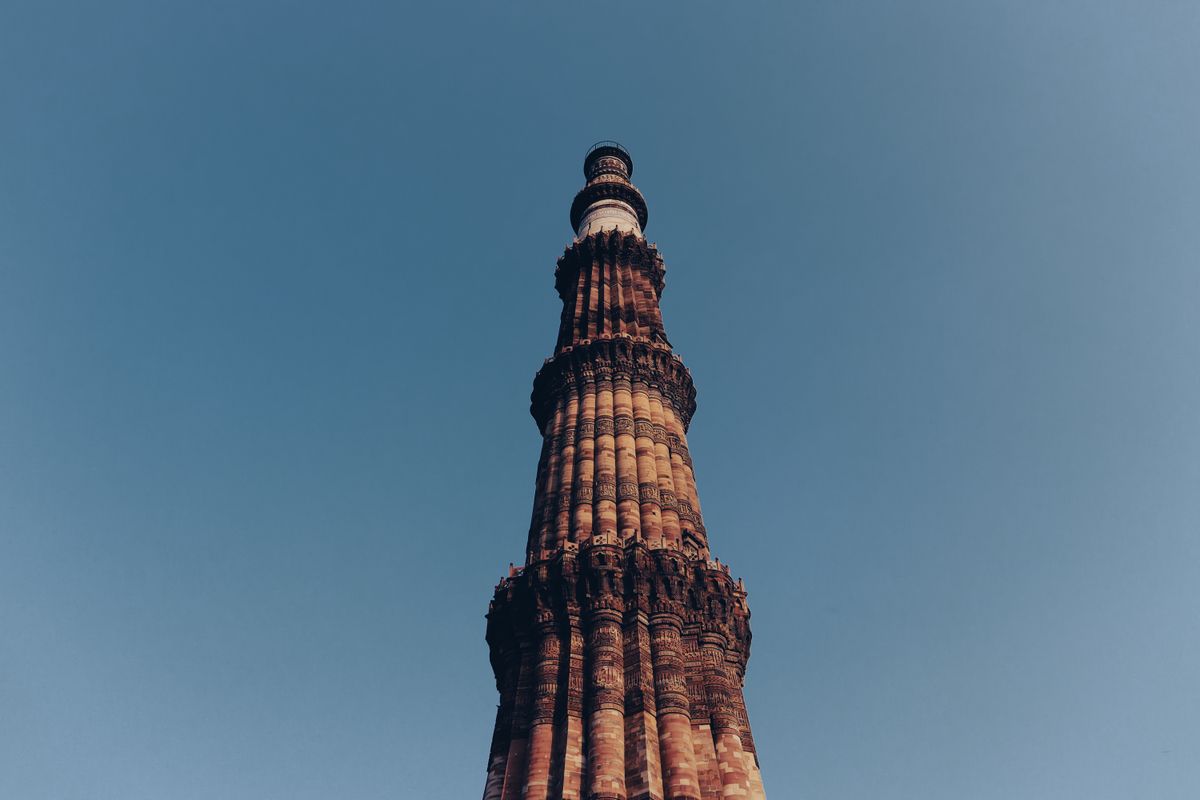
Delhi sunsets: the honest physics
Delhi sets its sun at about 5.28pm around the winter solstice and about 7.22pm in late June, which changes the whole calculation: in December you are watching sunset before dinner, in June after it. Clarity is the bigger variable. From late October to mid-January, particulate haze regularly cuts visibility to a kilometre or two, which kills long views but produces enormous orange discs you can look straight at. The cleanest evenings are late February to March and again in August and September, when monsoon rain has washed the air and there is cloud to catch colour.
The second constraint is closing time. Archaeological Survey monuments run sunrise to sunset, which in practice means guards start clearing visitors twenty to thirty minutes before the sun actually goes down — you can watch the light go golden but rarely the disc touch the horizon. City parks like Lodhi Garden stay open to 8pm. Rooftop restaurants have no such problem but cost ₹1,500-₹3,000 a head. The ranking below weighs all three: what you actually see, what it costs, and whether you get to stay for the last ten minutes.
1. The Hauz Khas madrasa terraces over the tank
Still the best free sunset in Delhi. Firoz Shah Tughlaq's 14th-century madrasa wraps two sides of a 13th-century water tank, and the arched galleries face west across the water. You sit on stone that has been there 650 years while parakeets go home over the lake and the sun drops behind the trees of Deer Park. Entry is free, the complex sits at the end of Hauz Khas Village's single lane, and the nearest metro is Hauz Khas on the Yellow and Magenta lines, about 1.5km away or ₹40 by e-rickshaw.
The catch: the gates close at dusk and the guards are firm about it, so arrive by 4.45pm in winter or 6.30pm in summer to get a full hour. Weekends bring photo shoots and drone-flying attempts, both of which crowd the good arches. Go on a Tuesday. Afterwards you are thirty seconds from the bars and rooftops of the village, where a beer runs ₹400-₹600 and several terraces face the same lake — a decent plan B if you are turned out early. Skip the paid photography permits touts occasionally mention; there are none.
2. The southern minaret of Jama Masjid, and the roofs around it
The highest publicly accessible viewpoint in the old city. The climb up the southern minaret is roughly 120 narrow steps for a fee of about ₹100, and it delivers the one view that explains Shahjahanabad: the red sandstone courtyard below, the Red Fort's walls to the east, and a low sea of rooftops, water tanks and pigeon flocks in every direction. Photography charges apply for cameras, shoes come off at the gate, and shoulders and knees must be covered — robes are lent for a deposit.
It ranks second because of access, not view. The minaret closes well before sunset and is periodically shut altogether for maintenance or on Fridays and during prayer times, so treat it as a late-afternoon target rather than a sunset one. The reliable alternative is one of the rooftop restaurants overlooking the eastern side of the mosque near Meena Bazaar, where a plate of kebabs and a cold drink for two runs about ₹600-₹900 and nobody moves you on. Arrive by 4.30pm in winter — the lanes below are chaos after dark.
3 and 4. Purana Qila's ramparts, and the ruins of Tughlaqabad
Third: Purana Qila, on Mathura Road, where you can walk the walls between the Bara Darwaza and the Humayun Darwaza and look west over the boating lake with the sun sinking behind the trees of the Delhi Zoo. Entry is around ₹25 for Indians and ₹300 for foreign passports, and the site closes at sunset sharp. Sher Mandal's octagonal tower catches the last light beautifully from the ground. It is central — Pragati Maidan metro on the Blue Line is a ten-minute walk — and rarely crowded on weekday evenings.
Fourth: Tughlaqabad Fort, 6km of collapsed 14th-century rampart on the southern edge of the city, reached from Tughlabad metro on the Violet Line. Climb the bastions on the western side and you get the widest horizon available inside Delhi, with the Aravalli scrub running away toward Faridabad. It is rough underfoot, the site is huge and lightly staffed, and I would not be there alone as the light goes — come in a group, be at the gate before 5pm in winter, and leave when the guards whistle rather than pushing your luck.
5 and 6. Sunder Nursery lawns, and Kartavya Path at dusk
Fifth: Sunder Nursery, where the central axis of the Mughal garden points roughly west and the lawns stay open until around 7pm — later than any ASI monument. Entry is about ₹50 on weekdays. Spread out near the Sunderwala Burj with a coffee from the café, and you get low light on restored domes, a lake with waterbirds, and no pressure to leave at the exact moment the colour arrives. It is the most comfortable sunset in Delhi and the best one to bring children or grandparents to.
Sixth: Kartavya Path. You do not come for the sun, which sets unremarkably behind Rashtrapati Bhavan; you come for the fifteen minutes after, when the floodlights hit India Gate, the fountains run and the whole 3km axis fills with families eating ice cream from ₹30 carts. It is free, endlessly walkable, and metro-served at Central Secretariat and Udyog Bhawan. Parking is a nightmare after 5.30pm, so do not drive. The kulfi and chaat vendors near the C-Hexagon are fine; the balloon-and-laser-toy sellers will follow you for a hundred metres.
7 and 8. Mehrauli rooftops, and the ridge parks
Seventh: paying for the view. The rooftop restaurants clustered in Mehrauli, five minutes from the Qutub complex, put you at table height with the Minar itself lit up after dark — dinner for two lands around ₹3,500-₹5,000 with drinks, and you must book for a terrace table on a Friday or Saturday. Aerocity's hotel-district rooftops give you a different show: aircraft on final approach into T3 every ninety seconds against a pink sky. Neither is a bargain, but both solve the closing-time problem completely.
Eighth: green, quiet and free. Nehru Park in Chanakyapuri, 80 acres of undulating lawn, stays open to 8pm and the western slope gives a clean tree-line sunset with embassy quiet around it. The Aravalli Biodiversity Park above Vasant Vihar closes earlier, usually around 6pm, but the ridge path there is the only place in Delhi that feels like open country. Both are best February to April, when the air is clear and the temperature at 6pm is a pleasant 24-28°C. Neither has a food stall worth the money — eat afterwards in Malcha Marg or Vasant Vihar.
What to skip, and how to get home
Skip anything advertised as a Yamuna sunset cruise or riverfront promenade; the accessible riverbank near Kalindi Kunj and Wazirabad is not a scenic viewpoint, and the Signature Bridge's much-publicised viewing gallery has spent years unavailable to visitors. Skip the Qutub Minar complex itself for sunset — it closes early and the ticket is a poor use of the last hour. And skip any rooftop in Paharganj sold on the strength of a Jama Masjid view: you are 2.5km away with buildings in between.
Getting home matters more than people expect. From Hauz Khas, Purana Qila, Sunder Nursery and Nehru Park you can be on the metro within fifteen minutes, and trains run until roughly 11pm. From Tughlaqabad and Mehrauli, book an app cab before you start walking out; surge pricing after dark on the Mehrauli-Gurgaon Road can double a ₹250 fare. Carry a light layer — a Delhi evening in December drops from 22°C at 4pm to 9°C by 8pm, and the ridge parks feel colder than the number suggests.
Questions, answered
What time does the sun actually set in Delhi?
Around 5.28pm in late December, 6.20pm in mid-March, 7.22pm in late June and 6.10pm in October. Monuments start clearing visitors twenty to thirty minutes earlier, so for winter you should be inside a site by 4.30pm and for summer by 6pm to get a proper hour of light.
Which sunset spot is best if I have children with me?
Sunder Nursery. It stays open later than the ticketed monuments, has lawns you can sit on, clean toilets, a café and a proper path network, and entry is around ₹50 on weekdays. Kartavya Path after dark is the other easy option, with ice cream carts and floodlit monuments.
Is winter smog going to ruin the view?
Between late October and mid-January, often yes for long views — visibility can drop to a kilometre. Close-range sunsets still work well, and the haze produces very strong orange colour. For clear horizons, come in late February and March, or in August and September between monsoon showers.
Doing good is the business: every booking through Stay New Delhi funds one verified tonne of carbon removal — same room, same price, no markup.
Start Your Search