Delhi with limited mobility: what is actually accessible and what is not
The metro and the big monuments are far better than their reputation, the pavements between them are the real obstacle, and a car with driver at ₹3,000 to ₹4,500 a day solves about 80 percent of the problem.
The short answer: plan around footpaths, not attractions
Delhi is more accessible than visitors expect at the destinations and much worse than expected in the 300 metres between them. Every metro station has lifts, most big monuments have been ramped over the past fifteen years following accessibility audits, and international-standard hotels have proper accessible rooms. What has not been fixed is the footpath network: kerbs without ramps, open drain covers, parked scooters, vendor stalls, and sudden 20 cm steps at every shop entrance. A wheelchair user who plans door-to-door transport has a good trip. One who plans to stroll between sights does not.
That reframes the whole itinerary. Instead of a walking day in Old Delhi followed by a walking day in south Delhi, build days around three or four drop-offs with generous time at each. Sunder Nursery, Kartavya Path, Humayun's Tomb, Bangla Sahib Gurdwara and Akshardham are all comfortably done from a car park. Chandni Chowk's back lanes, Paharganj's Main Bazaar and Hauz Khas Village's stepped alleys are not, and no amount of determination changes that. Choose the first list, and treat the second as something you look at from a vehicle.
The metro is the surprise winner
Delhi Metro was built with accessibility written into the specification, and it shows. Every station has at least one lift from street to concourse to platform, wide swing gates beside the ticket barriers for wheelchairs, tactile guidance strips, reserved seating and designated wheelchair spaces in coaches. Trains are level with the platform within a couple of centimetres, so boarding rarely needs a ramp. Station control rooms keep wheelchairs that can be borrowed, and staff will escort you through the security check if you ask at the entrance. Fares are ₹10 to ₹60 and trains run roughly 6am to 11pm.
The gaps are worth knowing before you commit. Not every street exit has a lift, so at big interchanges such as Rajiv Chowk and Kashmere Gate you may need a specific gate number, and it is worth asking staff which one before you go down. Crowds between 8am and 10am and again 6pm to 9pm are genuinely crushing and the polite queueing you might expect does not exist. Travel midday. Security checks require you to leave the chair briefly only if staff insist, and a wand scan while seated is the norm.
Road transport: what exists and what does not
There is no wheelchair-accessible taxi fleet in Delhi. Uber and the local apps have nothing with a ramp or lift, and pretending otherwise wastes a day. The workable solution is a hired car with driver: a Toyota Innova or similar seven-seater at ₹3,500 to ₹4,500 for eight hours and 80 km, or a sedan at ₹2,500 to ₹3,500. A folding manual chair goes in the boot easily; a rigid or powered chair generally does not, which is the single biggest planning constraint for anyone using one. For a powerchair, a small tempo traveller van chartered for the day is the realistic option and costs ₹5,000 to ₹7,000.
Booking the same driver for the whole stay is worth more than the money saved by shopping around. He learns which gate at Humayun's Tomb has the shortest ramped path, where cars are allowed to stop at Bangla Sahib, and that Red Fort parking is a long way from the ticket office. Autos and e-rickshaws are not an option for anyone who cannot step up and swing across a bench seat, though an e-rickshaw with a companion lifting a folded chair works fine for short hops and costs ₹40 to ₹60.
Monuments and gardens, ranked by how they treat a wheelchair
Best in class is Sunder Nursery near Nizamuddin: wide smooth paths, gentle gradients, accessible toilets, benches everywhere, and entry around ₹100 to ₹200. Kartavya Path and the National War Memorial are flat granite with kerb ramps and are the easiest photograph in Delhi. Bangla Sahib Gurdwara has ramps, loaner wheelchairs and volunteers who will simply take over pushing, and the free kitchen is at ground level. Akshardham is fully step-free with wheelchairs available at the entrance, but security is long and phones are not permitted inside, so factor 45 minutes before you see anything.
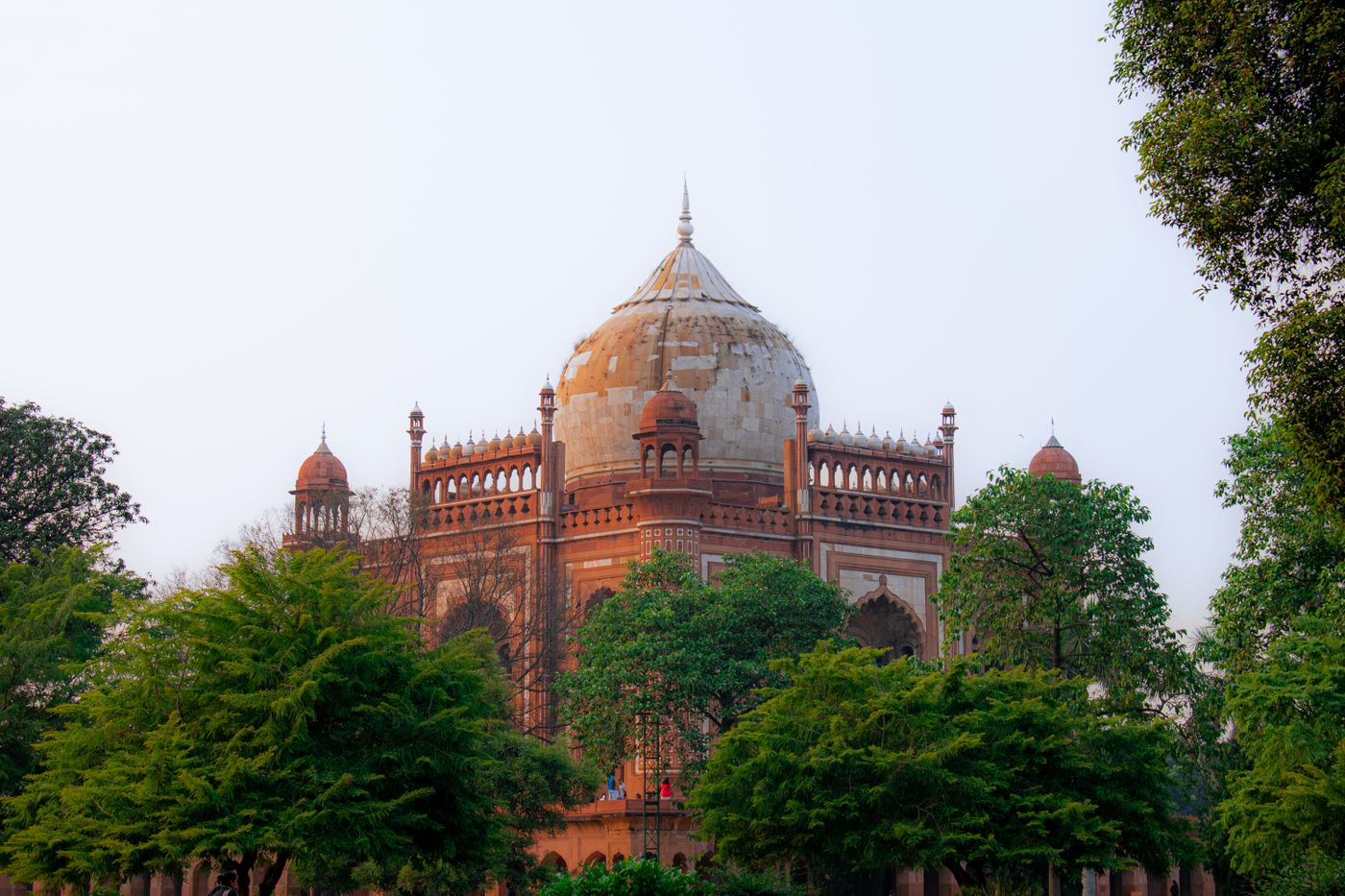
Humayun's Tomb has a ramped approach and firm paths across the garden, though the tomb chamber itself sits at the top of a steep flight and only the terrace level is reachable. Qutub Minar has paved routes to the main courtyard with some gravel and lips. Lotus Temple has a ramp and a separate priority queue for elderly and disabled visitors that saves the 60 to 90 minute wait. Red Fort is the one I would skip: 1.5 km of walking across uneven stone with distant parking. Lodhi Garden is half good, with paved main loops and stepped sections around the tombs.
Markets, food and the Old Delhi problem
The redeveloped stretch of Chandni Chowk between Red Fort and Fatehpuri Masjid is genuinely improved: a smooth, wide central corridor with motor vehicles banned during the day, which makes rolling along it feasible for the first time in decades. Step off it into Kinari Bazaar, Paranthe Wali Gali or Chawri Bazaar and you are back to 1.5 metre lanes, cables, steps, standing water and constant motorcycle traffic. If Old Delhi matters to you, do the main road with a companion, eat at a ground-floor place with a wide door, and let the labyrinth go.
For restaurants, the reliable step-free options cluster in the malls and the newer developments: Select Citywalk in Saket, DLF Promenade in Vasant Kunj, Aerocity's hotel restaurant strip and the larger Khan Market ground-floor units. Older markets such as Lajpat Nagar and Karol Bagh have raised shopfronts and narrow staircases to first-floor restaurants. Accessible toilets in Delhi are common in malls, five-star hotels, metro stations and the newer museums, and essentially absent everywhere else. Plan the day around those anchors rather than assuming a facility will appear.
Hotels: where step-free actually exists
The international five-star clusters in Aerocity, Chanakyapuri and Gurugram have designated accessible rooms with wider doorways, roll-in or low-lip showers, grab bars and lifts to every floor, along with ramped entrances and porters who materialise instantly. Prices sit high, but so does the reliability. Mid-range business hotels in Saket, Nehru Place and Dwarka are a mixed bag: lifts exist, but bathrooms often have a 10 cm threshold and a fixed showerhead over a tub, which is a real barrier. Ask for a photograph of the bathroom door and floor before booking; hotels here will send one.
What almost never works is the budget layer in Paharganj and parts of Karol Bagh: entrances up three or four steps from the street, four-person lifts too small for a chair, and staircases with 200 mm risers. Serviced apartments in Greater Kailash and Defence Colony are worth checking individually, since many are in walk-up buildings without lifts at all. If you use a chair, stay in one of the big-hotel districts and accept the higher rate, because the alternative is spending the trip negotiating your own front door.
Timing, weather and the practical extras
Season matters more here than in almost any city. April to June regularly hits 40 to 45 degrees, which is dangerous for anyone with limited circulation, restricted sweating, or a chair that heats up in direct sun. Mid-November to January brings serious air pollution, with readings that routinely push into hazardous territory for people with respiratory conditions. That leaves February to March and October to early November as the sweet spot: 18 to 30 degrees, clearer air, and daylight long enough to fit three stops without rushing.
Bring spares: a puncture repair kit, castor spares and a basic tool set, because Delhi has excellent general mechanics and almost no wheelchair technicians. Delhi airport is a strong point, with free assistance under Indian aviation rules if you request it when booking, aerobridge boarding at Terminal 3 and buggies inside the terminal. Finally, use the priority lanes at monuments, temples and the airport; they exist, they are signposted for senior citizens and disabled visitors, and staff will wave you through if you simply present yourself at the front.
Questions, answered
Can a wheelchair user really use the Delhi Metro?
Yes. Every station has lifts, wide gates beside the ticket barriers, tactile paths and reserved coach spaces, and platform-to-train height is nearly level. Ask staff at the entrance for escort through security and for the correct lifted street exit. Avoid 8am to 10am and 6pm to 9pm, when crowding makes boarding genuinely difficult.
Are there wheelchair-accessible taxis in Delhi?
No ramped or lift-equipped taxi fleet operates here. The practical alternative is a hired Innova or similar with driver at ₹3,500 to ₹4,500 for eight hours and 80 km, which takes a folding manual chair in the boot. For a rigid or powered chair, charter a small tempo traveller van at ₹5,000 to ₹7,000 a day.
Which Delhi sight is easiest with limited mobility?
Sunder Nursery, next to Humayun's Tomb: wide level paths, gentle gradients, benches, accessible toilets and entry around ₹100 to ₹200. Kartavya Path and the National War Memorial come second for flat granite surfaces and kerb ramps. Bangla Sahib Gurdwara is third, with ramps, loaner wheelchairs and volunteers who assist without being asked.
Doing good is the business: every booking through Stay New Delhi funds one verified tonne of carbon removal — same room, same price, no markup.
Start Your Search