Delhi's monuments, ranked: which are worth your time
Delhi has more than 1,300 listed historic structures and roughly six that deserve a serious morning — this ranking sorts the essential from the merely photogenic, with real ticket prices and the best hour to arrive.
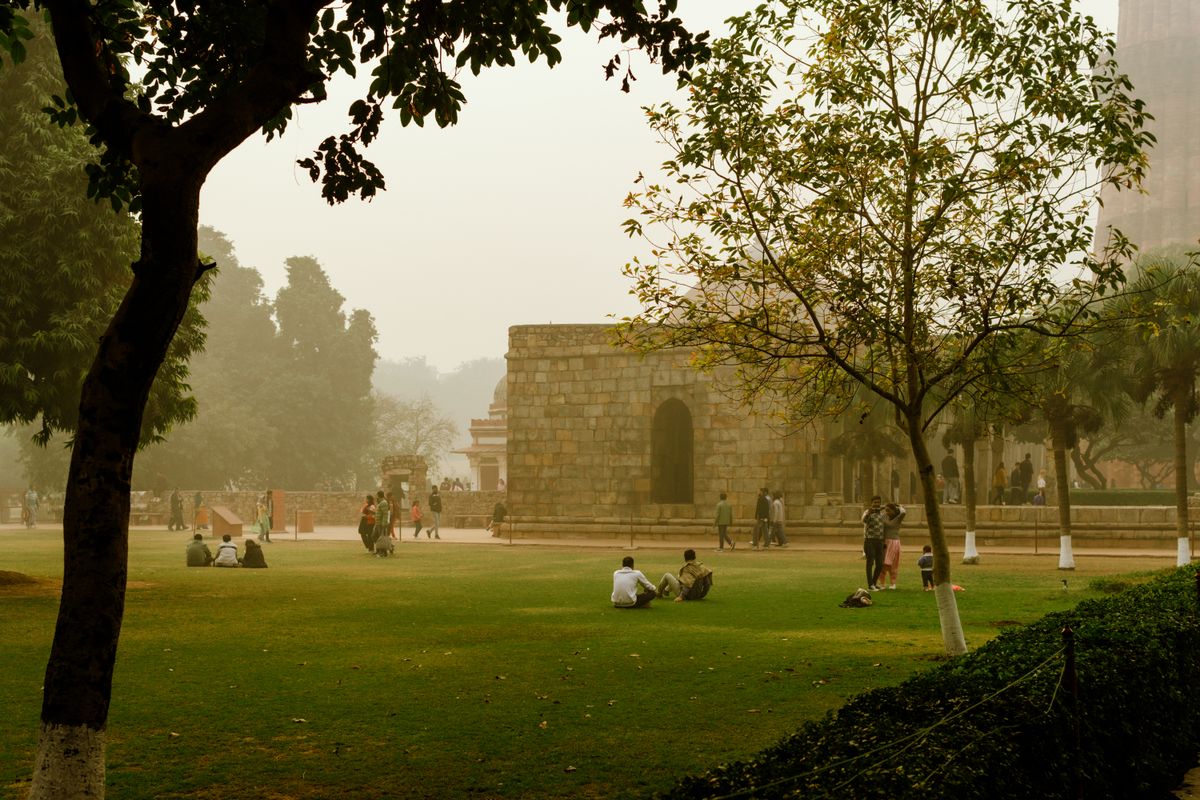
1. Humayun's Tomb, and the whole Nizamuddin complex
Built from 1565, the first great garden tomb in the subcontinent and the direct ancestor of the Taj Mahal, Humayun's Tomb is the one monument in Delhi I would never cut. Entry is about ₹40 for Indian nationals and ₹600 for foreign visitors, and the site opens at sunrise. Go at 7am: the red sandstone takes light from the east, the lawns are empty, and you will have Isa Khan's octagonal tomb — older than Humayun's and, for my money, prettier — entirely to yourself.
Do not treat it as a single ticket. Sunder Nursery next door, restored and opened as a 90-acre heritage park, has 15 more monuments scattered through it and a modest entry fee; combined, the two make a genuinely great half day. Then walk into Nizamuddin Basti for lunch and, if it is a Thursday evening, return for qawwali at the dargah after sunset. That sequence is the single best day of history in Delhi and costs under ₹1,000 excluding food.
2. Qutub Minar and the Mehrauli Archaeological Park
The 73-metre victory tower begun in 1193 is the oldest thing in Delhi that stops you dead, and the surrounding Quwwat-ul-Islam mosque is built from the columns of demolished temples, which is a lesson in the city's layering you cannot get from a book. Foreign entry runs about ₹600, Indians about ₹40. Arrive at opening, around 7am, because by 10.30 the school groups arrive in fleets and the compound loses all its calm.
The unmissable part is free and almost empty: Mehrauli Archaeological Park, immediately south, holds Jamali Kamali's mosque and tomb, Balban's tomb, Rajon ki Baoli and Quli Khan's tomb spread across scrubby woodland with no ticket booth. Wear closed shoes, go before 11am, and give it 90 minutes. Most visitors do Qutub in 40 minutes and drive away, which is the most common wasted opportunity in Delhi sightseeing.
3. Red Fort: essential, overcrowded, and best done early
Shah Jahan's fortress-palace, completed in 1648, is the emotional centre of Old Delhi and where the Prime Minister addresses the nation each 15 August. Tickets are around ₹600 for foreigners, ₹40 for Indians; closed Mondays. The interiors — Diwan-i-Khas, the Rang Mahal, the hammam — are stripped compared with what stood here, and the long Chatta Chowk arcade of souvenir shops sets a slightly theme-park tone at the entrance.
Go anyway, but go at opening and walk straight past the arcade to the far side, where the pavilions face what used to be the Yamuna. Allow 90 minutes. Skip the evening sound-and-light show unless you are travelling with children who need spectacle; it is dated and the ₹80 to ₹250 is better spent on kulfi at Sitaram Bazaar. Combine the fort with Jama Masjid, 10 minutes' walk south, where the courtyard at 4pm is the better photograph anyway.
4. Lodi Gardens and Safdarjung's Tomb: the free win
Lodi Gardens costs nothing, opens around 6am, and contains four significant fifteenth-century tombs — Mohammed Shah's, Sikandar Lodi's, the Bara Gumbad and Sheesh Gumbad — set in 90 acres of jogging paths, bougainvillea and enormous old trees. It is the single most pleasant hour in central Delhi and the place where the city's residents look most like themselves: walkers at dawn, yoga groups, students, families at dusk.
Safdarjung's Tomb is 500 metres away at the roundabout, entry about ₹300 for foreigners and ₹25 for Indians. Built in 1754, it is the last great Mughal garden tomb and openly derivative of Humayun's — the proportions are off, which historians note as the style's decline and which makes it fascinating if you have already seen the original. Fifteen minutes inside is enough. Pair both with lunch at Khan Market, 10 minutes east, and you have an easy, low-effort morning.
5. The ones that are overrated, and why
Jantar Mantar in Connaught Place, the 1724 masonry observatory, photographs magnificently and takes 20 minutes to exhaust. At about ₹300 for foreigners it is fine if you are already in CP, but nobody should cross the city for it. Purana Qila is atmospheric and cheap but heavily restored and often given more importance than it earns in a short trip. Tughlaqabad Fort, 6.5 km of fourteenth-century ramparts, is genuinely impressive but sprawling, unshaded and far south — only worth it if you like ruins for their own sake and have a full morning.
The India Gate area deserves a separate warning. The arch and Kartavya Path are a proper civic set piece, best at dusk when the lawns fill, but there is nothing to enter and the surrounding hawking is relentless. Twenty minutes, then move on. Anyone who plans a half-day around it is losing a morning that Mehrauli or Nizamuddin would have used far better.
6. The modern religious sites that earn their place
Three non-ticketed sites belong on any serious itinerary. Gurudwara Bangla Sahib in Connaught Place runs a langar feeding tens of thousands daily; visitors are genuinely welcome, heads must be covered, and the kitchen is worth seeing even if you do not eat. The Lotus Temple in Kalkaji, completed in 1986, is architecture worth 40 minutes; it closes on Mondays and the queue can run 30 to 45 minutes on Sunday afternoons.
Akshardham on the eastern bank, opened in 2005, is enormous, free to enter, and famously bans phones, cameras and most bags — leave them at the hotel or you will spend 25 minutes in the cloakroom line. It closes Mondays. Skip the paid exhibitions unless you have children; the temple stonework itself is the reason to come. Allow three hours door to door including security and travel, which is why I would only include it on a trip of five nights or longer.
Building the actual itinerary
Three days, doing it properly: Day one, Humayun's Tomb at 7am, Sunder Nursery, lunch in Nizamuddin, Lodi Gardens at dusk. Day two, Old Delhi — Red Fort at opening, Jama Masjid, Chandni Chowk on foot, Kuremal's kulfi at Sitaram Bazaar. Day three, Qutub Minar at opening then Mehrauli Archaeological Park, lunch in Saket, National Museum on Janpath in the afternoon. That covers the city's five centuries without a single wasted drive.
Three practical rules. Buy tickets online through the ASI portal where possible; the counter queues at Red Fort and Qutub can run 20 minutes. Check Monday closures — most Archaeological Survey sites stay open but the Lotus Temple, Akshardham, the National Museum and the Red Fort's museums do not all follow the same rule. And do everything monumental before 11am from March onwards, because the heat is not a mild inconvenience here; by May it removes the day entirely.
Questions, answered
How much do monument tickets cost for foreign visitors?
World Heritage sites — Humayun's Tomb, Qutub Minar, Red Fort — are around ₹600 for foreign nationals and ₹40 for Indians, with children under 15 usually free. Lesser monuments such as Safdarjung's Tomb and Jantar Mantar are roughly ₹300. Lodi Gardens and Mehrauli Archaeological Park are free.
Are Delhi's monuments open on Mondays?
Most Archaeological Survey monuments including Humayun's Tomb and Qutub Minar stay open daily. The Red Fort, the Lotus Temple and Akshardham close on Mondays, and the National Museum closes Mondays too. Always confirm the day before rather than assuming a single citywide rule.
Is a guide worth hiring?
At Humayun's Tomb and the Red Fort, yes — an approved guide costs around ₹600 to ₹1,200 for 90 minutes and turns empty rooms into a story. Hire only from the official desk inside the gate, never from someone approaching you in the car park, and agree the price before you start.
Doing good is the business: every booking through Stay New Delhi funds one verified tonne of carbon removal — same room, same price, no markup.
Start Your Search