What to wear and do in Delhi's temples, mosques and gurdwaras
Cover your shoulders, knees and — in a gurdwara or dargah — your head, take your shoes off without exception, and you will be welcome at every one of the eight major sites in this guide.
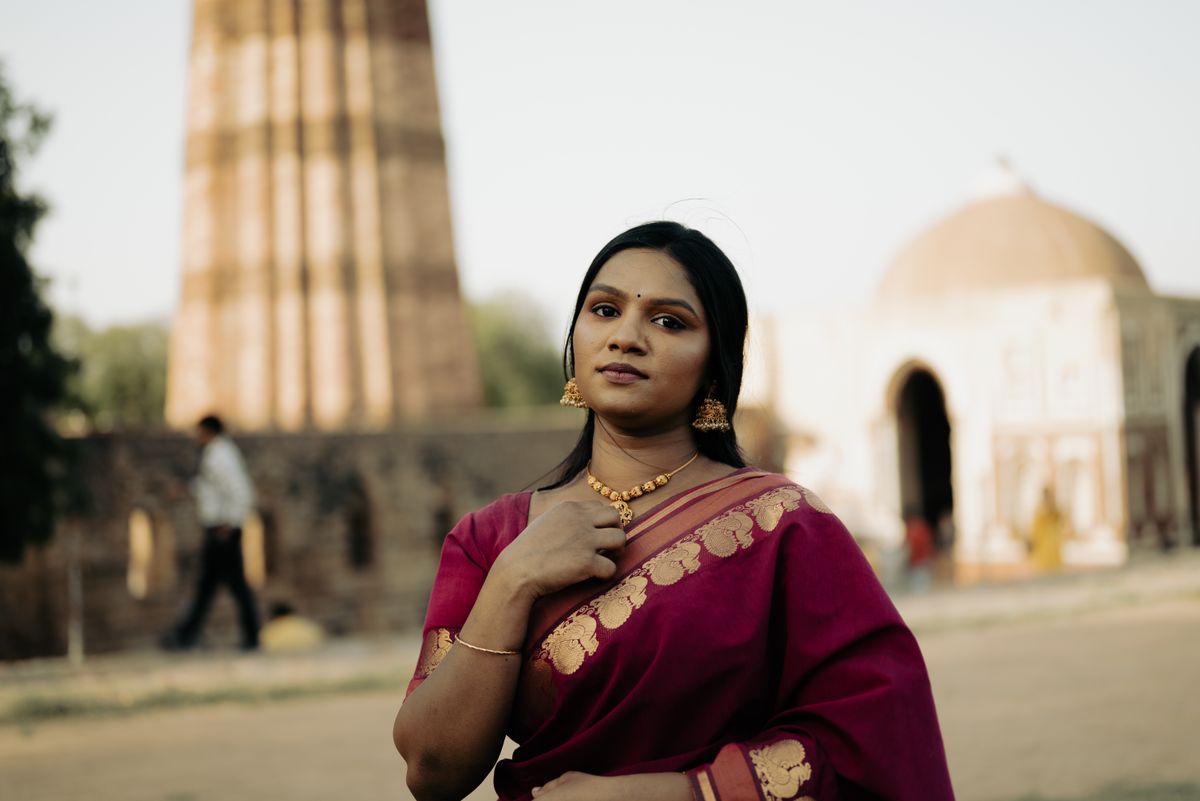
The dress code, translated into what you own
Delhi's religious sites want shoulders and knees covered, and everything else is detail. For men that means any trousers and a t-shirt with sleeves; shorts will get you turned away at Jama Masjid and a robe handed to you at several temples. For women, loose full-length trousers or a long skirt with a top that covers the upper arms handles every site in the city. A large cotton or light silk scarf is the single most useful thing in your day bag — it becomes a head covering, a shoulder cover, a sun shield and something to sit on when the marble is scorching.
Avoid leather where you can. Some temples ask you to leave belts and bags at the counter, and while it is rarely enforced strictly, appearing at a Jain or Krishna temple in visible leather is poor form. Skip anything sheer, tight or cropped — not because anyone will lecture you, but because Delhi's religious spaces are full of families, and you will feel it. And wear shoes you can slip off in one motion: laces are a genuine nuisance when you are removing footwear five times in a morning.
Shoes off, and the shoe-minder economy
Every temple, mosque, gurdwara and dargah in Delhi requires bare feet, and this is non-negotiable. Socks are allowed at some Hindu temples and forbidden at gurdwaras, where you also wash your feet by walking through a shallow water channel at the entrance. Official cloakrooms — the joda ghar at Bangla Sahib, the counters at Akshardham — are free, staffed, organised and completely secure. Use them. Where one exists, no freelance shoe minder should be involved at all.
Where an official counter does not exist, at Jama Masjid's gates or around Nizamuddin's lanes, men will offer to watch your shoes. This is a real service and ₹20-₹30 is the fair rate, agreed before you hand anything over. What actually happens if you do not agree first is a demand of ₹100-₹200 on your return, delivered loudly in front of a crowd. Set the number up front, hand over a ₹20 note when you collect, and walk. Alternatively carry a cloth bag, put your shoes in it, and carry them yourself — entirely acceptable at most sites and it removes the whole transaction.
Gurdwara Bangla Sahib: the easiest and warmest visit
If you visit one religious site in Delhi, make it this one, just off Ashoka Road near Connaught Place, open around the clock and free. The sequence: cover your head — free orange scarves are stacked at the entrance — deposit shoes and socks at the joda ghar, walk through the ankle-deep water channel, then enter. Inside, sit on the floor facing the Guru Granth Sahib, listen to the kirtan for as long as you like, and accept karah prasad in cupped hands with both palms together when it is offered. Do not refuse it and do not take it one-handed.
The sarovar, the large water tank, is the photograph everyone wants; photos there are fine, discretion inside the prayer hall is expected, and video of worshippers is not. Then go to the langar, the free community kitchen serving tens of thousands of meals a day to anyone who sits down. Eat there — dal, roti, kheer, served by volunteers — and if you have twenty minutes, join the washing-up line, which visitors genuinely do. Leave a donation in the box if you wish, but nobody will ask you for one, and no tobacco or alcohol may be carried onto the premises at all.
Jama Masjid: timings matter more than clothing
The great Mughal mosque above Chandni Chowk closes to tourists during each of the five daily prayers, for roughly 15-30 minutes, and the midday Friday congregation closes it for longer. Broadly you are welcome between about 07:00 and noon and again from around 13:30 until half an hour before sunset. Arrive at prayer time and you will simply be waved away, which is the most common reason visitors leave frustrated. Enter by Gate 1 or Gate 3; the steps are steep and there are around thirty of them at every entrance.
There is a photography charge, commonly ₹300 for a still camera, collected at the gate — phones are usually waved through but the enforcement is inconsistent and arguing is pointless. Women are handed a printed cotton robe to wear over their clothes regardless of how modestly they are already dressed; put it on, it costs nothing. The southern minaret can be climbed for around ₹100 and gives the best rooftop view over Old Delhi's tangle, though women are not permitted to climb unaccompanied. Do not cross in front of anyone praying, and do not walk into the prayer hall itself while worship is under way.
Nizamuddin Dargah: go for Thursday qawwali, prepared
The shrine of Hazrat Nizamuddin Auliya sits at the end of a narrow lane off Mathura Road, and Thursday evening after sunset prayers is when qawwali singers perform in the courtyard — one of the most extraordinary hours available in Delhi and free to attend. Arrive around 18:00 to get a place, cover your head whatever your gender, and expect the lane in to be tight, wet underfoot and lined with stalls selling rose petals and chadars. Women should know that entry to the inner tomb chamber of the saint is restricted to men; the courtyard and the surrounding shrines are open to all.
This is the site with the most persistent donation pressure in the city. Men with receipt books will approach, quote a figure like ₹1,100, and imply it is a required offering. It is not. Give ₹50-₹100 into a donation box directly if you want to give, decline the books politely and repeatedly, and do not hand your shoes or your phone to anyone offering to hold them. Once the singing starts, none of this matters — sit, do not applaud between verses, and follow the crowd's lead on when money is thrown toward the musicians.
Akshardham and the Lotus Temple: the no-phone sites
Akshardham, across the Yamuna near Noida Mor, bans phones, cameras, bags, electronics and often power banks completely, with airport-grade screening at the entrance. Free cloakrooms take everything, but the queue at 16:00 on a Sunday can run 40 minutes, so come mid-week and before 15:00. It is closed Mondays, entry to the grounds is free with charges for the exhibitions, and last admission is in the early evening. Allow three hours, dress to the standard code, and accept that you will have no photographs of the single most photogenic modern building in Delhi.
The Lotus Temple in Kalkaji, the Bahá'í House of Worship, is free, closed Mondays, and asks for something rarer: complete silence inside. No photography in the prayer hall, no audible prayer of any tradition, no guides talking. Queues of 30-45 minutes are normal on weekend afternoons; go at 09:30 on a weekday and walk straight in. Both sites are the exact opposite of Old Delhi's sensory overload, which is why they pair badly on the same day and beautifully on either side of one.
Hindu temples: the small rules that read as respect
At Laxminarayan Mandir on Mandir Marg, Kalkaji Mandir, Chhatarpur or the ISKCON temple in East of Kailash, the pattern repeats: shoes off at the counter, phones usually banned inside the sanctum, no photography of the deity, and circumambulation of the shrine clockwise. Do not point the soles of your feet toward the idol or toward another person seated on the floor — sit cross-legged or with your feet tucked behind you. When prasad or a spoonful of holy water is offered, accept it in your right hand; refusing outright is awkward, and touching it to your lips is enough.
Two more that visitors get wrong. Do not touch a religious image, a carving or a priest's ritual items, however inviting the sculpture. And do not offer money directly to a priest performing a rite unless you have asked for one — a performed puja followed by a demand for ₹500 is a recognised setup at busier temples. Put donations in the box. If you want a genuine ceremony, ask at the office in advance and agree the offering then, when nobody is standing over you with a tray.
Photography, festivals and when not to go at all
The universal rule on cameras: buildings yes, worshippers no, faces at prayer never. Ask before photographing anyone, and accept a refusal instantly. Drones are illegal over all of central Delhi without permits nobody grants tourists. During Ramadan, the courtyard at Jama Masjid and the food streets around Matia Mahal after sunset are exceptional, but non-Muslim visitors should stay out of the prayer hall and keep out of the way as the fast breaks — go to eat, not to observe. Eid, Diwali, Guru Nanak Jayanti and Janmashtami all bring crowds that double or triple normal footfall.
Skip the sites entirely on their peak days unless crowds are the point: Kalkaji during Navratri, ISKCON at Janmashtami, and any temple on a major festival afternoon means two-hour queues and no space to stand. Tuesdays and Saturdays are busy at Hanuman temples, Mondays at Shiva shrines. The reliably calm slot for almost every site in this guide is a weekday between 09:00 and 11:00, before the heat and after the morning worship rush — which also happens to be when the light on the marble is at its best.
Questions, answered
Can non-Hindus and non-Muslims enter these places at all?
Yes, at every site named here. Delhi's temples, gurdwaras, mosques and dargahs admit visitors of any faith or none, with the single common restriction being the inner tomb chamber at Nizamuddin Dargah, which women do not enter. Behaviour and dress matter far more than belief, and nobody will ask what yours is.
Do I have to cover my head everywhere?
Only at gurdwaras and Muslim shrines, where everyone covers regardless of gender — free scarves are provided at Bangla Sahib and Sis Ganj. Hindu temples generally do not require it, and the Lotus Temple does not. Carrying one large scarf covers every case and doubles as a shoulder cover at sites with stricter door staff.
How much should I actually donate?
Nothing is required anywhere. If you want to give, ₹50-₹100 into a fixed donation box is entirely normal and respectable, and eating at the Bangla Sahib langar without paying is completely expected. Ignore anyone with a receipt book quoting figures like ₹1,100, which is a pressure tactic rather than a temple charge.
Which two sites work best in one morning?
Bangla Sahib at 09:00, then Jama Masjid and Chandni Chowk from 10:30 — they are 6km apart, roughly ₹150 by app auto, and the contrast between a Sikh langar and a Mughal courtyard mosque is the sharpest cultural hour Delhi offers. Both close for prayers, so lead with the gurdwara, which never does.
Doing good is the business: every booking through Stay New Delhi funds one verified tonne of carbon removal — same room, same price, no markup.
Start Your Search