Hauz Khas guide for tourists: ruins, bars and where to sleep
A fourteenth-century reservoir with a madrasa on its bank, wrapped in a village of 60-odd bars and boutiques — here is what survived the 2017 licensing crackdown and where to stay for ₹3,000 to ₹6,000.
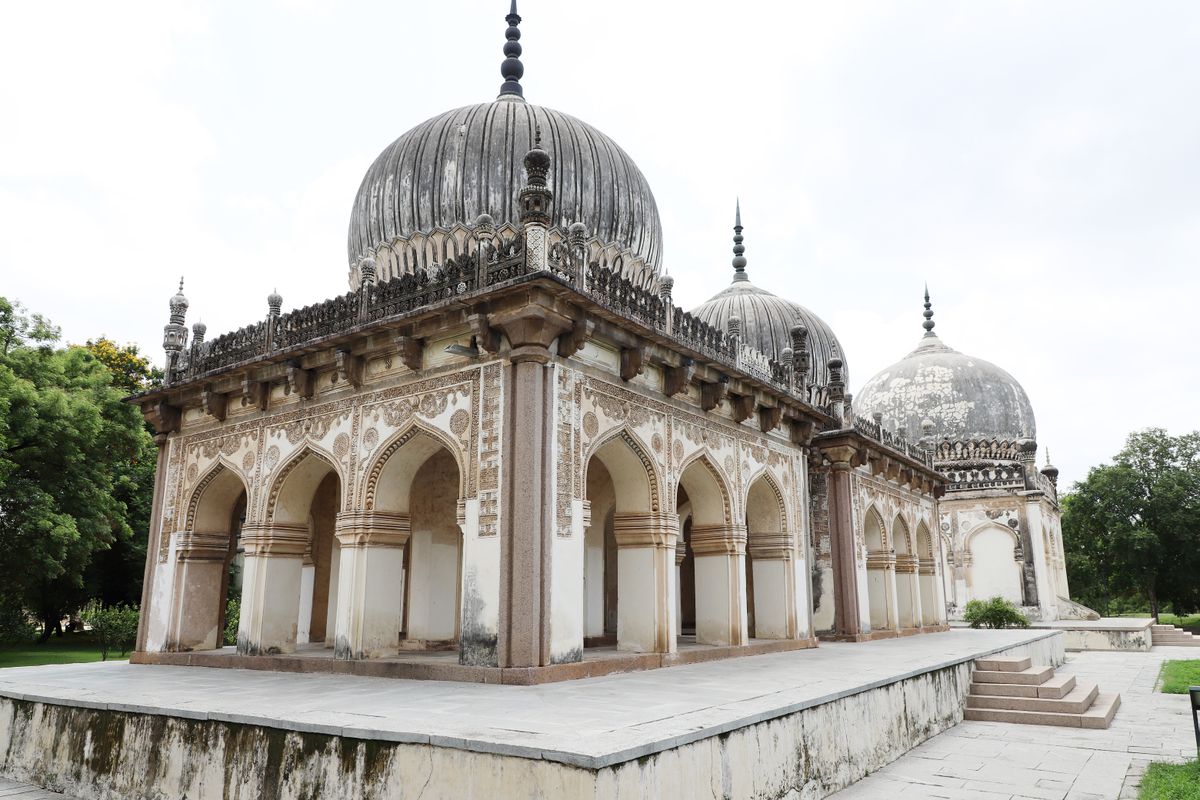
The ruins first: Hauz Khas Complex and Deer Park
The name means royal tank. Alauddin Khalji dug the reservoir around 1300 to supply Siri, and Firoz Shah Tughlaq built a madrasa and his own tomb along its southern edge in the 1350s. The complex is free, open roughly sunrise to sunset, and is the best-value historic site in South Delhi: L-shaped colonnades of grey stone with domed pavilions looking straight down onto the water. Go an hour before sunset, when the light comes across the tank and the whole thing turns gold.
Deer Park adjoins it — 60-odd hectares of scrub and lawn with spotted deer in an enclosure, peacocks, and a good jogging loop. It is the reason locals live here. Combined, the ruins and the park make a genuinely lovely 90 minutes that costs nothing, and they are almost always emptier than Lodi Gardens. Enter through the village lane past the boutiques, or from the Deer Park gate on the Aurobindo Marg side if you want to avoid the crowd.
What happened to the nightlife, honestly
Hauz Khas Village became Delhi's most concentrated bar strip in the early 2010s — dozens of venues stacked in narrow buildings up a single lane, most with terraces overlooking the ruins. Then came the sealing drives and licensing crackdowns of 2016 and 2017, prompted by fire-safety and building-use violations, and a large share of them shut. The lane today has perhaps half its peak number of venues and a calmer character.
That is not entirely a loss. What remains skews towards places that had the paperwork and the cooking to survive: a couple of long-running Himalayan and Tibetan restaurants, some solid cafés, a few terraces where a beer runs ₹350 to ₹500 and a cocktail ₹600 to ₹900. Expect a young, mostly Indian crowd, loud music after 9pm, and a hard stop around 12.30am under Delhi's licensing hours. If you came expecting Bangkok, adjust; if you want an easy night out with a ruin view, it still delivers.
Where to stay in and around the village
Hauz Khas itself has almost no conventional hotels — the village buildings are too small and too regulated. What it has is boutique guesthouses and B&Bs, typically four to eight rooms in a converted house, at ₹3,000 to ₹6,000 a night, plus hostels with dorm beds at ₹600 to ₹1,000. These are the best-value rooms in South Delhi if you want atmosphere, and they book out on weekends.
For a proper hotel, look 1 to 2 km out: Safdarjung Enclave and SDA have small business hotels around ₹3,500 to ₹5,500; Green Park has a handful of mid-range options near the metro. Saket, four minutes further down the Yellow Line, has the four-stars with pools at ₹5,500 to ₹9,000. My pick for a couple spending four or five nights in Delhi is a village guesthouse — you wake up next to a fourteenth-century reservoir, which no chain hotel in the city can offer.
Getting in and out: the metro trap
There is a station called Hauz Khas, but it is on the Yellow and Magenta Lines at the Outer Ring Road junction, roughly 1.8 km from the village — a 25-minute walk or a ₹40 auto. The closer, more useful station for the village is Green Park on the Yellow Line, about 1.2 km and 15 minutes on foot through Aurobindo Marg. People routinely get this wrong and end up walking the wrong way along a busy road at night.
From Green Park, Rajiv Chowk is 25 minutes and Qutub Minar 15. App cabs from the village to Connaught Place run ₹250 to ₹400 depending on the hour; to the airport, ₹450 to ₹700 and 35 to 50 minutes. Note that the village lane is largely pedestrian at peak evening hours and cabs will not enter, so agree a pickup point at the main gate rather than arguing with a driver on a one-way lane.
Eating around Hauz Khas beyond the bar strip
The best food in the postcode is not in the village. SDA Market, 10 minutes west, has cheap North Indian and South Indian canteens where a full thali runs ₹150 to ₹250, plus late-night rolls. Aurobindo Place Market has a well-known Tibetan momo stretch and a couple of long-standing cafés. Yusuf Sarai and Green Park's small market are where the neighbourhood actually eats, at half the village's prices.
In the village itself, the Himalayan restaurants near the top of the lane are worth it — thukpa, momos, and a decent shyaphaley for ₹250 to ₹450 a head — and there are two or three cafés doing genuinely good filter coffee. What to skip: the terrace places selling a generic international menu at ₹800 a plate purely for the ruin view. Have a drink there, then walk five minutes for dinner. The view is worth ₹500; the pasta is not.
What else is within 20 minutes
Qutub Minar and Mehrauli Archaeological Park are 5 km south — an ₹80 auto or two metro stops plus a walk. The Lotus Temple in Kalkaji is 25 minutes east by cab. Dilli Haat at INA, 10 minutes north, is a state-crafts market with regional food stalls, entry around ₹30, and the most efficient place in Delhi to buy handicrafts without haggling in a shop. Khan Market, the city's most expensive retail address, is 20 minutes northeast.
The underrated near-miss is Siri Fort and the Asian Games village area to the east, where sections of Alauddin Khalji's fourteenth-century wall still stand in parkland and almost nobody goes. Combine it with the Siri Fort Auditorium if there is a film festival on. All of this makes Hauz Khas a workable base for a South Delhi-weighted trip, though anyone doing Old Delhi daily should still choose Connaught Place.
Who this neighbourhood suits and who it does not
Book Hauz Khas if you are a couple or a solo traveller in your twenties or thirties, want a walkable evening, and are happy trading a big-hotel room for a small guesthouse with character. The combination of ruins, park, cheap food and a bar strip inside a 15-minute radius is unique in Delhi, and the guesthouse prices of ₹3,000 to ₹6,000 undercut equivalent atmosphere anywhere else in the city.
Skip it if you have young children — the village lanes are narrow, the stairs are steep, and the music runs late on weekends. Skip it if your itinerary is Red Fort, Chandni Chowk and Jama Masjid, because you will spend 50 minutes each way. And skip weekend nights in the village if you want quiet: Friday and Saturday from 9pm the lane is a crush, and rooms above the strip get every decibel of it.
Questions, answered
Is the Hauz Khas Complex free to enter?
Yes, the ruins and reservoir are free and open roughly from sunrise to sunset, with the last entry around 30 minutes before closing. Deer Park alongside is also free. Come an hour before sunset for the light, and note the gates do close promptly after dark.
Which metro station should I use for Hauz Khas Village?
Green Park on the Yellow Line, about 1.2 km and a 15-minute walk. Hauz Khas station, despite the name, sits at the Outer Ring Road junction roughly 1.8 km away. An auto from either costs ₹40 to ₹70 and takes five minutes.
How late do bars stay open?
Most venues close between midnight and 12.30am under Delhi's licensing hours, with last orders earlier. Expect ₹350 to ₹500 for a beer and ₹600 to ₹900 for a cocktail. Dry days apply on major national holidays and election days, when no alcohol is served anywhere in the city.
Doing good is the business: every booking through Stay New Delhi funds one verified tonne of carbon removal — same room, same price, no markup.
Start Your Search