Is Delhi too hot in May and June? The heat, the deals and the workarounds
Delhi runs 41 to 45°C for six straight weeks in May and June, and hotels respond by cutting rates 30 to 45 per cent — this is how to split the day so the heat costs you nothing but a 5.30 a.m. alarm.
What 44°C in Delhi actually means
April already delivers 36 to 39°C. From about 5 May the city settles into its serious phase: daily highs of 41 to 45°C, night minimums that stop falling below 28°C, and the loo, a dry desiccating westerly wind that blows between 11 a.m. and 4 p.m. and feels like standing in front of an open oven. In May 2024 a station at Mungeshpur on the city's north-west edge recorded 49.9°C. Dust storms roll in from Rajasthan without much warning in late May, dropping visibility and temperature together for an hour.
The character of the heat is what matters. It is dry, not humid, until the last ten days of June when pre-monsoon moisture arrives and the temperature drops to 38 or 40°C but sweat stops evaporating — many residents find that the harder fortnight. Dry heat is manageable if you drink relentlessly and stay out of direct sun between eleven and four. Delhi's own population organises around this: markets thin, restaurants empty at lunch, construction workers shift to night hours and the city genuinely comes alive after 7 p.m.
The biggest room discounts of the year
May and June are the cheapest weeks to sleep in Delhi, tied with the monsoon and slightly better on availability. Aerocity four- and five-stars that command ₹12,000 to ₹15,000 in November go for ₹5,500 to ₹8,000. Lutyens-area landmark hotels drop from ₹28,000 to somewhere between ₹14,000 and ₹19,000. Nehru Place and Gurugram business hotels sell weekends at ₹3,000 to ₹4,500. Karol Bagh and Lajpat Nagar three-stars go ₹2,000 to ₹3,000, and Paharganj doubles ₹800 to ₹1,500 — though a Paharganj room without a working air conditioner in June is a genuine mistake.
This is the one season where booking direct and asking pays off. Hotels will throw in breakfast, a late 4 p.m. checkout, an airport pickup or a free category upgrade to move inventory. Ask specifically for a pool-facing or high-floor room and for confirmation that the air conditioning is a split or central unit rather than a window box. My advice: spend one band above your usual level in May. The difference between a ₹2,200 room and a ₹4,500 room in Delhi in June is the difference between hiding from your hotel and using it.
The split day: the only itinerary that works
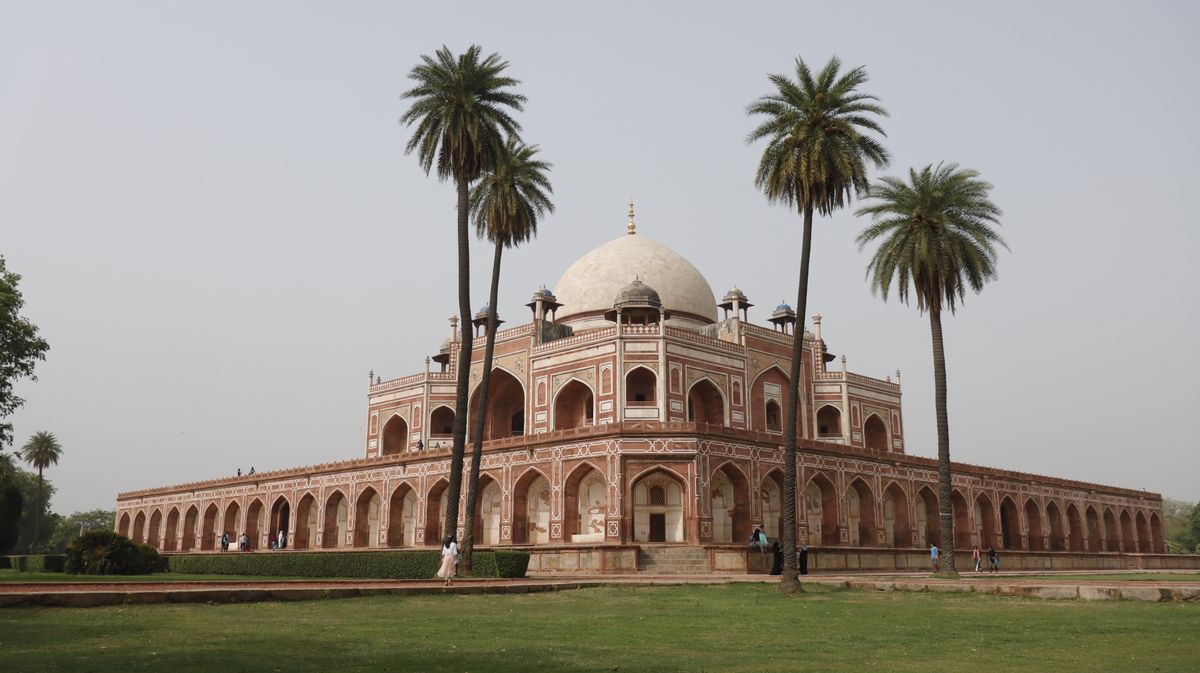
Run two shifts. From 5.45 to 10 a.m., do everything outdoors: Humayun's Tomb and Lodhi Garden open around sunrise, Qutub Minar from 7 a.m., and the Mehrauli Archaeological Park and Sunder Nursery are empty and cool enough at six that you will want a light layer. This is also when Old Delhi's lanes are workable — the Jama Masjid steps at 6.30 a.m., before the tin-roofed bazaars turn into ovens. Photographs from this window are the best you will take in Delhi all year, because the dust in the air makes the light extraordinary.
From 11 a.m. to 5 p.m., go indoors and stay there. Museums, malls, a long lunch, the hotel pool, a nap. Then shift two runs from 6 p.m. to 11 p.m.: the Kartavya Path lawns and India Gate after dark when families arrive with ice cream, the Hauz Khas and Greater Kailash restaurant strips, Nizamuddin Dargah for qawwali on Thursday evenings after sunset prayers, and Old Delhi's Matia Mahal food lane, which peaks at 10 p.m. Delhi in summer is a nocturnal city and refusing to adapt is the only way to have a bad time.
Heat safety without being dramatic
Drink four litres a day minimum and add salt. Oral rehydration sachets cost ₹20 at any chemist and one a day prevents the flattened, headachy afternoon that most visitors write off as jet lag. Nimbu pani, sugarcane juice from a roadside press, chaas and the sherbet stalls that appear on every market street are all cheap and all doing the same job. Wear loose cotton and a hat, not technical synthetics. Carry an umbrella for shade the way locals do — it works better than a cap and folds away.
Know the warning signs: stopping sweating, confusion, a pounding headache and clammy skin mean heat exhaustion and require air conditioning, fluid and, if it does not resolve fast, a hospital. South Delhi and Gurugram have excellent private hospitals. The other practical point is timing your worst physical decisions out of the day: do not walk the Chandni Chowk lanes at 2 p.m., do not queue for Red Fort tickets at noon, and do not take an open autorickshaw across the city at three in the afternoon.
Pools, day passes and where to actually cool off
If your hotel has no pool, buy a day pass at one that does. Five-stars in Aerocity, Vasant Kunj and the Gurugram corridor sell them at ₹1,500 to ₹3,500, usually with part of it redeemable against food, and four-stars in Saket and Nehru Place at ₹800 to ₹1,500. Booked for a family of four, that is a whole afternoon solved for less than a set of monument tickets. Check whether the pool is rooftop and unshaded, which is unusable between noon and four, or courtyard-level with tree cover, which is the one you want.
Water parks are the other move if you have children: Worlds of Wonder in Noida is the largest in the region with tickets in the ₹1,000 to ₹1,700 range depending on the day, and Splash in north Delhi and Fun N Food Village near Kapashera are cheaper and smaller. Otherwise the reliable cool interiors are Select Citywalk in Saket, DLF Promenade and Emporio in Vasant Kunj, the National Museum on Janpath and the Metro itself, which is aggressively air-conditioned and doubles as free respite between stops.
Delhi in school-holiday season: emptier city, full transport
Delhi's schools break from roughly 11 May to 30 June, and the city's own residents leave. That is why hotels are cheap and monuments are quiet — domestic tourism goes to the hills, not to the plains. The paradox is that the transport infrastructure gets busier, not quieter, because Delhi is the springboard. Trains to Kalka, Shimla, Dehradun, Haridwar and Katra sell out the day booking opens, sixty days ahead, and the Kashmere Gate ISBT buses to Manali and Dharamshala run packed overnight departures all through June.
Two practical consequences. If any part of your trip involves onward rail travel north, book it the moment the sixty-day window opens or accept Tatkal queues and heavy premiums. And if you want a genuine escape, budget eight to ten hours by road to Shimla or Nainital, not the four that the map suggests — the Chandigarh stretch is fast but everything above it is not. A weekend at Neemrana, two and a half hours down NH-48 in Rajasthan, is the low-effort version, though it is no cooler than Delhi.
Who should come in May or June, and who should not
Come if you are budget-driven, if you are transiting to Ladakh, Kashmir or Himachal and want a cheap Delhi bookend, if you shoot photographs and want empty monuments, or if you are here to eat mangoes — the Safeda arrives in late May, the Dussehri in mid-June, and the difference between a Delhi mango in season and anything you have had elsewhere is not subtle. Come if you can genuinely get up at 5.30 a.m. and are honest with yourself about that.
Do not come if you are travelling with a toddler or anyone over seventy, if you have a heart or respiratory condition, or if your trip is a single tightly packed sightseeing week with no slack. Between May and June specifically, take May: the heat is dry and the evenings, though hot, are bearable, whereas the last fortnight of June adds humidity without yet delivering the rain that fixes it. And if the dates are movable at all, February to mid-March is the same city at its best for roughly ₹1,500 a night more.
Questions, answered
Is June better than May in Delhi?
Only marginally, and not in the way people expect. Early June is as hot as May at 42 to 44°C. Late June brings pre-monsoon humidity that drops the peak to 38 to 40°C but makes it far stickier. If you want dry heat you can plan around, take the first three weeks of May; if you want the first rain, gamble on the last week of June.
Are there power cuts in the summer?
Delhi's grid holds up far better than its reputation suggests, but load on 45°C afternoons is enormous and neighbourhood outages of thirty to ninety minutes do happen. Every hotel above the ₹2,500 band runs a diesel generator that covers lights, lifts and air conditioning. Cheaper guesthouses may cover fans and lights only, so ask.
Can I still visit Agra and Jaipur in this heat?
Yes, but restructure them. Take the early Vande Bharat or Gatimaan to Agra, be at the Taj Mahal by 8 a.m., be indoors by eleven, and return in the evening. Jaipur is hotter still at 44 to 46°C; make it an overnight rather than a day trip so you have a hotel room for the middle of the day.
Do monument opening hours change in summer?
The ASI sites open sunrise to sunset, so summer actually gives you longer hours than winter — Humayun's Tomb and Qutub Minar are usable until about 7 p.m. in June. Red Fort keeps to roughly 9.30 a.m. to 4.30 p.m. and stays closed on Mondays. Museums keep standard 10 a.m. to 6 p.m. hours year-round.
Doing good is the business: every booking through Stay New Delhi funds one verified tonne of carbon removal — same room, same price, no markup.
Start Your Search