New Delhi on ₹4,000 a day: a real budget breakdown
₹4,000 a day covers a private room, three good meals, metro travel and one paid monument in Delhi — here is the line-by-line, including the ₹600 foreigner ticket that breaks the maths.
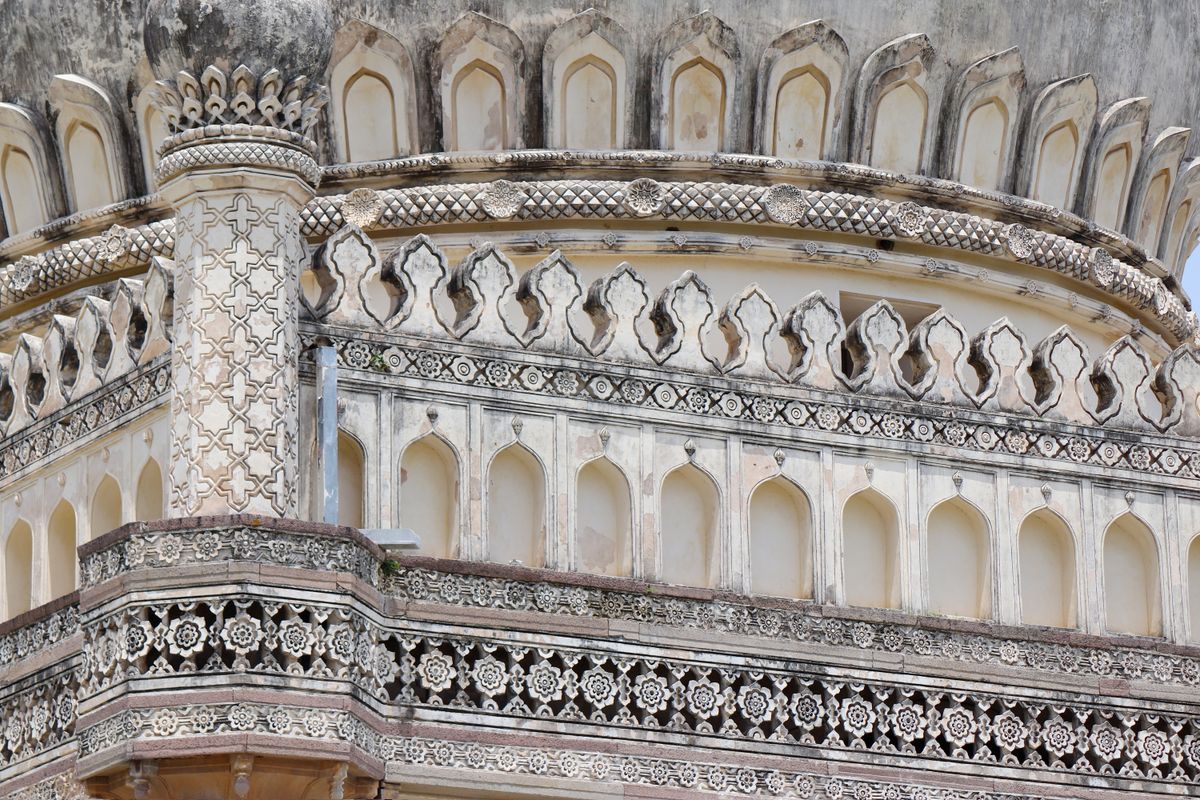
What ₹4,000 buys, and where it runs out
This budget assumes one person, a private room rather than a dorm, and a trip in the good season of October to March. The rough split: ₹1,600 accommodation, ₹700 food, ₹250 local transport, ₹600 sightseeing, ₹850 buffer for water, laundry, SIM data and the inevitable extra auto. It is comfortable rather than tight, and it collapses in exactly one place — the foreign-national ticket price at World Heritage monuments.
Humayun's Tomb, Qutub Minar and the Red Fort each cost around ₹600 for foreign visitors and ₹40 for Indian nationals. Do all three in one day and your sightseeing line is ₹1,800. The fix is not to skip them but to spread them across the trip, one per day, and fill the rest with the free sites Delhi has in abundance — Lodi Gardens, Mehrauli Archaeological Park, Agrasen ki Baoli, the Hauz Khas ruins, Bangla Sahib, the Lotus Temple, Akshardham.
Accommodation: ₹1,000 to ₹2,000 done properly
Paharganj is the classic answer: private rooms with attached bathroom and hot water at ₹800 to ₹1,800, hostel dorms at ₹500 to ₹900, five minutes from New Delhi Railway Station and the Airport Express. Rooms are small and the lane outside is chaos, but the location is unarguable and long-stay negotiation is easy. Ask for a top-floor, rear-facing room, and check the geyser and the fan before paying.
Two better-value alternatives at ₹1,800 to ₹2,800. Karol Bagh, one Blue Line stop further out, buys a distinctly better room in the same money band with superb food on the doorstep. And hostels in Hauz Khas or Saket at ₹700 to ₹1,200 a dorm bed put you in South Delhi with a kitchen and a common room. What I would avoid: the sub-₹700 rooms in the deepest Paharganj lanes, which are usually windowless and where you save ₹300 to lose a night's sleep.
Food: eating extremely well on ₹700
Breakfast: chole kulche or chole bhature from a cart, ₹50 to ₹90, or a South Indian canteen dosa for ₹90 to ₹150. Lunch: a thali at a market canteen in SDA, Lajpat Nagar or Karol Bagh, ₹150 to ₹280 for unlimited dal, sabzi, roti, rice and curd — the best-value meal in India. Dinner: rolls, momos or a plate of biryani for ₹120 to ₹300, or the Indian Coffee House in Connaught Place for a full plate under ₹250.
That comes to ₹450 or so and leaves room for the important extras: a lassi for ₹60, kulfi for ₹100, and filter coffee for ₹40. Sit-down restaurant meals in Khan Market or Hauz Khas Village will run ₹700 to ₹1,200 a head with a drink, which is one meal every three days on this budget. The langar at Bangla Sahib, incidentally, is free to everyone and is genuinely good food; go respectfully, not as a budget hack.
Transport: ₹250 a day is generous
The metro is the whole answer. Single fares run ₹10 to ₹60, and a tourist card costs about ₹200 for one day or ₹500 for three days of unlimited travel plus a refundable ₹50 deposit — worth it only if you plan four-plus rides a day. The DMRC app issues QR tickets so you can skip the token queue at Rajiv Chowk, which alone saves 10 minutes at peak. Trains run roughly 6am to 11pm, with a later 8am start on Sundays.
Autos should be metered at roughly ₹30 for the first 1.5 km and ₹11 per kilometre after, but the meter is often ignored — either insist, or use an app which fixes the fare and removes the argument entirely. A typical 4 km hop costs ₹70 to ₹120. The Airport Express from New Delhi station to Terminal 3 is ₹60 and 20 minutes, which is the single best-value transport in the city and makes any taxi to the airport an unnecessary ₹500.
The free-and-cheap sightseeing list
Free, and genuinely worth your morning: Lodi Gardens with four fifteenth-century tombs; Mehrauli Archaeological Park with Jamali Kamali and Rajon ki Baoli; Agrasen ki Baoli off Hailey Road; the Hauz Khas reservoir and madrasa; Gurudwara Bangla Sahib; the Lotus Temple; Akshardham; the Sunday book market at Daryaganj; and the entire walk down Chandni Chowk, which is the best free experience in Delhi.
Cheap: the National Museum on Janpath, around ₹650 for foreigners and ₹20 for Indians, and worth every rupee for the Harappan and Buddhist galleries; the National Rail Museum in Chanakyapuri at a nominal fee; Dilli Haat at INA for about ₹30 entry. Safdarjung's Tomb at around ₹300 for foreign visitors is the cheapest way to see a Mughal garden tomb if the ₹600 tickets are hurting. Spread the expensive three across three days and the budget holds.
The ₹600 tickets: what they include, and who gets in free
The one genuinely expensive line in a Delhi trip is the foreign-national ticket at the three World Heritage monuments, so know what each ₹600 actually buys. At Humayun's Tomb it covers the whole complex — Isa Khan's octagonal tomb, Bu Halima's garden and the wider Arab Serai — which is a full half-day, not one building. The Qutub Minar ticket takes in the Iron Pillar, the Alai Darwaza and the Quwwat-ul-Islam mosque in the same enclosure. At the Red Fort the ticket includes the archaeological museums inside; only the evening light-and-sound show is separate, at roughly ₹60 to ₹80. Book each on the ASI e-ticket portal to skip the cash counter, where the queue at the Red Fort can run 20 minutes on a Sunday.
Two facts halve the bill for the right travellers. Children under 15 enter every ASI-ticketed monument free, so a family pays only for the adults — a couple with two kids saves ₹1,200 across the three sites. And still cameras are free everywhere; only a video camera costs a token ₹25, so leave the tripod and shoot on your phone. The National Museum's ₹650 foreigner ticket includes a free audio guide, which turns a ₹650 line into a two-hour tour. What to skip: the ₹500-plus "guide" who attaches himself at the Qutub gate. The QR code on the ASI signboards and a downloaded map do the same job for nothing.
Where budget travellers waste money here
The biggest leak is taxis. A ₹500 airport cab instead of a ₹60 metro, three times over a trip, is ₹1,320 gone — a full day's budget. Second is bottled water: buy 2-litre bottles for ₹35 from a shop rather than 500ml at ₹20 from a monument gate, or carry a filter bottle. Third is the travel-agent tour. The Janpath and Paharganj agencies selling a five-day Golden Triangle package at ₹25,000 to ₹45,000 are selling you a train ticket you could buy for ₹800.
Fourth: paying tourist prices in Janpath Market without negotiating, when the fixed-price state emporia on Baba Kharak Singh Marg sell better goods honestly. Fifth: hotel laundry at ₹150 a shirt when a market dhobi charges ₹40. None of these is dramatic on its own; together they are the difference between ₹4,000 and ₹6,000 a day, which over a week is a return train to Varanasi.
A sample day at ₹3,900
Room in Karol Bagh, ₹2,000. Chole kulche at 9am, ₹70. Metro to Jor Bagh, ₹30. Lodi Gardens free, then walk to Safdarjung's Tomb, ₹300. Thali lunch near Yusuf Sarai, ₹220. Metro to Chandni Chowk, ₹40. Afternoon walking Old Delhi, dahi bhalle and jalebi, ₹180. Kulfi at Sitaram Bazaar, ₹120. Metro back, ₹30. Dinner of rolls in Karol Bagh, ₹200. Water and data top-up, ₹150. Total ₹3,340, with ₹660 spare.
Swap Safdarjung for Humayun's Tomb and the day is ₹3,640 — still inside budget, because everything else in a Delhi day is cheap. The lesson is that Delhi is not an expensive city; it is a city with a handful of expensive tickets and unlimited free walking. Structure the week as one paid monument a day plus one free area, eat at market canteens, and ₹4,000 leaves you with money for a train ticket out.
A whole week, not a day: what seven days really costs
The daily figure flatters the expensive days and punishes the cheap ones, so price the real unit — a week. Seven nights in a decent Karol Bagh or Paharganj room at about ₹1,200 is ₹8,400; food at ₹700 a day is ₹4,900; metro and autos at ₹250 a day is ₹1,750. Sightseeing is where the week wins, because the ₹600 monuments are one-offs, not a daily tax: the three World Heritage tickets (₹1,800), the National Museum (₹650), Safdarjung's Tomb (₹300) and a Dilli Haat evening (₹30) come to ₹2,780 for the whole trip.
Add the one-time costs a daily figure hides — a ₹400 tourist SIM, roughly ₹300 for a week of market-dhobi laundry, and a ₹500 buffer for water and top-ups — and seven days lands near ₹19,000, about US$230 at ₹83 to the dollar. That is ₹2,720 a day averaged out, well under the ₹4,000 headline, because you buy the pricey tickets once and walk free sites the rest of the week. A day trip to Agra or Jaipur is extra: the Vande Bharat or Gatimaan chair car to Agra runs roughly ₹800 to ₹1,500 return, and the Taj foreigner ticket is a separate ₹1,100, so ring-fence a day-trip line rather than smearing it across the daily budget.
Questions, answered
Can I do Delhi on less than ₹4,000 a day?
Yes. A hostel dorm at ₹700, street food at ₹400, metro at ₹150 and free sights only brings a day to about ₹1,300. The constraint is the foreign-national monument tickets at ₹600 each — budget those separately rather than trying to squeeze them into a daily figure.
Do I need cash or will cards work?
Carry ₹2,000 to ₹3,000 in small notes daily. UPI dominates and even street carts accept it, but that generally requires an Indian bank account. Cards work in hotels, restaurants and supermarkets. ATMs are everywhere; withdraw ₹10,000 at a time to reduce per-transaction fees.
How much is a local SIM and is it worth it?
About ₹300 to ₹600 for a tourist prepaid SIM with 1.5 to 2 GB a day for 28 days, bought at the airport or an authorised store with your passport and visa copy. Yes, it is worth it — app cabs, maps and metro QR tickets all depend on data.
How far ahead should I book a budget room in Delhi?
It depends entirely on season. From April to September, when demand is thin, book two or three days ahead or simply walk into Paharganj and negotiate. From November to February, wedding season and peak tourism collide, rooms genuinely sell out and rates climb 30 to 40 percent, so lock a budget room three to four weeks ahead.
What is the cheapest way from the airport if I land after 11pm?
The ₹60 Airport Express metro runs only from about 4:45am to 11:30pm, so a late-night arrival cannot use it. Take a prepaid taxi from the counter inside Terminal 3 (₹500 to ₹700 to central Delhi) or book an app cab (₹400 to ₹550), and ignore anyone at arrivals claiming your hotel is closed or moved.
Doing good is the business: every booking through Stay New Delhi funds one verified tonne of carbon removal — same room, same price, no markup.
Start Your Search