The seven cities of Delhi: a two-day ruins route, stop by stop
Delhi was founded and refounded seven times between about 1180 and 1648, and every one of those cities still stands in fragments — this two-day route reaches all seven in a sensible driving and metro order.
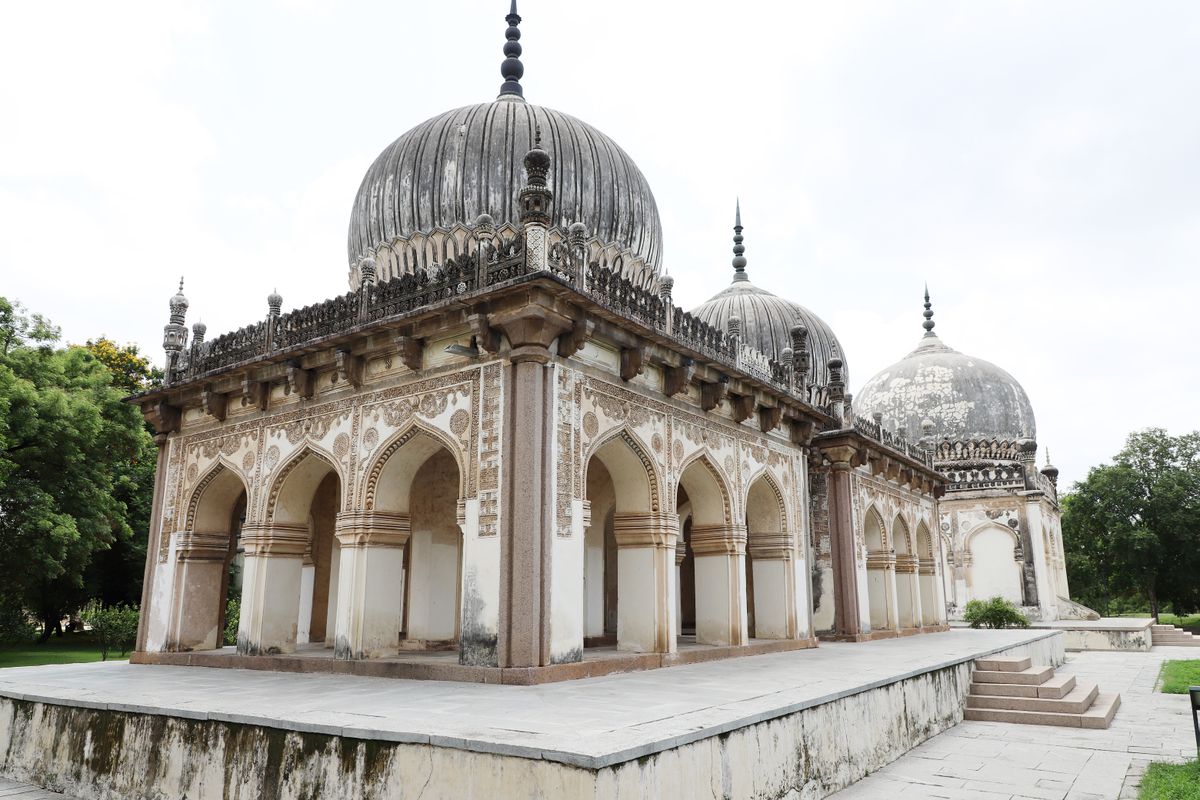
The seven cities, and why the order matters
The list, in order: Qila Rai Pithora or Lal Kot, the Tomar and Chauhan citadel around Mehrauli, roughly 1180; Siri, built by Alauddin Khalji in 1303 and now surviving as broken rubble walls behind Shahpur Jat; Tughlaqabad, Ghiyasuddin Tughlaq's fortress of 1321 on a rock spur in the south-east; Jahanpanah, Muhammad bin Tughlaq's walled infill of about 1327 between the first two; Firozabad, Firoz Shah Tughlaq's riverside city of 1354, now Feroz Shah Kotla; Dinpanah and Sher Shah's Shergarh at Purana Qila, 1533 to 1545; and Shahjahanabad, laid out from 1639 around the Red Fort.
The geography does the planning for you. The first four sit in a nine-kilometre arc across south Delhi, none of them well served by metro; you want a car and a driver for that day. The last three run north up the spine of the city towards the Yamuna and are all within a short walk of a metro station. So day one is south and motorised, day two is central and mostly on foot and rails. You break chronology exactly once, visiting Tughlaqabad after Jahanpanah rather than before, because backtracking across the Mehrauli-Badarpur Road in afternoon traffic costs an hour you do not have.
Day one, 6.30am to 12.30pm: Lal Kot, Mehrauli and the Qutub
Start at Mehrauli Archaeological Park at 6.30am, entering from the Anuvrat Marg side. It is free, unfenced, largely unlabelled and empty at that hour except for dog walkers. Give it ninety minutes: Rajon ki Baoli, a four-tier stepwell from about 1506 with parakeets nesting in the arches; Jamali Kamali's mosque and the tiny painted tomb chamber beside it, which a caretaker will unlock if he is around; Balban's tomb of 1287, a roofless brick shell that contains India's first true arch; and Quli Khan's tomb, which Thomas Metcalfe converted into a Regency weekend house in the 1840s.
At 8.30am walk twelve minutes to the Qutub Minar complex, which opens at seven and is bearable before the coach parties land around ten. Tickets run about ₹40 for Indian nationals and ₹600 on a foreign passport, bought by QR at the gate. Look for the Alai Darwaza of 1311, a Siri-period gateway standing inside the Lal Kot city you are technically still in, and Alauddin's abandoned Alai Minar stump. From 10.30, cross Mehrauli village for Adham Khan's tomb, the Jahaz Mahal beside Hauz-i-Shamsi, and Zafar Mahal, the last Mughal palace, crumbling behind a butcher's lane.
Day one, 12.30pm to 6.30pm: Siri, Jahanpanah and Tughlaqabad
Lunch at 12.30 in Champa Gali off Westend Marg in Saidulajab, five minutes from Saket metro: a courtyard of small cafés where a proper meal runs ₹500 to ₹900 a head. At 2pm take the Hauz Khas complex, free and open till sunset, where Firoz Shah's madrasa and tomb sit on the edge of Alauddin's Hauz-i-Alai reservoir — the water tank of Siri. Walk fifteen minutes east to Shahpur Jat and the rubble bastions of the Siri walls along Siri Fort Road, best seen from the lane behind the boutiques. Siri is the thinnest of the seven; twenty minutes is enough.
By 3.30pm you should be at Begumpuri Masjid in Sarvapriya Vihar, a vast, silent, courtyard mosque from the Jahanpanah city with children playing cricket in the sahn, and Bijay Mandal five minutes away, the platform where Muhammad bin Tughlaq is said to have held audience. Then drive twenty-five minutes to Tughlaqabad Fort, tickets around ₹25 and ₹300, last entry near 5pm. Give it ninety minutes of rough, rocky walking in closed shoes; the bastions and the causeway to Ghiyasuddin's tomb across the road are the most convincing ruins in Delhi. Watch for monkeys and do not go up alone after dusk.
Day two, 7.30am to noon: Firozabad and Dinpanah
Open at Purana Qila at 7.30am, tickets around ₹25 and ₹300, five minutes from Pragati Maidan metro on the Blue Line. This is Humayun's Dinpanah, finished by Sher Shah as Shergarh: the Bara Darwaza, the patterned Qila-i-Kuhna Masjid of 1541, and the octagonal Sher Mandal, from whose steps Humayun fell to his death in 1556. Boats run on the moat lake from about nine for a small fee. Ninety minutes covers it, and the mounds behind the mosque are where excavation has pulled up painted grey ware pottery going back three thousand years.
At 9.30am cross to Feroz Shah Kotla on Bahadur Shah Zafar Marg, the citadel of Firozabad, same ticket band. The set piece is the polished Ashokan pillar from the third century BC, which Firoz Shah had floated down from Topra in the 1350s and mounted on a stepped pyramid. Go on a Thursday and you will find hundreds of handwritten letters wedged into niches by people petitioning the jinns said to live in the cellars. Add fifteen minutes for Khuni Darwaza, a Sher Shah-era gate marooned on a traffic island four minutes north, then head for Old Delhi.
Day two, noon to 9pm: Shahjahanabad
Eat first, at noon, in Gali Kababian behind Jama Masjid — mutton burra and sheermal at Karim's or Al Jawahar, ₹400 to ₹700 a head. At 1.30pm take the Red Fort, closed Mondays, about ₹40 and ₹600, entering by Lahori Gate through the covered Chhatta Chowk bazaar. The walk to Diwan-i-Am, Rang Mahal and the marble Diwan-i-Khas is close to a kilometre on flat stone; two hours is right. Skip the paid light show unless you are staying near Kashmere Gate, and skip the museums inside if the afternoon is hot, since they are poorly cooled.
At 3.30pm climb the south minaret of Jama Masjid for around ₹100, with a camera charge of roughly ₹300 at the gate and no entry during prayer times. From 4.30pm walk Chandni Chowk itself, which has been closed to motor traffic between 9am and 9pm, so it is cycle rickshaws and pedestrians only: Dariba Kalan for silver, Kinari Bazaar for wedding trim, and Khari Baoli, Asia's largest wholesale spice market, where a small tip gets you onto the Gadodia Market roof for the sunset. Finish with jalebi at Dariba corner and kulfi at Kuremal in Sitaram Bazar.
Cars, metro and what the tickets cost
Day one needs a car. Begumpuri, Bijay Mandal and Tughlaqabad have no useful metro station and app cabs will not wait at ruins. A sedan with driver on the standard eight-hour, eighty-kilometre basis runs ₹2,800 to ₹3,500 in 2026, an SUV ₹4,000 to ₹5,000; agree the Tughlaqabad extension in advance because it pushes you past eighty kilometres. Day two costs almost nothing: Blue Line to Pragati Maidan, a ₹150 auto hop to Kotla, Yellow Line from Delhi Gate area up to Chandni Chowk. A one-day tourist metro card is ₹200, three days ₹500, plus a ₹50 refundable deposit.
Total entry fees for the route come to roughly ₹150 on an Indian passport and about ₹1,800 on a foreign one, because Qutub, Purana Qila, Tughlaqabad, Feroz Shah Kotla and the Red Fort are all ticketed while Mehrauli park, Hauz Khas, the Siri walls and Begumpuri are free. Buy ASI tickets on your phone at the gate rather than queuing. One warning: several sites close on Mondays or run reduced hours around Republic Day and Independence Day, when the Red Fort shuts for rehearsals for the better part of a fortnight in January.
Where to sleep after each day
After day one, sleep in south Delhi so you are not driving back into the centre at 8pm. Green Park, Hauz Khas Enclave and Safdarjung Enclave are full of converted-house guesthouses and small boutique properties at ₹3,000 to ₹6,000 a night, quiet residential streets, tree cover, and a ten-minute walk to a Yellow or Magenta Line station. Saket suits anyone who wants a lift, a gym and a mall dinner instead: the business hotels around the Press Enclave Road malls sit at ₹6,000 to ₹11,000. Avoid booking beside Hauz Khas Village itself unless you want music until one in the morning.
After day two, stay walkable to Shahjahanabad. The restored havelis inside the walled city — Haveli Dharampura on Gali Guliyan is the famous one, from around ₹12,000 — put you inside the lanes at dawn, when Chandni Chowk is at its best. Connaught Place mid-range hotels at ₹5,000 to ₹9,000 are the practical compromise, twelve minutes by metro from Chandni Chowk station. Paharganj rooms at ₹1,200 to ₹2,500 are cheap and close but noisy and mostly lift-free. If I were booking one night only, I would spend it in the old city and eat breakfast at Fatehpuri.
Questions, answered
Can this route be done without hiring a car?
Day two, yes, entirely by metro and short autos. Day one, no. Tughlaqabad's nearest station is a hot twenty-minute walk from the gate, Begumpuri and Bijay Mandal sit inside residential colonies, and stringing them together by app cab wastes about two hours in pickup waits.
Which of the seven cities is least worth the time?
Siri. Alauddin Khalji's walls survive only as low rubble stretches near Shahpur Jat and Siri Fort Road, with nothing ticketed or interpreted. Twenty minutes as part of the Hauz Khas stop is enough. If you are short of daylight, drop it and give the time to Tughlaqabad instead.
What day of the week works best?
Start on a Wednesday. That puts the Red Fort, which closes on Mondays, on a Thursday, and it lands Feroz Shah Kotla on the Thursday when petitioners leave letters for the jinns in the cellars — the strangest twenty minutes on the route. Avoid Fridays for Jama Masjid, closed to visitors around midday prayers.
Is Mehrauli Archaeological Park safe at 6.30am?
It is fine in the main corridor between Rajon ki Baoli, Jamali Kamali and Balban's tomb, where joggers and dog walkers are about from first light. The far scrub towards Sanjay Van is deserted and better left for later in the morning, and solo women travellers may prefer an 8am start.
Doing good is the business: every booking through Stay New Delhi funds one verified tonne of carbon removal — same room, same price, no markup.
Start Your Search