Where to stay in Greater Kailash: GK-1, GK-2 and the B&B belt
South Delhi's best eating district has almost no hotels, so the beds are family-run guesthouses and serviced flats at ₹3,000-6,500 a night, with the Violet Line running direct to Jama Masjid in half an hour.
The setup: a residential colony with a restaurant problem in your favour
Greater Kailash is two adjoining colonies, GK-1 and GK-2, laid out in the 1960s and now among the most expensive residential land in Delhi. There is no hotel district. What there is instead is a large stock of registered homestays and bed-and-breakfast floors inside family houses, plus serviced apartments built for corporate transferees, spread across GK-1's E, M, N, S and W blocks and GK-2's residential streets. That means arrival is different: you get a house with a gate, a caretaker, three or four rooms, and no lobby, no bar and no room service after 10 pm.
What you get in exchange is the neighbourhood. GK-1 M Block Market is one of Delhi's best-known eating and drinking squares, with a couple of dozen restaurants around a central parking court. N Block Market next door handles boutiques and tailoring. GK-2 M Block Market, a kilometre south, is quieter and better for groceries and everyday food. Chittaranjan Park, the Bengali colony 1.5 km east, has the fish market and the sweet shops. Nowhere else in Delhi puts this much good eating inside a 2 km walk of a bed.
Who should book here
Repeat visitors to Delhi who already did the monuments and want to live somewhere for a week. People who came to eat. Long-stay travellers and remote workers, because the serviced flats run ₹60,000-1,10,000 a month for a one-bedroom with a kitchen, a lift and a guard, and the area's cafés have reliable power and fast connections. Couples in their thirties and forties who want quiet residential streets at night and a walk to dinner. And anyone visiting family or attending a wedding in south Delhi, which is a very large share of the guest list here.
It also suits travellers who want to see Old Delhi without living in it. Kailash Colony station on the Violet Line, at the north edge of GK-1, runs direct with no changes to Jama Masjid and Lal Quila in about 30-35 minutes for ₹40, passing Khan Market, Central Secretariat and Mandi House on the way. That single line covers a surprising proportion of a first-timer's list, which makes GK a more practical base than its lack of hotels suggests.
Who should not
First-time visitors on a three-night trip. You will spend 30-45 minutes each way reaching Red Fort, Jama Masjid and Connaught Place, and there are no monuments in walking distance to fill the gaps. Book Connaught Place instead. Anyone who needs the reassurance of a front desk at 2 am, because most GK properties have a caretaker who sleeps on site rather than a manned reception. Anyone under about ₹2,500 a night, because the cheap end here is thin and you do far better in Lajpat Nagar, 3 km north, for the same money.
Backpackers looking for other travellers will find none: the guest population is business visitors, wedding guests and families. Travellers without a phone-based cab app will struggle, since autos are less abundant on the inner streets than in the bazaar districts. And anyone with an early flight should note that Terminal 3 is 17-19 km and 40-55 minutes away through the Ring Road and NH48, which is 15 minutes worse than Saket.
Prices and what the bands buy
₹2,500-3,500: a room in a homestay on an upper floor of a family house, usually with a private bathroom, breakfast, a shared terrace and stairs rather than a lift. Fine for a few nights, and the hosts are the area's real asset. ₹4,000-6,000: a boutique guesthouse floor or a serviced studio with a kitchenette, daily cleaning, a lift and parking. ₹6,500-9,000: two-bedroom serviced apartments, which for a family or two couples is the best deal in south Delhi. Above that, you are into the nearby business hotels in Nehru Place and New Friends Colony rather than GK proper.
Compare that with the city: GK sits ₹500-1,500 under Connaught Place for a better-equipped room, level with Hauz Khas, and roughly ₹2,000 under the branded hotels at Saket. It is not backpacker territory and never has been. Rates drop about 20 per cent from May to August. They rise sharply in wedding season, roughly late November to early December and again in late January and February, when whole guesthouse floors get block-booked and short lead times are punished.
What you can walk to
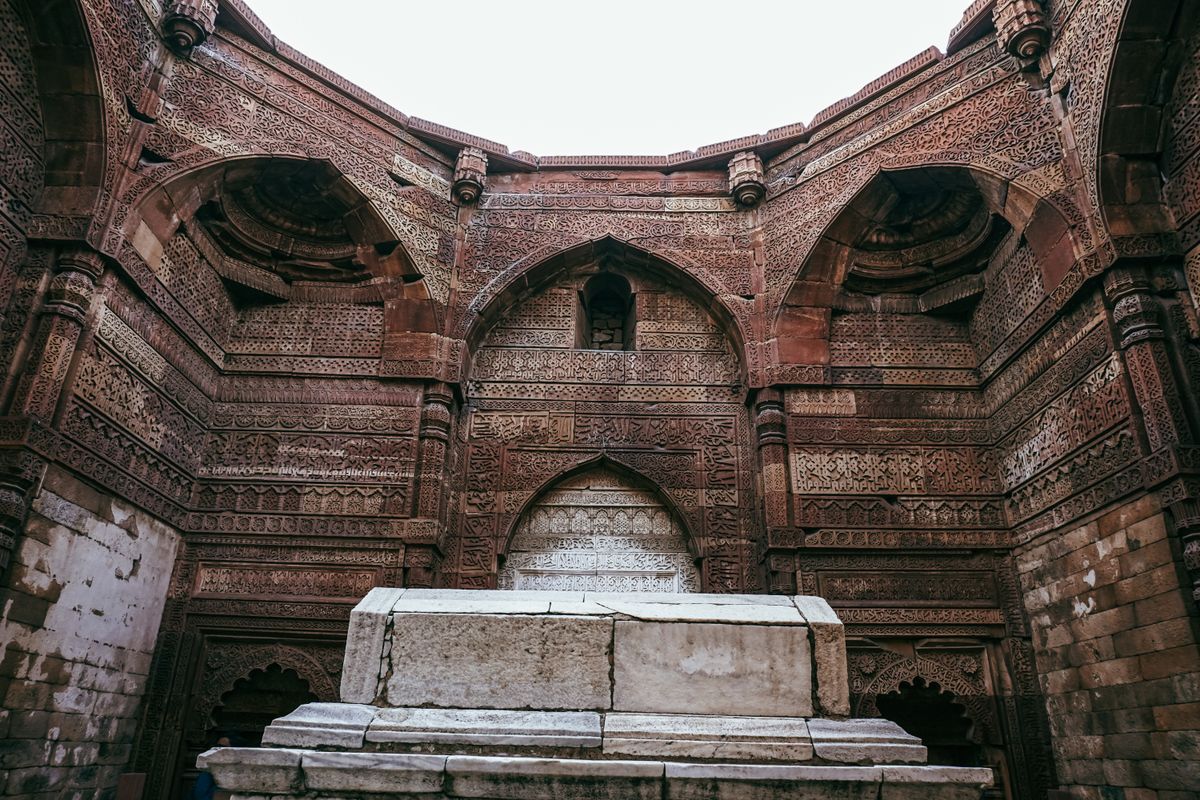
From a bed in GK-1's E or M blocks: M Block Market is 5-12 minutes, and it holds everything from long-running North Indian restaurants to sushi, bakeries, ice cream and a couple of bars that run to 12.30 am. N Block Market is 400 m further for tailoring and boutiques. Masjid Moth, a 15th-century Lodi-era mosque, sits inside the residential grid at the western edge of GK-2 and is genuinely worth twenty minutes; almost no visitor finds it. Savitri cinema and the Chirag Delhi flyover mark the southern boundary.
Twenty to thirty minutes on foot, or a ₹50-80 auto: Chittaranjan Park's markets, where the fish stalls and Bengali sweet shops are best in the morning and the Durga Puja pandals in late September or October draw the whole city. Nehru Place, Delhi's computer market and a large office cluster, is 2 km south-west. Lajpat Nagar's Central Market for clothes and mehendi is 3 km north. Kailash Colony metro is a 10-15 minute walk from most GK-1 addresses, and Greater Kailash station on the Magenta Line serves the western side.
Practicalities of staying in a residential colony
Learn the block system before you arrive. Addresses read like E-56 GK-1 or M-14 GK-2, and drivers navigate by block letter, not street name, so give the block and the market it sits near. GK-1 and GK-2 are separate colonies with their own M blocks, and mixing them up is the single most common arrival error; confirm which one your booking is in. Parking is permit-based and tight, so do not hire a car unless the property confirms a space.
Second, food logistics. Most guesthouses do breakfast and nothing else, but delivery apps cover the whole area in 25 minutes and the markets stay open until 10-11 pm. Third, power: GK has fewer outages than central Delhi, but check for an inverter or generator if you are here in June. Fourth, water: many houses run on tankers in May and June, so ask about supply hours during a long summer stay. Fifth, guards will ask who you are visiting; carry the booking on your phone.
GK-1 or GK-2, and the verdict
GK-1 is the one to book. It is livelier, better connected to the Violet Line at Kailash Colony, and puts M Block Market's restaurants within a walk. Target E, S or W blocks if you want quiet with a five-minute walk to dinner; avoid rooms fronting the main road at the M Block junction, where traffic runs late. GK-2 is calmer, greener and about ₹500 a night cheaper, but the walk to a good dinner is longer and the metro is further, so take it for a long stay rather than a short one.
The one-line recommendation: book a serviced one-bedroom in GK-1 at ₹4,500-6,000 for stays of five nights or more, and a family homestay at ₹3,000-3,800 for shorter ones, then use the Violet Line for the old city and cabs for everything south. If you want Greater Kailash's food but a real hotel with a pool and a 24-hour desk, the practical compromise is Nehru Place or Saket, 3-6 km away, at ₹8,000-14,000 — you lose the walk to M Block and gain a lobby.
Questions, answered
Are there proper hotels in Greater Kailash?
Very few. The area is zoned residential, so the beds are registered homestays, bed-and-breakfast floors in family houses and serviced apartments at ₹3,000-6,500 a night. For a full-service hotel with a pool and 24-hour reception, look at Nehru Place 2 km south-west or Saket 6 km west.
How do I get from Greater Kailash to Old Delhi?
Walk to Kailash Colony station and take the Violet Line north with no changes to Jama Masjid or Lal Quila, roughly 30-35 minutes for about ₹40. The same line also stops at Khan Market, Central Secretariat and Mandi House, which covers a good part of a first-timer's list.
What is the difference between GK-1 and GK-2?
GK-1 is north, livelier and holds M Block Market's restaurant square plus N Block's boutiques, with Kailash Colony metro on its edge. GK-2 is south, quieter and around ₹500 a night cheaper, but further from both the metro and the good eating. Both have an M Block, which regularly confuses drivers.
Is Greater Kailash a good base for a first Delhi trip?
Only if you have five nights or more. There are no monuments within walking distance and Red Fort is 45 minutes away, so a three-night visitor loses too much time in transit. For a first short trip, Connaught Place is the better base; save Greater Kailash for a return visit.
Doing good is the business: every booking through Stay New Delhi funds one verified tonne of carbon removal — same room, same price, no markup.
Start Your Search