Where to base yourself for two nights
For a 48-hour trip the hotel decision matters more than the itinerary, because the wrong postcode costs you 90 minutes a day in traffic. Connaught Place is the sharpest choice: Rajiv Chowk is the interchange of the Yellow and Blue metro lines, the Airport Express terminates at New Delhi station ten minutes away, and Old Delhi is four metro stops north. Expect around ₹3,500 to ₹6,000 a night for a solid mid-range double at somewhere like Hotel Palace Heights on Radial Road 3, and ₹9,000 upward at The Park on Sansad Marg. Rooms facing the inner circle are noisy; ask for the courtyard side.
The alternatives each trade something. Aerocity, eight minutes from Terminal 3, is spotless and dull, and runs ₹7,000 to ₹14,000 a night at the Holiday Inn or Pride Plaza — good for a late arrival, bad for atmosphere. Paharganj, just west of New Delhi railway station, is where ₹800 dorms and ₹2,000 doubles live, but the lanes are chaotic and rooms vary wildly floor to floor. South Delhi bases like Hauz Khas or Defence Colony are calmer and greener, with guesthouses around ₹4,000 to ₹7,000, but you are 40 minutes from Chandni Chowk in the morning crush. For two nights, stay central.
Day one, morning: Old Delhi from the Red Fort down
Start at Lal Qila metro station on the Violet Line by 09:30. The Red Fort opens at sunrise and closes Mondays; foreign visitors pay ₹600, Indian nationals ₹35, and the ticket includes the Diwan-i-Aam, the marble Diwan-i-Khas and the small museums in the barracks. Ninety minutes is enough. Walk out the Lahori Gate side and cross into Chandni Chowk, now pedestrianised in its central stretch, which makes the walk west far more pleasant than it was five years ago. Keep your bag in front of you and ignore anyone who tells you a monument is closed today.
Turn into Paranthe Wali Gali for a stuffed paratha plate at ₹80 to ₹150, then push on to Jama Masjid, built by Shah Jahan and finished in 1656. Entry to the courtyard is free, there is a ₹300 camera charge, and the southern minaret costs ₹100 to climb for the best rooftop view of the old city. Cover shoulders and knees; robes are lent at the gate. Below the east steps, Gali Kababian holds Karim's, serving mutton burra and seekh kebabs from around ₹250 a plate since 1913. Al Jawahar next door is cleaner and nearly as good.
Day one, afternoon and evening: markets, gurudwara, Connaught Place
After lunch take a cycle rickshaw through the spice lanes of Khari Baoli — Asia's largest wholesale spice market, best experienced from a seat rather than on foot — for about ₹150 for a 20-minute loop. Agree the fare first. If the heat is winning, Kuremal Mohan Lal in Sitaram Bazar has been freezing fruit kulfi since 1908 at ₹80 to ₹150 a piece, and Natraj Dahi Bhalle Wala on Chandni Chowk does two-item plates for around ₹100. Then walk to Chawri Bazar metro and ride two stops south to Rajiv Chowk before the 17:00 office rush jams the platform.
Late afternoon belongs to Gurudwara Bangla Sahib on Ashoka Road, ten minutes' walk from Connaught Place. Entry is free and open around the clock; cover your head with the scarves provided, leave shoes at the counter, and walk the marble edge of the sarovar tank. The langar kitchen feeds thousands daily and volunteers are welcome. Finish with a drink on the inner circle, or dinner at Saravana Bhavan on Janpath, where a South Indian thali runs ₹350 to ₹450. Agrasen ki Baoli, a 60-step medieval stepwell on Hailey Lane, is free and open until 18:00 if you have energy left.
Day two: Lutyens' Delhi and the Mughal south
Begin at India Gate on Rajpath, now Kartavya Path, at 08:00 while the light is soft and the lawns are still empty. Walk or take an auto west toward Rashtrapati Bhavan and the North and South Blocks — the sandstone-and-dome vocabulary Edwin Lutyens and Herbert Baker built between 1912 and 1931. The National Museum on Janpath opens at 10:00, closes Mondays, and charges foreign visitors ₹650 including an audio guide; the Harappan gallery and the Buddhist relic room justify 90 minutes. Gandhi Smriti on Tees January Marg, where Gandhi was shot in 1948, is free and takes 30 minutes.
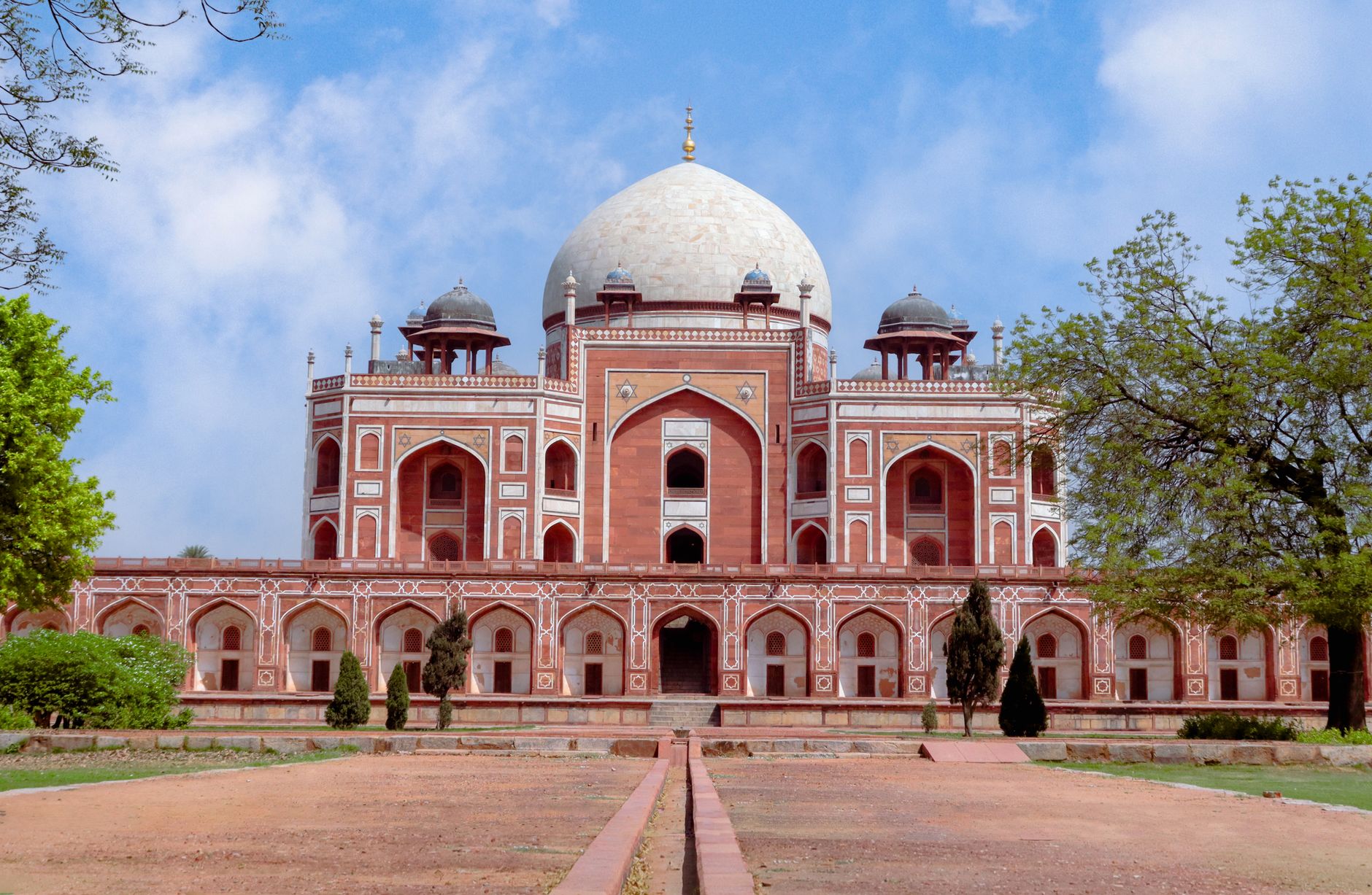
Move south after lunch. Humayun's Tomb, finished in 1572 and the template for the Taj Mahal, costs ₹600 for foreign visitors and ₹35 for Indian nationals, and its ticket is best paired with the adjacent Sunder Nursery, a restored 90-acre Mughal garden park with ₹100 entry. Yellow Line to Jor Bagh or a ₹150 auto from Khan Market gets you there. If you would rather have the other icon, ride the Yellow Line to Qutub Minar station instead: the 73-metre tower of 1193 and the Iron Pillar sit in the same ₹600 complex, open sunrise to sunset daily.
Moving between it all
The metro is the only reliable clock in this city. Fares run ₹10 to ₹60, trains start around 05:30 and stop near 23:00, and the tourist smart cards — ₹200 for one day, ₹500 for three, plus a ₹50 refundable deposit — pay for themselves on a two-day sprint. Buy them at any station counter with a passport copy. The first coach of every train is women-only. Security screening at each entrance adds three to five minutes, so budget accordingly, and avoid Rajiv Chowk between 18:00 and 19:30 when the interchange corridors back up badly.
For gaps the metro does not cover, use Uber or Ola rather than negotiating. A metered auto-rickshaw from Connaught Place to Humayun's Tomb should be ₹120 to ₹180; app autos remove the argument. Airport transfers by app run ₹450 to ₹700 to central Delhi, while the Airport Express from Terminal 3 to New Delhi station costs ₹60 and takes 20 minutes. Do not accept unsolicited offers of a ₹100 city tour outside New Delhi station — that is the classic detour to a commission-paying travel agent. Walk into the station or the metro entrance directly.
What to cut, and what to book ahead
In 48 hours something has to go. Cut Akshardham unless temples are your priority — it is magnificent but eats four hours with the security queue and a phone-free policy. Cut the Lotus Temple if your second day is already full; it closes Mondays and the queue after 16:00 can be 45 minutes. Cut Dilli Haat unless you want handicrafts, since ₹30 entry buys a curated market you can replicate at any state emporium on Baba Kharak Singh Marg. Keep Humayun's Tomb, Jama Masjid and one long meal in Old Delhi; those are the memories that survive the trip.
Book the hotel first and everything else late. Monument tickets are sold online through the ASI portal and at gate counters, and only the Taj Mahal night viewing genuinely sells out. If you want a guide, licensed operators charge roughly ₹2,500 to ₹3,500 for a half day and are worth it in Old Delhi, where the lanes defy maps. Restaurants like Indian Accent at The Lodhi need a week's notice; Karim's needs none. And confirm your hotel's check-out time — many Delhi properties still hold to 12:00, which matters when your flight is at 23:00.
Questions, answered
Is 48 hours enough for New Delhi?
It is enough for the headline sights if you stay central and use the metro. Two full days covers Old Delhi, Lutyens' Delhi and one Mughal monument cluster in the south. You will not fit Agra into the same 48 hours without gutting Delhi itself. Treat it as a sampler and plan to return.
Which area should I stay in for a short trip?
Connaught Place, for the metro interchange at Rajiv Chowk and the ten-minute link to the Airport Express. Mid-range doubles there run ₹3,500 to ₹6,000 a night. Aerocity is better only if you arrive after midnight or leave before dawn. South Delhi is calmer but adds 30 to 40 minutes each way to Old Delhi.
What days are Delhi monuments closed?
The Red Fort, National Museum, Lotus Temple, Akshardham and Gandhi Smriti all close on Mondays. Humayun's Tomb, Qutub Minar and Jama Masjid open every day. Jama Masjid closes to visitors for about 30 minutes around each of the five daily prayers. Plan Monday around the gardens, gurudwara and outdoor complexes.
How much does a 48-hour trip cost?
A mid-range traveller should budget roughly ₹6,000 to ₹9,000 a day: ₹4,000 to ₹6,000 for the room, ₹1,200 for food, ₹400 for transport and ₹1,200 in monument entries at foreign-visitor rates. Budget travellers do it on ₹2,500 a day using hostel dorms and street food. Indian nationals pay ₹35 rather than ₹600 at ASI sites, which changes the maths substantially.
Is it safe to walk around Old Delhi?
Yes, in daylight and with your bag worn in front. The main risks are pickpocketing in crowded bazaar lanes and touts steering you toward commission shops. Chandni Chowk's central stretch is now pedestrianised and well populated until around 21:00. Solo women travellers generally report fewer problems in the day markets than around New Delhi railway station at night.
Doing good is the business: every booking through Stay New Delhi funds one verified tonne of carbon removal — same room, same price, no markup.
Start Your Search