Chandni Chowk: the mother market and its specialist lanes
Chandni Chowk is not one market but a dozen, each lane specialising since Mughal times. Dariba Kalan sells silver and gold and has done for three centuries; Kinari Bazaar handles wedding trim, zari, sequins and tinsel; Nai Sarak is paper and textbooks; Bhagirath Palace is electrical goods and one of Asia's biggest lighting markets; Chawri Bazaar deals in wedding cards and brass. Most of it operates 11:00 to 20:00 and closes on Sunday, which is the single most useful fact in this guide and the one most visitors learn the hard way.
Go on a weekday morning, take the Yellow Line to Chandni Chowk station, and start at the Red Fort end. Hire a cycle rickshaw for ₹100–₹150 for a slow half-hour through the narrow lanes where walking is genuinely difficult at peak. Prices are wholesale-adjacent, which means good value but limited patience for browsing; shopkeepers here sell in bulk to traders. Fixed prices are common on paper and hardware, negotiable on textiles and jewellery. Keep bags in front of you and phones out of back pockets in the crush.
Khari Baoli: the spice market
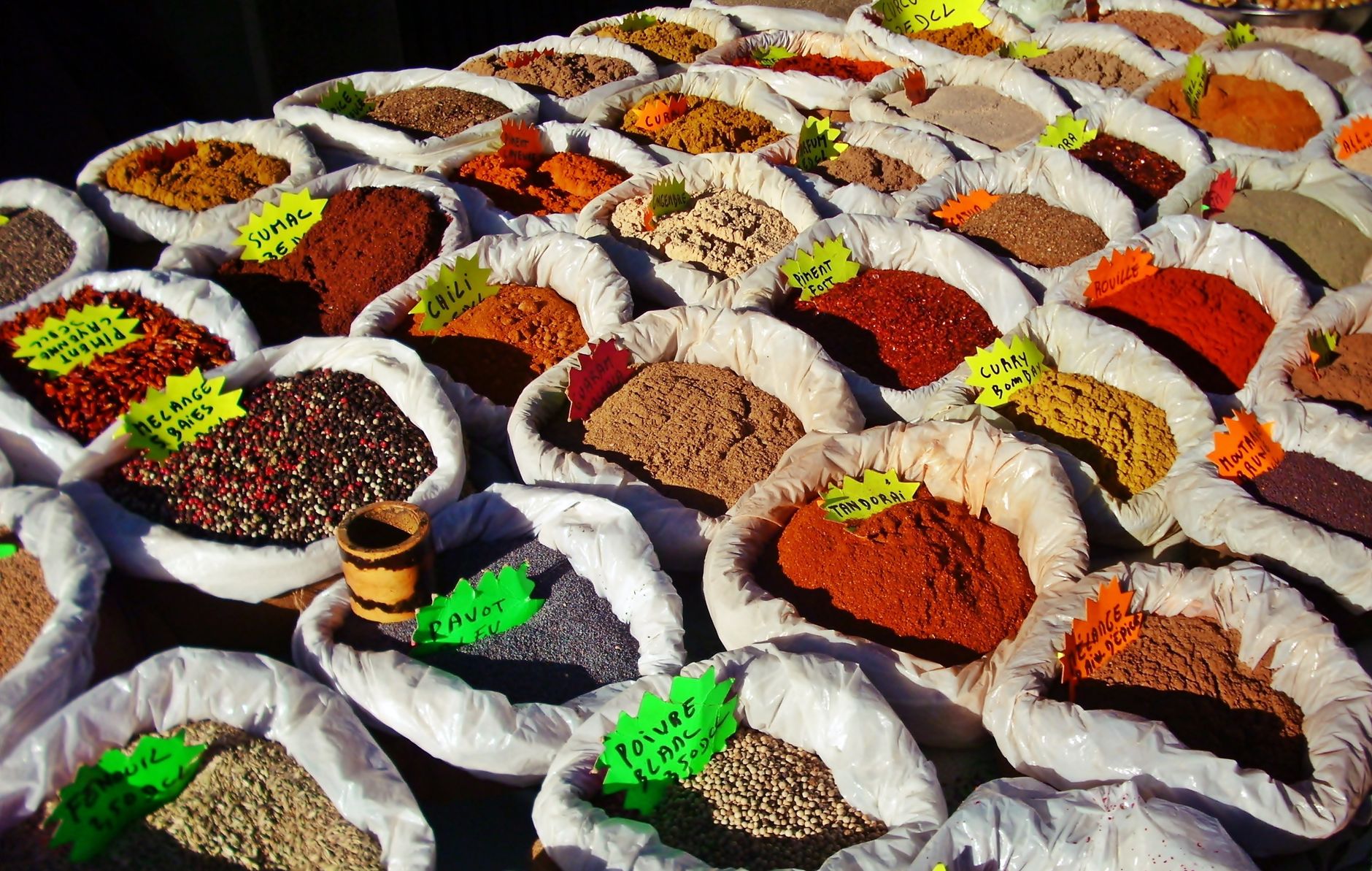
At the western end of Chandni Chowk, Khari Baoli is the largest wholesale spice market in Asia and has traded on the same street since the seventeenth century. Sacks of Kashmiri chilli, black cardamom, star anise, dried fruit, nuts, tea and asafoetida are stacked to the ceiling in courtyard warehouses built as caravanserais. The air will make you cough — that is the chilli dust, and it is the authentic Khari Baoli experience. Trading runs roughly 10:00 to 19:00, Monday to Saturday, with mornings busiest and most photogenic.
For buying, saffron, cardamom, dried figs and good tea are the sensible souvenirs; a small quantity of decent Kashmiri saffron runs ₹300–₹600 depending on grade, cardamom ₹200–₹400 for 100 grams, and vacuum-packed masala blends ₹100–₹250. Ask for sealed packaging if you are flying. Some warehouses will let you climb to the rooftops for views over the rooftops of Old Delhi for a small tip — ₹50–₹100 is fair. Combine with Paranthe Wali Gali for lunch and Jalebi Wala at the Dariba corner for dessert at ₹60–₹100.
Dilli Haat and INA: crafts and produce side by side
Dilli Haat opposite INA is a government-run craft bazaar, open daily from roughly 10:30 to 22:00 with an entry fee of about ₹30 for adults. Around 100 stalls rotate on a fortnightly basis so that artisans from different states cycle through: Kashmiri papier-mâché, Rajasthani block prints, Bengal kantha, Northeast weaves, Channapatna wooden toys. Prices are higher than a village market but bargaining is expected and 20–30 percent off the opening quote is normal. The food court sells state specialities — Momos, litti chokha, Bengali fish curry — at ₹120–₹300 a plate.
Directly across the road, INA Market is where Delhi's diplomats and chefs shop. It is the best food market in the city: imported cheeses, fresh fish on ice, banana leaves, Thai basil, whole spices, Sunday morning chaos and porters with head baskets. It runs daily except Monday, roughly 09:00 to 20:00. Even if you are not cooking, walk it for twenty minutes; the seafood section and the dried fish stalls are a straightforward education. INA station sits on the Yellow and Pink lines, which makes this the easiest market pairing in Delhi.
Sarojini, Lajpat Nagar and Janpath: cheap clothes and bargaining
Sarojini Nagar is the export-surplus market: brand-label clothing that failed quality checks or was overproduced, sold at ₹100–₹500 an item on pavement racks. It is chaotic, extremely cheap and rewards patience — the technique is to dig, not to browse. Closed Mondays, busiest Saturday and Sunday afternoons, best around 11:00 on a weekday. Bargain hard; a first quote of ₹600 for a shirt should settle near ₹250. Sarojini Nagar station is on the Pink Line and the walk from the exit is five minutes.
Lajpat Nagar Central Market, closed Mondays, is the place for salwar suits, fabrics, tailoring, mehndi artists and shoes, with a permanent street-food strip along the way. Prices sit between Sarojini and Khan Market. Janpath, running south from Connaught Place, is the tourist-facing option — Tibetan silver, brass, mirror-work cushion covers, oxidised jewellery — where opening quotes to foreign visitors run two to four times realistic value. For fixed prices without the theatre, the Central Cottage Industries Emporium and the state emporia on Baba Kharak Singh Marg charge 20–30 percent more and guarantee quality.
Khan Market, Sunder Nagar and Shahpur Jat: the polished end
Khan Market is the most expensive retail per square foot in India and functions as central Delhi's living room: bookshops like Bahrisons and Full Circle, Anokhi and Fabindia for block-printed clothing, Good Earth for homeware, and cafés on every corner. It closes on Sunday. Expect to pay ₹1,500–₹4,000 for a good kurta and ₹2,500 up for homeware. The back lanes hold the tailors, dry cleaners and old chemists that made it work before it was fashionable, and Khan Chacha's rolls at ₹250–₹400 are still the best cheap thing in it.
Sunder Nagar Market, ten minutes away opposite the zoo, is a small crescent of antique dealers, jewellers and tea shops — the place for silver, old textiles and Mehrachandra-style curio browsing, with prices to match. Shahpur Jat and Hauz Khas Village hold designer studios in an urban village setting: independent labels, ₹3,000–₹12,000 for a piece, and small cafés between. These three are for people who want quality over volume and would rather spend an unhurried afternoon than a chaotic one.
Sadar Bazaar, Nehru Place and the Sunday book bazaar
Sadar Bazaar, north-west of Chandni Chowk, is the wholesale market Delhi traders use: toys, party goods, kitchenware, plastics, decorations, all in quantities of a dozen or more. It is the least visitor-friendly market in this guide and the most interesting to walk if you like commerce as spectacle. Closed Sunday; go on a weekday morning and expect to be the only foreigner in sight. Nehru Place, on the Violet Line, is the electronics equivalent — components, repairs, secondhand laptops, and Delhi's best cheap phone-fixing in a brutalist plaza.
The Sunday book bazaar, historically on Daryaganj's pavements and now running from Mahila Haat on Asaf Ali Road, spreads roughly 250 stalls of secondhand and remaindered books from about 09:00 to 18:00 every Sunday. Paperbacks go for ₹50–₹150, coffee-table books ₹200–₹500, and the browsing is the point. Combine it with Old Delhi's Sunday-quiet lanes and lunch at Karim's. It is one of the few genuinely great things to do in Delhi on a Sunday, when most other markets are shut.
How to shop: days, hours and bargaining
Learn the closing days before you plan a shopping day: Chandni Chowk, Khan Market and Sadar Bazaar shut on Sunday; Sarojini Nagar, Lajpat Nagar and INA shut on Monday. Dilli Haat opens every day. Most retail markets run 11:00 to 20:00, wholesale markets 10:00 to 19:00, and nothing serious happens before 10:30. Fridays are quieter in the Muslim quarter around Jama Masjid, where many shops close for midday prayers.
On bargaining: in fixed-price emporia and mall shops, do not. In street markets, expect the opening quote to run two to four times the real price for foreign buyers. Counter at around 35 percent, settle near half, and be prepared to walk — the walk is the strongest tool you have. Carry small notes, because ₹500 change is a problem everywhere; use UPI QR codes where offered. And buy what you actually want on the spot: Delhi markets are large enough that you will not find the same stall again.
Questions, answered
Which day are Delhi markets closed?
It varies by market and catches people out constantly. Chandni Chowk, Khan Market and Sadar Bazaar close on Sunday. Sarojini Nagar, Lajpat Nagar Central Market and INA Market close on Monday. Dilli Haat opens daily from about 10:30 to 22:00. Plan Old Delhi for a weekday morning and save Sunday for the book bazaar on Asaf Ali Road.
Where do you buy spices in Delhi?
Khari Baoli, at the western end of Chandni Chowk, is Asia's largest wholesale spice market and trades Monday to Saturday, roughly 10:00 to 19:00. Buy saffron at ₹300–₹600 for a small grade-dependent quantity, cardamom at ₹200–₹400 per 100 grams, and sealed masala blends at ₹100–₹250. Ask for vacuum packing if you are flying home.
How much should I bargain in Delhi markets?
In street markets like Janpath, Sarojini Nagar and parts of Chandni Chowk, expect opening quotes at two to four times the realistic price. Counter around 35 percent of the ask and settle near half. Walking away usually produces the real price. In fixed-price shops such as Central Cottage Industries Emporium, Fabindia and Good Earth, bargaining is neither expected nor possible.
Is Sarojini Nagar worth visiting?
Yes if you enjoy digging through racks for export-surplus clothing at ₹100–₹500 an item, and no if you want a calm browse. It is crowded, loud and cash-heavy. Go on a weekday around 11:00 rather than a weekend afternoon, keep valuables in front pockets, and bargain hard. It is closed on Mondays and sits five minutes from Sarojini Nagar station on the Pink Line.
What is the best market for souvenirs in Delhi?
Dilli Haat, opposite INA, for craft from across India in one place with a small entry fee of about ₹30 and rotating artisan stalls. For guaranteed quality without haggling, the Central Cottage Industries Emporium on Janpath and the state emporia on Baba Kharak Singh Marg. For textiles and homeware at the design end, Khan Market and Shahpur Jat.
Doing good is the business: every booking through Stay New Delhi funds one verified tonne of carbon removal — same room, same price, no markup.
Start Your Search