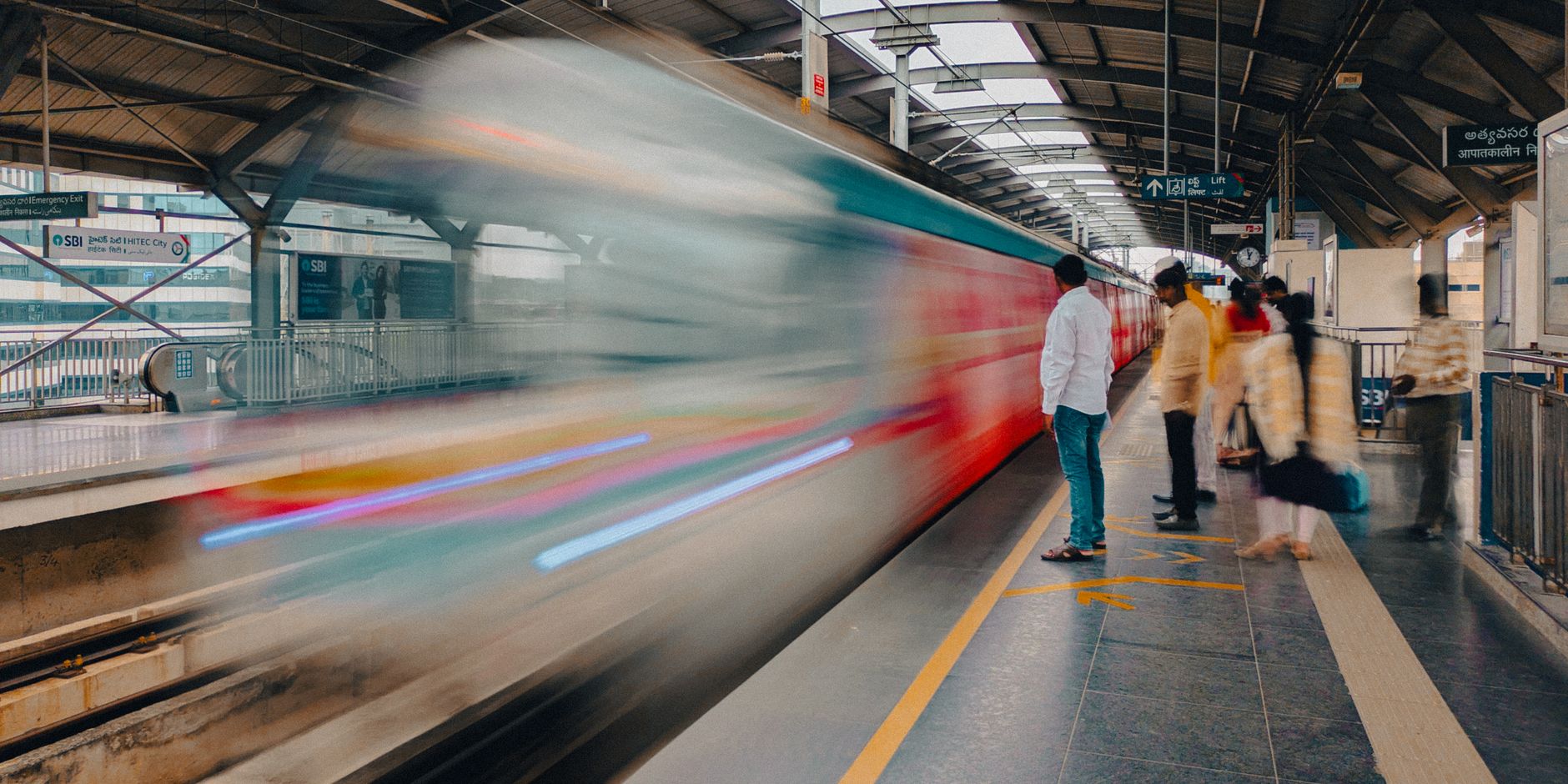
The Metro is the backbone — learn three lines
Delhi Metro is clean, air-conditioned, punctual and cheap, and it is the reason a visitor can cover this city at all. Fares run ₹10 to ₹60 by distance. Trains start around 05:30 on weekdays, a little later on Sundays, and the last services leave terminals near 23:00, which means the last useful train from a central station is usually around 22:45. Three lines cover almost everything a visitor wants: Yellow (Chandni Chowk, Rajiv Chowk, Central Secretariat, Hauz Khas, Qutub Minar), Blue (Karol Bagh, Rajiv Chowk, Mandi House, Akshardham) and Violet (Jangpura, Lajpat Nagar, Kalkaji, Jama Masjid).
Buy tickets through the DMRC Momentum 2.0 app, which generates a QR code you scan at the gate, or get a rechargeable smart card at any station counter. There are one-day and three-day tourist cards priced at around ₹200 and ₹500 plus a refundable deposit, worth it only if you plan five or more rides a day. Security screening at every entrance means a two to five minute queue; large backpacks and lighters are refused. The first coach of every train is reserved for women and is strictly enforced.
Getting in from the airport
The Airport Express, or Orange Line, runs from Terminal 3 to New Delhi Railway Station in about 18 minutes for ₹60, with trains roughly every 10 to 15 minutes from around 04:45 to 23:30. It stops at Aerocity, Dhaula Kuan and Dhaula Kuan's interchange for the Pink Line, plus Shivaji Stadium near Connaught Place. At New Delhi station you can transfer to the Yellow Line. Trolleys are allowed, which matters — this is the easiest airport rail link in India and it beats the road at almost every hour.
If you land at 02:00, take the prepaid taxi booth in the arrivals hall rather than negotiating outside; a metered black-and-yellow to Connaught Place runs about ₹450–₹600, and to South Delhi ₹550–₹750. Uber and Ola pick up from designated bays at T3 and usually cost ₹550–₹900 to central Delhi, more with surge. Hotel pickups are typically ₹800–₹1,200 and worth it after a long-haul flight. Terminal 1 serves domestic low-cost carriers and connects to the Magenta Line at Terminal 1-IGI Airport station.
Auto-rickshaws: the meter, and what to do when it is refused
The green-and-yellow auto is Delhi's most useful door-to-door tool for trips under six kilometres. The official meter starts at ₹30 for the first 1.5 kilometres and adds about ₹11 per kilometre, with a 25 percent night surcharge between 23:00 and 05:00 and a small charge for luggage. In practice, drivers at tourist spots will quote a flat fare. Connaught Place to Humayun's Tomb should be ₹120–₹160; Karol Bagh to CP ₹120–₹180; Hauz Khas to Qutub Minar ₹150–₹200. If a quote is more than double those, walk to the next auto.
The simplest workaround is to book an auto through Uber or Ola, which applies an app fare and removes the negotiation entirely — usually ₹20–₹40 cheaper than a street quote and with a driver name on record. Carry ₹10, ₹20 and ₹50 notes; drivers rarely have change for ₹500. Never accept an unsolicited offer of a cheap city tour or a detour to an emporium. If a driver claims your destination is closed, it is a commission scam; get out and pay only what the meter shows.
App cabs, bike taxis and when to use them
Uber and Ola both operate at scale and both work with international phone numbers, though verification is easier if you have an Indian SIM. A 10-kilometre ride in a compact car costs roughly ₹200–₹350 outside surge hours. Rapido and Uber Moto run motorbike taxis at ₹40–₹100 for short hops, which are fast, useful for solo travellers and completely unsuitable if you dislike Delhi traffic at close quarters. Cancellation rates are high at rush hour, so allow buffer time and consider ordering a slightly higher category when you must be somewhere.
Cabs make most sense for airport runs, late nights after 22:30 when the Metro has closed, monsoon downpours, and any trip involving luggage. They make least sense between 08:30 and 10:30 and 17:30 and 20:30 on weekdays, when a five-kilometre journey along the Ring Road or Aurobindo Marg can take 45 minutes for the same money the Metro spends in ten. If you are staying in Aerocity or Gurugram, factor an hour each way for anything in Old Delhi at peak.
Buses, e-rickshaws and cycle rickshaws
DTC and cluster buses cover the whole city at ₹10–₹25 a ride, and women travel free on DTC services with a pink ticket. Routes are hard to decode without Google Maps transit directions, but the electric low-floor buses along Ring Road and Mathura Road are comfortable and genuinely useful for lateral trips the Metro does not make. Cash is accepted; conductors will not have change for ₹2,000 notes. The Delhi Metro feeder buses from stations to nearby markets cost ₹10–₹20 and are underused by visitors.
For the last kilometre, battery e-rickshaws swarm every Metro exit at ₹10–₹30 a person for shared rides or ₹40–₹80 for the whole vehicle. They are the practical way to reach Nizamuddin Basti from Jangpura, or Majnu ka Tilla from Vidhan Sabha. In Old Delhi, hand-pulled cycle rickshaws remain the best way to travel Chandni Chowk's lanes: ₹50–₹100 for a fifteen-minute run, and worth ₹150 for a slow half-hour loop through Kinari Bazaar and Dariba Kalan at your own pace.
Cars with drivers, walking, and timing the day
For day trips or a packed monument day, a car with a driver is a fair deal: ₹2,500–₹3,500 for eight hours and 80 kilometres inside Delhi, ₹4,500–₹6,500 for a return run to Agra or Neemrana with tolls extra. Book through your hotel or an established operator, confirm whether tolls, parking and driver allowance are included, and tip ₹300–₹500 at the end of a full day. Do not let a driver route you through carpet showrooms and marble emporiums; state at the start that you are not shopping.
Delhi rewards walking in specific pockets and punishes it everywhere else. Walk Chandni Chowk, Connaught Place's inner and middle circles, Lodhi Garden, Khan Market, Hauz Khas Village, Nizamuddin East and Sunder Nursery. Do not attempt to walk between neighbourhoods; the distances are longer than they look and footpaths disappear. Build your day around two anchors — one north, one central, say — rather than four scattered stops, and use 13:00 to 15:30 for lunch and indoor stops while traffic and heat peak.
Questions, answered
How much does the Delhi Metro cost?
Fares run from ₹10 for a short hop to ₹60 for the longest journeys, with the Airport Express charging ₹60 from Terminal 3 to New Delhi Railway Station. Tourist cards cost around ₹200 for one day and ₹500 for three, plus a refundable deposit, and only pay off if you take five or more rides daily. The Momentum 2.0 app issues QR tickets straight to your phone.
Is Uber or an auto-rickshaw cheaper in Delhi?
An auto is cheaper for trips under about six kilometres — roughly ₹120–₹180 versus ₹200–₹350 in a compact cab. Booking that same auto through the Uber or Ola app usually gets you the auto price without any haggling. Cabs win at night after the Metro closes, in heavy rain, and whenever you are carrying luggage or travelling as a group of three or four.
What time does the Delhi Metro stop running?
Last trains depart terminal stations at around 23:00, which typically means the final service through a central station like Rajiv Chowk is around 22:45. Services start about 05:30 on weekdays and later on Sundays. If your dinner plans run past 22:30, budget ₹250–₹450 for a cab home rather than sprinting for a train you will miss.
Do I need an Indian SIM card to get around Delhi?
It makes everything easier. Uber, Ola, the Metro app and UPI payments all lean on an Indian number for verification. Airtel and Jio prepaid tourist SIMs are sold at the airport arrivals hall from about ₹500 for a month with generous data, and you will need your passport and visa. Airport and Metro Wi-Fi exist but are patchy and require OTP verification.
How do I get from Delhi airport to Connaught Place?
Take the Airport Express from Terminal 3 to New Delhi Railway Station in 18 minutes for ₹60, then walk or take a short auto ride. Between 23:30 and 04:45, use the prepaid taxi counter in arrivals, which charges about ₹450–₹600 for the same journey. App cabs from the T3 pickup bays run ₹550–₹900 depending on surge.
Doing good is the business: every booking through Stay New Delhi funds one verified tonne of carbon removal — same room, same price, no markup.
Start Your Search