Chandni Chowk Bazaars
The 1650 market avenue Shah Jahan's daughter laid out is still Delhi's loudest, cheapest, most useful shopping street — a spice bazaar, a silver lane and a wedding-trim alley all inside one kilometre.
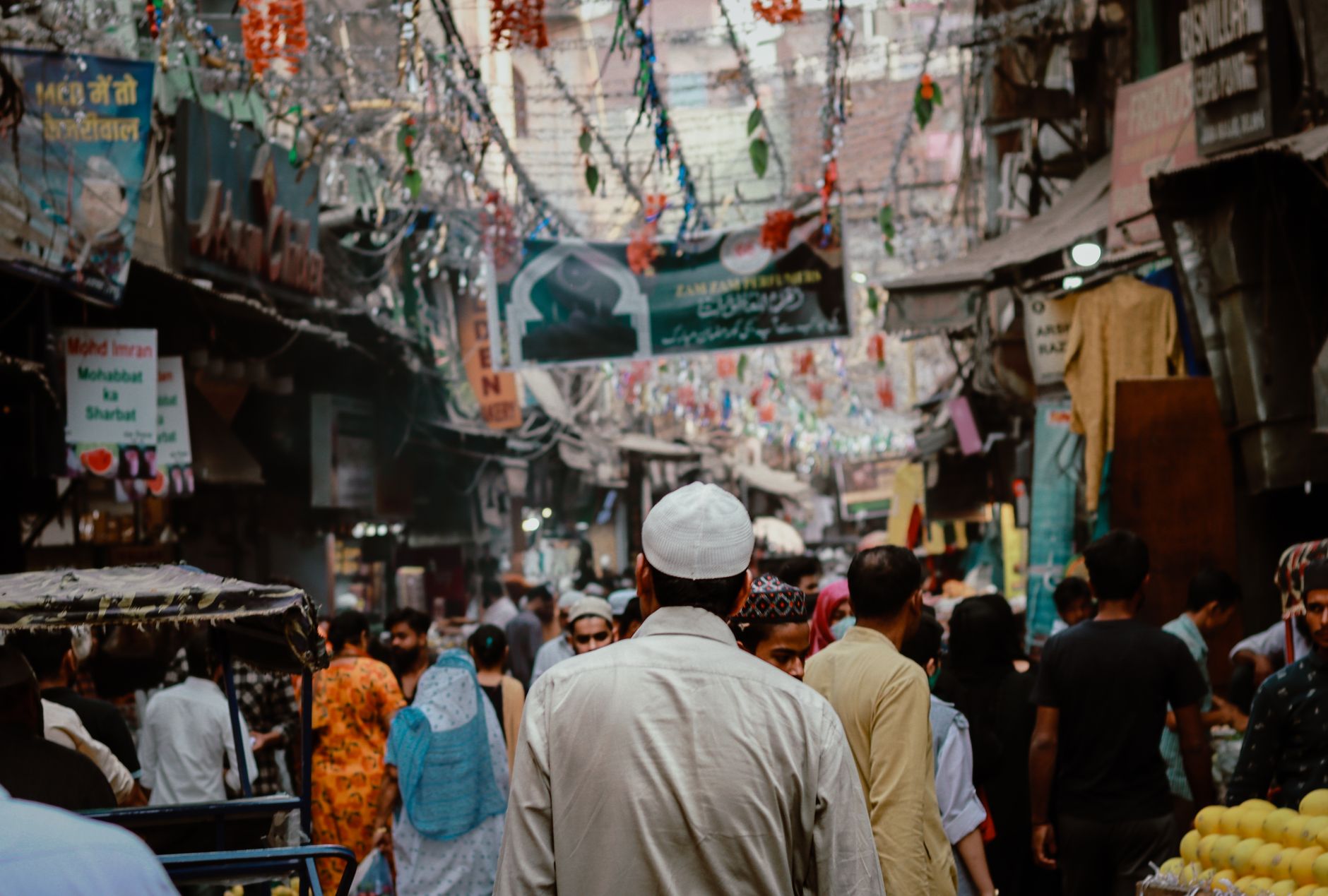
Chandni Chowk was laid out in 1650 as the ceremonial approach to Shahjahanabad, planned by Jahanara Begum, Shah Jahan's eldest daughter, with a canal running down the middle that caught the moonlight and gave the street its name — the moonlit square. The canal is long gone, the trees went with it, and what remains is a 1.3 km avenue from the Red Fort's Lahori Gate to Fatehpuri Masjid at the western end, with a dense grid of specialist lanes hanging off it. Each lane still sells more or less what it sold two centuries ago: Dariba Kalan for silver and attar, Kinari Bazaar for wedding trim and tinsel, Nai Sarak for schoolbooks and stationery, Bhagirath Palace for lighting and electricals, Chawri Bazaar for paper and wedding cards, and Khari Baoli at the far west for spices, nuts and dried fruit in wholesale sacks.
A visit works best as a walk rather than a shopping trip. Start at the Sis Ganj Sahib gurdwara end, where the avenue has been repaved and closed to cars between 09:00 and 21:00, so you share it only with cycle rickshaws, handcarts and several thousand people. Duck south into Dariba Kalan and the noise halves: narrow, shaded, silver anklets in every window and old attar shops selling oud and khus by the tola. Kinari Bazaar next door is a corridor of gold thread, turban trim and marigold garlands so tight two people cannot pass without a shuffle. Work west and the goods change to hardware, then books, then, past Fatehpuri Masjid, to Khari Baoli, where the chilli dust in the air will make you cough within a minute and porters run sacks of cardamom up stairways.
Plan it as a morning or a late afternoon, never as a full unbroken day — the sensory load is real. Shops open slowly, so before 11:00 you get clean light and photographs but half the shutters down; by 13:00 the lanes are at full pressure. If you want the bazaar explained rather than survived, a guided food or heritage walk booked in advance is genuinely worth it; several operators start at Chandni Chowk metro station around 08:00 or 16:00. Skip the idea of buying anything technical here unless you know the market rate. Do buy spices, dried fruit and cheap silver. Carry cash in small notes, keep a bag zipped across your body, and accept that a cycle rickshaw from one end to the other, about ₹80-120 after a short haggle, is both transport and a viewing platform.
Getting there is the easy part. Chandni Chowk station on the Yellow Line puts you at the eastern end; take the exit signed for Gurudwara Sis Ganj and you are on the avenue in three minutes. From Rajiv Chowk (Connaught Place) it is two stops and about six minutes, with a fare of roughly ₹20-30 on a token. Lal Qila station on the Violet Line drops you beside the Red Fort, a five-minute walk to the same avenue. For the spice end, Chawri Bazaar on the Yellow Line is closer, then ten minutes on foot north through Nai Sarak. Auto-rickshaws from Connaught Place run ₹100-150 but crawl in the last kilometre; app cabs cannot enter the pedestrianised stretch at all and will drop you at Netaji Subhash Marg or Church Mission Road. Driving yourself is a bad idea — parking near Red Fort fills by 10:00 and costs ₹20-50 an hour.
There is no entry fee anywhere in Chandni Chowk; every rupee you spend is chosen. Rickshaw hops cost ₹50-120 depending on distance and your bargaining. A silver anklet in Dariba starts around ₹800-1,500 by weight; loose spices in Khari Baoli run from ₹120 a kilo for cheap chilli powder to several thousand for good cardamom or saffron sold by the gram. Street food is the cheapest pleasure: a plate of chaat ₹60-100, jalebi by weight around ₹400-500 a kilo, a lassi ₹60-90. Guided walking tours are the one real cost, generally ₹1,200-2,500 a head for three hours including tastings. Public toilets exist but are grim; the cleanest option is to buy a coffee or a lassi at a sit-down shop. Keep at least ₹500 in tens and twenties — many stalls still wave away cards, though UPI is now accepted almost everywhere.
Timing decides whether you enjoy this or endure it. The best window is 09:00-11:00 on a weekday, when the vehicle ban is in force, deliveries are still moving and the crowds have not thickened. Between 13:00 and 17:00 on a Saturday the main avenue is close to gridlock on foot. Sunday is the weekly closing day for most of the cloth and jewellery trade — the street is quieter and easier to photograph, but you will not be shopping. October to March is the season: cool mornings, sharp light, and the run-up to Diwali when Kinari Bazaar is at its most spectacular. April to June is punishing, with 43°C afternoons in lanes that hold heat, and the July-September monsoon turns the side alleys into slippery, puddled obstacle courses.
It suits curious walkers, photographers, food-first travellers and anyone shopping for spices, fabric or wedding kit. It suits teenagers who like a bit of chaos. It does not suit wheelchair users in any honest sense — surfaces are broken, kerbs are high, the lanes are too narrow for a chair to pass a handcart, and only the repaved central avenue is remotely manageable. Small children need to be carried or held very firmly; a pushchair is close to unusable. If you have an hour before a train from Old Delhi railway station, do a single lane — Dariba or Paranthe Wali Gali — and no more. Anyone who dislikes crowds, noise or being touched by strangers in a queue should come at 09:00 or not at all.
Nearby, everything folds into the same half-day: Jama Masjid is a ten-minute walk south through Dariba and Chawri Bazaar, the Red Fort is at the avenue's eastern head, and the paratha lane sits three minutes off the main street. Fatehpuri Masjid closes the western end and Khari Baoli begins at its gate. The honest caveats: the touts at the metro exits offering rickshaw tours are not guides, and the price quoted doubles at the end; the famous fried food is heavier and sweeter than most visitors expect; and the guidebook line about a graceful Mughal boulevard is a century out of date — this is a working wholesale district with overhead wire tangles and no shade. Expect commerce, not romance, and you will love it.
One more practical note for anyone planning where to sleep: staying in Old Delhi puts you inside the bazaar but in noisy, basic rooms, and most visitors do better in Paharganj for budget or Connaught Place for comfort, both a short metro ride away on the Yellow Line. From Connaught Place you can be standing in Dariba Kalan twenty minutes after leaving your hotel lobby, which is the argument for spending on location rather than on the room.
Hours & entry
No ticket at any hour · lanes open all day, though most shops shut on Sundays
Mon-Sat roughly 11:00-20:00 (most shops) · Sun mostly closed; food stalls and Khari Baoli partly open · Main avenue is vehicle-free 09:00-21:00
What to see
{'what': 'Khari Baoli spice market', 'where': 'West of Fatehpuri Masjid, at the far end of the main avenue'}
{'what': 'Dariba Kalan silver and attar lane', 'where': 'First major lane south of the avenue, near Sis Ganj gurdwara'}
{'what': 'Kinari Bazaar wedding trim', 'where': 'Off Dariba Kalan, running towards Chawri Bazaar'}
Tips from the ground
Use Chandni Chowk metro exit 5 for the gurdwara end; the Red Fort exits add ten minutes of walking.
Come 09:00-11:00 on a weekday for the vehicle-free avenue at its calmest.
Agree the cycle rickshaw fare before you sit down — ₹80-120 end to end is fair.
Questions, answered
How much does it cost to visit Chandni Chowk?
Nothing. The bazaar is a public street with no ticket, no gate and no charge at any hour. You only spend what you choose: a cycle rickshaw ride ₹50-120, chaat ₹60-100 a plate, a lassi around ₹60-90, and spices in Khari Baoli from ₹120 a kilo upwards. Guided walking tours are the only fixed cost, usually ₹1,200-2,500 per person for about three hours with tastings included.
Are there free hours or free tours?
The whole market is open access all day, so there are no free windows to wait for. The one genuinely free extra is Gurudwara Sis Ganj Sahib on the main avenue, which admits anyone with head covered and shoes left at the counter, and serves langar without charge. No official body runs a free guided walk here; anyone at the metro exit offering one is a rickshaw tout working on commission.
How long should I spend in Chandni Chowk?
Half a day is the honest answer — roughly three to four hours. That covers the main avenue, one silver or trim lane, the walk to Fatehpuri Masjid and half an hour in Khari Baoli, with a food stop. If you are only here for the paratha lane and a look at the street, ninety minutes is enough. Shoppers hunting fabric or wedding material can lose an entire day inside three lanes.
Which day is Chandni Chowk closed?
Sunday is the weekly closing day for most of the market. Cloth, jewellery, book and hardware shops keep their shutters down, though many eateries, the gurdwara and parts of Khari Baoli still operate. Monday to Saturday shops open slowly from about 11:00 and trade until 20:00. Public holidays and the days immediately after Diwali also see widespread closures, so check before making a special shopping trip.
Do I need to book anything in advance?
No booking is needed to walk the bazaar — just turn up. Booking matters only for guided heritage or food walks, which fill in the October to March season and should be reserved a few days ahead; most start at Chandni Chowk metro station at about 08:00 or 16:00. Restaurants in the area do not take reservations and work on a queue-and-share-a-table basis, so arriving before 12:30 saves waiting.
What is the nearest metro station?
Chandni Chowk on the Yellow Line, exit 5, drops you three minutes from the avenue beside Gurudwara Sis Ganj Sahib. Lal Qila on the Violet Line serves the Red Fort end, and Chawri Bazaar on the Yellow Line is closest to the spice and paper lanes. From Rajiv Chowk in Connaught Place the ride is two stops, six minutes, and roughly ₹20-30. Cabs cannot enter the pedestrianised stretch between 09:00 and 21:00.
Doing good is the business: every booking through Stay New Delhi funds one verified tonne of carbon removal — same room, same price, no markup.
Start Your Search