Gali Kababian and Karim's
The kebab lane at Jama Masjid's southern gate, where Karim's has cooked Mughlai food since 1913 and a dozen charcoal grills work the pavement until midnight — Delhi's most famous meat street.
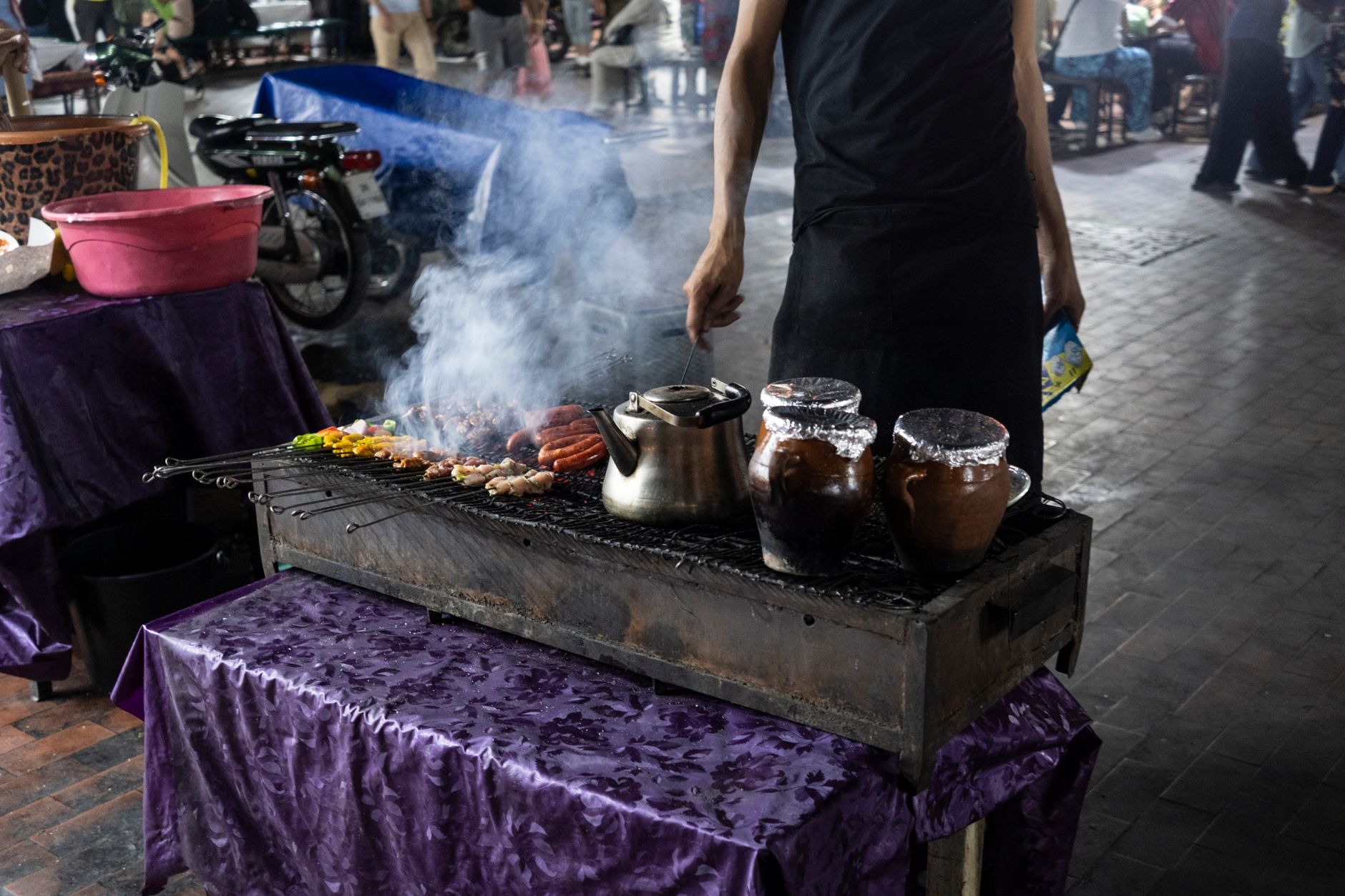
Gali Kababian runs off Matia Mahal, the market street that begins at Jama Masjid's Gate 1, and it has fed the neighbourhood of Shahjahanabad since long before anyone thought of it as a tourist attraction. Its anchor is Karim's, opened in 1913 by Haji Karimuddin, whose family traced its cooking to the kitchens of the late Mughal court; the original shop still occupies a small courtyard down the lane, ringed with tiny dining rooms and a kitchen you walk past to reach your table. Around it sit Al Jawahar, established 1948, and a shifting line of charcoal grills, korma counters and sweet shops. This is Mughlai food in its everyday form — mutton burra, seekh kebab, korma, biryani, sheermal bread, nihari eaten at dawn during winter — cooked in volume, served fast, and priced for a working neighbourhood rather than a hotel restaurant.
The lane is a strip of noise, smoke and steel. Grills stand on the pavement with skewers laid over coals; a man works a shallow pan of mince the size of a bicycle wheel; sheermal and khameeri roti come out of a tandoor sunk into the floor. Karim's courtyard is entered under a painted arch and opens into cramped rooms with formica tables where waiters take orders without menus if you know what you want. The standards are mutton burra, seekh kebab, mutton korma with khameeri roti, badam pasanda, and the chicken jahangiri. Al Jawahar next door serves a similar range with a slightly brighter dining room. In Ramzan the whole street transforms after sunset into an all-night food fair that runs until the pre-dawn meal, and it is the single best night of eating in Delhi.
Plan an early dinner or a late lunch and eat less than you think you need — portions are large and rich. Nothing is bookable; you queue, you share, you order in stages. Order one meat dish, one bread and one kebab between two people to start, and add more once you see the size. Vegetarians will struggle: this is a meat street, and while a dal and a couple of vegetable dishes exist, they are afterthoughts. Alcohol is not served anywhere in the lane, which sits beside a mosque. Carry cash and small notes; UPI is widely accepted, cards less reliably. Wash hands at the basin by the entrance — the food is eaten with bread and fingers.
Getting there: Jama Masjid station on the Violet Line is the nearest, and exit 3 puts you four minutes' walk from Matia Mahal's mouth at Gate 1 of the mosque. From Rajiv Chowk in Connaught Place, take the Yellow Line to Central Secretariat and change to the Violet Line, about twenty minutes and ₹30-40; or take the Yellow Line to Chawri Bazaar and walk twelve minutes east through the lanes, which is the more atmospheric approach. Auto-rickshaws from Connaught Place run ₹120-180 and take 25-35 minutes in evening traffic. App cabs can reach Netaji Subhash Marg but not the lane itself; expect to walk the last five to eight minutes. Parking around Jama Masjid is chaotic and costs ₹20-50, and is not worth attempting after 19:00.
There is no charge to walk the lane; food is the cost and it remains reasonable. At Karim's, a plate of seekh kebab runs about ₹180-260, mutton burra ₹400-500, mutton korma ₹350-450, chicken jahangiri ₹400-500, biryani ₹250-350, and breads ₹25-60 each. A filling meal for two with two mains, kebabs and bread lands around ₹800-1,400. Pavement grills are cheaper — a skewer of seekh for ₹80-150, a roll for ₹100-180. Sweets from the shops at the Matia Mahal end cost ₹300-600 a kilo. There is no cover charge, no alcohol and no service charge, and tipping is optional and small. Budget ₹500-700 a head for a proper Mughlai dinner, which is about a third of what the same food costs in a hotel dining room.
The lane works from morning to midnight, but the timing that matters is this: come between 12:00 and 14:00 for a calm lunch, or between 18:30 and 20:00 for the grills lit and the crowd not yet at full pressure. After 21:00 on a Friday or Saturday, Karim's courtyard fills and waits of twenty minutes are common. Fridays around midday prayers make the whole approach to Jama Masjid dense — avoid 12:30-14:30 that day. Winter, October to February, is the best season and the only time nihari is properly in season at the dawn counters. May and June are punishing beside charcoal grills. Ramzan, whose dates move each year, turns the street into an all-night market and is unmissable if your visit coincides — but expect crowds five deep.
It suits meat eaters, food travellers and anyone who wants Delhi's most storied dinner for under ₹700 a head. It suits a group of friends better than a couple looking for a quiet meal. It does not suit vegetarians in any real sense, nor anyone who needs a clean, calm dining room — the rooms are small, hot and shared, and the toilets are basic. Wheelchair access is very poor: narrow lanes, steps into the courtyards, and permanently blocked pavements. Small children can manage a short lunch visit but not a 21:00 dinner. If you have one hour before catching a train from Old Delhi station, 2.5 km north, a plate of kebab at a pavement grill is doable; a sit-down meal is not.
Nearby, Jama Masjid itself is four minutes' walk and the natural pairing — eat first, climb the minaret afterwards, and note that the mosque closes to visitors during prayer times. The Red Fort is fifteen minutes north on foot, Chandni Chowk's bazaars and the paratha lane are ten to fifteen minutes north-west, and Dariba Kalan sits between the two. The honest caveats: Karim's reputation has outrun its consistency, and on a busy night the food can arrive lukewarm and the service brusque — Al Jawahar is often the better meal for the same money; the lane is greasy, smoky and cramped, which is part of the appeal but shocks visitors expecting a restaurant experience; and no one here serves alcohol, so plan drinks elsewhere.
Hours & entry
No ticket at any hour · lane open daily, food charged per dish
Daily roughly 09:00-00:00 · Nihari and breakfast dishes from about 07:00 at some counters · Grills busiest 20:00-23:00
What to see
{'what': "Karim's original courtyard, opened 1913", 'where': 'Down Gali Kababian, under the painted arch off Matia Mahal'}
{'what': 'Pavement charcoal grills', 'where': 'Matia Mahal street, between Gate 1 and the Gali Kababian turning'}
{'what': 'Al Jawahar, established 1948', 'where': 'Facing the mosque steps at the head of Matia Mahal'}
Tips from the ground
Order in two rounds — the first plates are bigger than they look.
Al Jawahar is usually faster than Karim's after 21:00 for near-identical food.
Avoid Friday 12:30-14:30, when prayer crowds block the whole approach.
Questions, answered
What does eating in Gali Kababian cost?
Walking the lane is free; the food is the spend. At Karim's, seekh kebab runs ₹180-260, mutton burra ₹400-500, korma ₹350-450, biryani ₹250-350 and breads ₹25-60. A full meal for two comes to ₹800-1,400. Pavement grills are cheaper at ₹80-180 a skewer or roll. There is no cover or service charge and no alcohol. Budget about ₹500-700 a head, roughly a third of hotel Mughlai prices.
Are there free tastings or discounts?
No. Every dish is charged and there are no free windows, happy hours or complimentary items beyond the onion, chutney and salad that come with a kebab plate. During Ramzan the street stays open all night and some mosques and community kitchens nearby distribute iftar food, but that is charity for those fasting, not a tourist offer. Paid Old Delhi food walks, ₹1,200-2,500 a head, bundle a kebab stop here with several other tastings.
How long should I allow?
One to two hours. A sit-down meal at Karim's or Al Jawahar takes about an hour once you are seated, plus a possible twenty-minute wait after 21:00 on weekends. A quick pavement kebab and a walk down the lane takes thirty minutes. Most people combine it with Jama Masjid, four minutes away, which adds another hour, making a comfortable half-evening in Old Delhi.
Is the lane closed on any day?
No — the eateries run daily from about 09:00 to midnight, with some counters serving nihari and breakfast dishes from around 07:00 in winter. The busiest and most disrupted period is Friday between 12:30 and 14:30, when prayers at Jama Masjid fill the approach streets. During Ramzan the hours shift dramatically: quieter by day, then packed from sunset until the pre-dawn meal.
Do I need to book?
There is no booking anywhere in the lane. Karim's, Al Jawahar and the pavement grills all work on a queue-and-share basis with small formica-table rooms, and waits of fifteen to twenty-five minutes are normal after 21:00 on Friday and Saturday. To avoid queueing entirely, eat between 12:00 and 14:00 or before 20:00. Large groups of six or more should expect to be split across two tables.
Which metro station is closest?
Jama Masjid on the Violet Line, exit 3, is a four-minute walk to Matia Mahal and the lane. From Rajiv Chowk take the Yellow Line to Central Secretariat and change to the Violet Line — about twenty minutes for ₹30-40. Chawri Bazaar on the Yellow Line is a twelve-minute walk through the bazaar lanes and the more interesting approach. Cabs stop on Netaji Subhash Marg, leaving a five-to-eight-minute walk.
Doing good is the business: every booking through Stay New Delhi funds one verified tonne of carbon removal — same room, same price, no markup.
Start Your Search