Khan Market
A 1951 refugee-resettlement market that became India's most expensive retail address — bookshops, cafés and a scruffy back lane that quietly serves the best coffee and rolls in central Delhi.
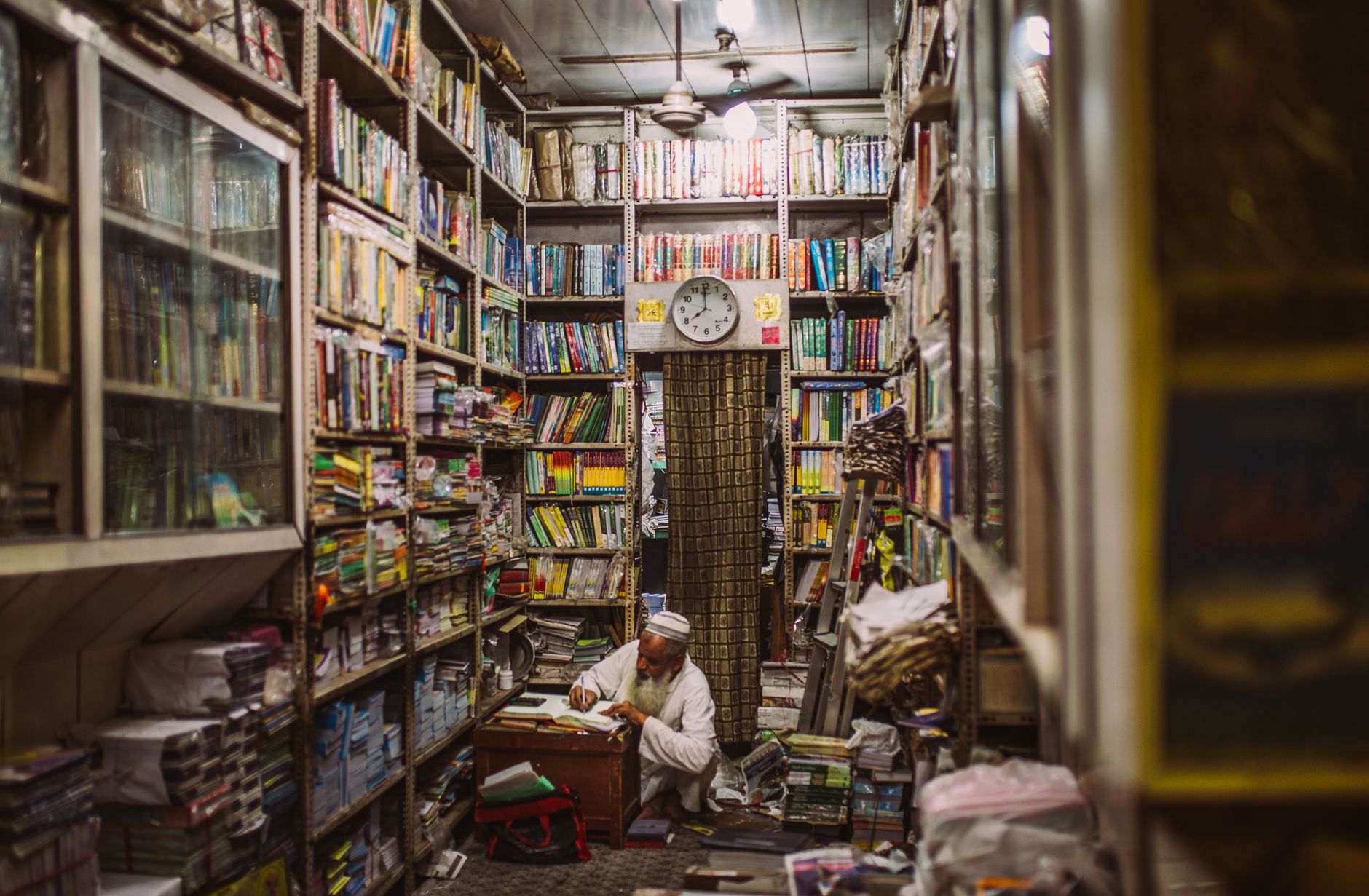
Khan Market was built in 1951 to give livelihoods to families displaced from the North-West Frontier Province at Partition, and named after Khan Abdul Jabbar Khan, brother of Khan Abdul Ghaffar Khan. It was designed as a plain two-storey horseshoe of small shops serving the surrounding government housing of Lutyens' Delhi, and for decades it stayed that: chemists, tailors, a bookshop, a bakery. Proximity to ministries, embassies and the bungalows of Delhi's political class changed the economics entirely, and by the 2000s Khan Market was ranked among the most expensive retail high streets in the world by rent per square foot. The shopkeepers are often third-generation descendants of the original allottees. What makes it worth a visit is not the luxury but the density: independent bookshops, design stores, cafés, kebab counters and a chemist that never closes, all in a block you can cross in six minutes.
The market is built as two parallel rows facing an inner service lane, with a front lane facing the road. Bahrisons Booksellers, trading since 1953, sits at the front corner and is still the best general bookshop in the city; Full Circle and its Café Turtle upstairs is the other literary anchor. Along the front are design and homeware shops — Good Earth, Anokhi, Fabindia — selling block-printed textiles and ceramics at real prices, not tourist ones. The back lane is where locals actually go: Khan Chacha for mutton tikka rolls, Big Chill for pasta and cheesecake, Amici for pizza by the slice, coffee bars and a chaat counter. Upstairs floors, reached by narrow staircases, hide tailors, opticians, salons and quiet first-floor restaurants with balcony tables looking over the lane.
Plan it as an afternoon or an evening rather than a shopping mission — this is a place to browse, eat and read. Nothing needs booking except a table at the busiest restaurants on a Friday or Saturday night, and even then most work on a short wait. Skip the market entirely on a Sunday if you want to shop, because the retail closes; come on a Sunday only for brunch. What to prioritise: an hour in Bahrisons, a roll at the back-lane counters, and a look at the textile stores, which are the most reliable place in Delhi to buy a gift that is neither tacky nor overpriced. What to skip: the international-brand outlets, which cost more here than at home.
Getting there is easy and quick. Khan Market station on the Violet Line has an exit two minutes from the market's front lane; from Rajiv Chowk in Connaught Place, change at Central Secretariat and the whole journey takes about fifteen minutes for roughly ₹30. Central Secretariat itself is 2 km away if you prefer the Yellow Line and a short auto. Auto-rickshaws from Connaught Place run ₹80-120, from Hauz Khas ₹150-200, and app cabs are simple except at 20:00-21:00 on weekends when the pickup point on Subramania Bharti Marg backs up. Parking is the weak point: a small paid lot behind the market and metered kerbside spaces charge ₹20-40 an hour and are full from lunchtime. Walking from India Gate takes about twenty minutes along Sikandra Road.
There is no entry charge — it is a public shopping street. Costs are what you consume, and Khan Market is genuinely expensive by Delhi standards. Coffee ₹200-350, a Khan Chacha roll ₹250-350, a main course at a mid-range restaurant ₹500-900, a two-course meal with a drink ₹1,200-2,000 a head, a cocktail at a first-floor bar ₹600-900. A paperback runs ₹350-800; block-printed cushion covers ₹800-1,800; a good scarf ₹1,500-4,000. Compared with Sarojini Nagar, everything is four times the price and roughly four times the quality. Cards and UPI are accepted everywhere, and unlike the bazaars there is no bargaining at all — prices are fixed and asking for a discount marks you out. Public toilets are limited; use a café you have bought something in.
The market runs Monday to Saturday from about 10:30 to 20:00 for shops, while the eating places open earlier for breakfast and run to about 23:00 seven days a week. Sunday is the weekly closing day for retail — a genuinely useful thing to know, because a Sunday shopping trip here fails. The quiet window is weekday mornings before 12:30, when the bookshops are empty and you can get a balcony table without waiting. From 19:00 onward on Thursday to Saturday the lanes fill with a young Delhi crowd and parking becomes hopeless. October to March is the best season, when the first-floor terraces are usable; May and June are too hot to sit outside at any hour, and the market's charm halves when you are stuck indoors under air conditioning.
It suits readers, gift-hunters, café sitters and anyone who wants a couple of unhurried hours in central Delhi without dust and haggling. It works well for wheelchair users on the ground floor — the front lane is level and paved — although the first-floor shops and restaurants are reached only by narrow stairs with no lifts. It suits families for an early dinner, and teenagers for the food. It is a poor fit for anyone hunting bargains or authentic old Delhi, and a poor fit on a Sunday for shopping. If you have an hour to fill, a coffee and a bookshop is a perfect use of it; it is also one of the better rainy-afternoon options in the city, since the arcades give some cover.
Nearby, this is the most convenient base in central Delhi for a half-day: Lodhi Gardens is a 15-minute walk or five-minute auto west, India Gate and the Rajpath lawns are 1.5 km north-west, and Humayun's Tomb is about 3 km south-east, ten minutes by cab. The Lodhi Art District's painted walls are a ten-minute drive away. The honest caveats: the market is small and can be walked end to end in six minutes, so anyone expecting a grand shopping district will be underwhelmed; prices are high enough that a casual lunch costs more than a hotel night in Paharganj; and the parking and Sunday closures catch out more visitors than any other detail in this guide. Come for the bookshops and the back lane, not the labels.
Hours & entry
No ticket at any hour · most shops closed Sundays, restaurants open
Mon-Sat roughly 10:30-20:00 (shops) · Restaurants and cafés daily 08:00-23:00 · Most shops closed Sunday
What to see
{'what': 'Bahrisons Booksellers', 'where': 'Front corner of the market, Middle Lane entrance'}
{'what': 'Back-lane kebab roll counters', 'where': 'Rear service lane behind the main row'}
{'what': 'Block-print and homeware stores', 'where': 'Front row facing Subramania Bharti Marg'}
Tips from the ground
Come before 12:30 on a weekday for an empty bookshop and a balcony table.
Do not plan Sunday shopping — retail shuts; only cafés and restaurants open.
Metro exit 1 at Khan Market station is closer than any parking you will find.
Questions, answered
Does Khan Market cost anything to enter?
No — it is a public shopping street with no gate or ticket at any hour. The expense is what you buy, and this is Delhi's priciest retail address: coffee ₹200-350, a kebab roll ₹250-350, a restaurant main ₹500-900, a paperback ₹350-800. A relaxed lunch with a drink runs ₹1,200-2,000 a head. Prices are fixed, cards and UPI work everywhere, and unlike the bazaars there is no bargaining at all.
Are there happy hours or discount times?
Several first-floor bars and restaurants run early-evening happy hours, typically between about 16:00 and 19:00 on weekdays, with cocktails discounted from around ₹800 to ₹500-600 — terms vary by venue and are posted at the door. Shops do not discount outside the two big annual sale periods, roughly late June to July and late December to January, when the design and clothing stores cut 20-40 percent. There are no free entry windows because there is no entry fee.
How long is a visit?
Two to three hours covers a browse through the bookshops, a walk of both lanes, a look at the homeware stores and a meal. If you are only having coffee and buying a book, an hour is plenty — the market is small enough to cross in six minutes. Shoppers combining it with Lodhi Gardens, a 15-minute walk west, should allow a half day for the pair, which is the classic central Delhi afternoon.
Is Khan Market closed on Sundays?
Most shops are, yes. Sunday is the weekly retail closing day, so bookshops, clothing and homeware stores keep their shutters down. Restaurants, cafés and the chemists stay open, which makes Sunday a good brunch destination and a bad shopping one. Monday to Saturday shops run about 10:30 to 20:00. Eating places open from around 08:00 and serve until 23:00 seven days a week, later on Friday and Saturday.
Should I book a table in advance?
For weekday meals, no — walk in. For Friday and Saturday evenings after 20:00, book the popular first-floor restaurants a day or two ahead or expect a 20-40 minute wait, since the market draws a large young Delhi crowd. Casual counters selling rolls and pizza slices never take bookings and turn over quickly. Nothing else here requires reservation; the shops and bookshops are straightforward walk-ins throughout the week.
What is the nearest metro stop?
Khan Market station on the Violet Line, exit 1, is a two-minute walk from the front lane. From Rajiv Chowk in Connaught Place change at Central Secretariat; the trip takes about fifteen minutes and costs roughly ₹30. Autos from Connaught Place run ₹80-120. Parking is the weak link — a small paid lot behind the market charges ₹20-40 an hour and fills from lunchtime, so the metro is genuinely the better option.
Doing good is the business: every booking through Stay New Delhi funds one verified tonne of carbon removal — same room, same price, no markup.
Start Your Search