Nehru Park
Eighty-five acres of undulating lawn in the middle of the diplomatic enclave, free at every hour, and the best place in Delhi to see how the city actually relaxes on a winter morning.
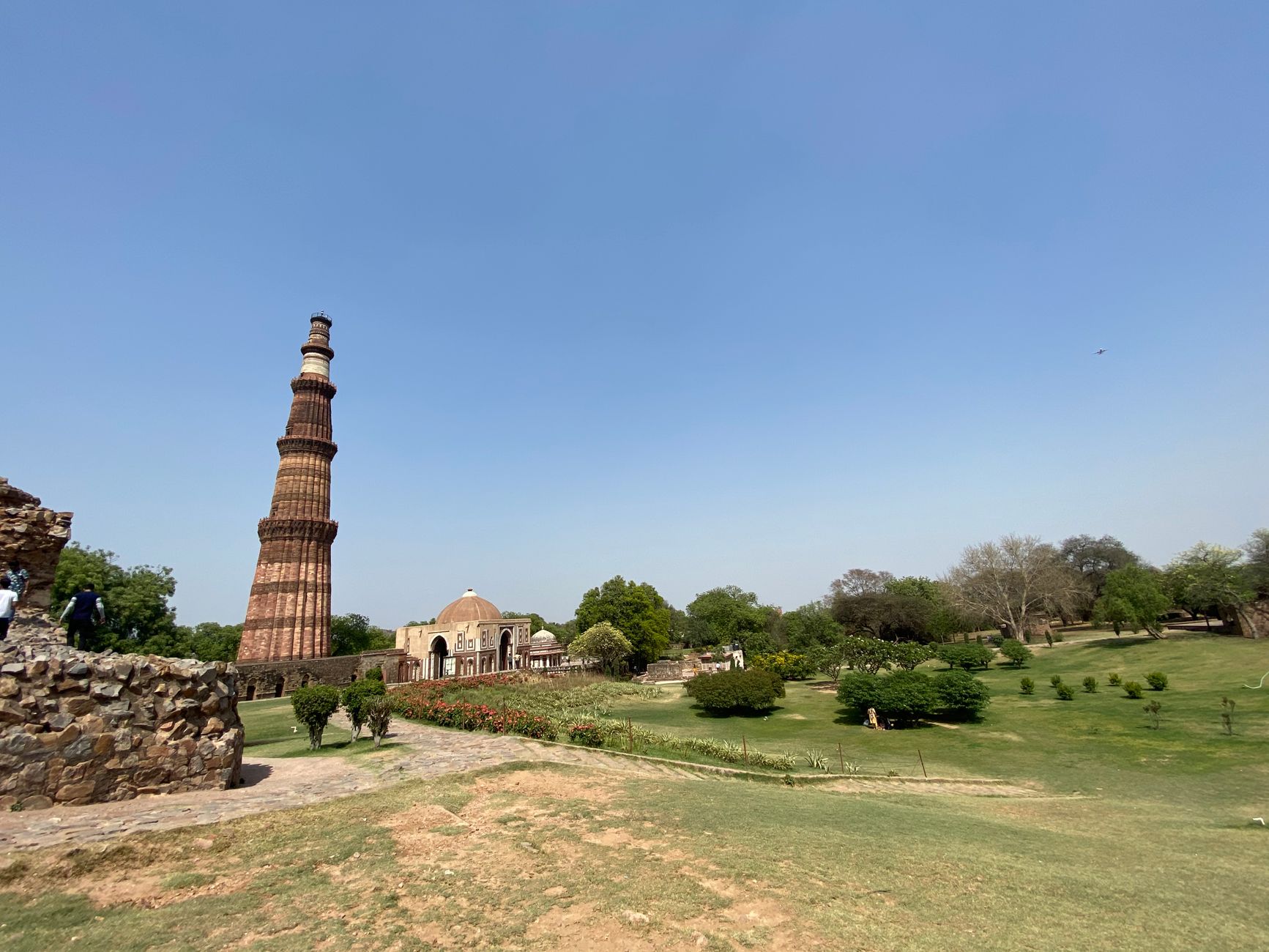
Nehru Park is roughly eighty-five acres of open lawn, mature trees and rolling ground in the heart of Chanakyapuri, the diplomatic enclave built in the 1950s and 1960s to house Delhi's embassies. The park was laid out in 1969, in the centenary year of Jawaharlal Nehru's birth, and is maintained by the New Delhi Municipal Council rather than by any heritage body — which is the point. It holds no tombs, no ruins and no ticket counter. What it holds is space: long sight lines across grass, groves of jamun, neem and arjun trees, a jogging circuit used by embassy staff and south Delhi residents from before dawn, and a bronze statue of Lenin that has quietly outlived a great many arguments about whether it should stay. In a city where most green space is either monumental or fenced, this is Delhi's ordinary, working park.
There is no route to follow. You walk in from one of the gates on Vinay Marg or the Kamal Ataturk Marg side and the park opens out in front of you: broad lawns dipping and rising, a perimeter jogging path of about two and a half kilometres, benches under old trees, and open-air stages used for concerts. Early mornings are the show — laughter-yoga circles, badminton without nets, elderly walking groups doing loops in formation, dogs, and serious runners on the outer track. By mid-morning the lawns belong to families with newspapers and to embassy staff eating lunch. In winter the New Delhi Municipal Council and Delhi Tourism run open-air music programmes here on weekend mornings and evenings, classical and semi-classical, free to attend, with the audience seated on the grass. There is also an NDMC swimming pool within the park complex, run seasonally on its own separate charges.
Plan it as an hour or ninety minutes, not a destination day. The right way to use Nehru Park is as the calm half of a Chanakyapuri morning: walk here first, then go and do something with walls and a roof. Bring water, because kiosks are minimal and there is no café culture inside; bring a mat or a cloth if you intend to sit, because the grass is watered early and often damp. Nothing needs booking. If a winter concert is on, arrive 30 minutes early for a decent patch of lawn and expect no seating beyond what you carry. Dogs are common but should be leashed. There is no left luggage and security at the gates is light but present, given the embassies on every side.
Getting there means an auto or a cab for the last stretch, because no metro station sits at the gate. Lok Kalyan Marg on the Yellow Line is about 2 km east and Bhikaji Cama Place on the Pink Line about 2.5 km south; either is a ₹50-70 auto ride or ₹90-130 by app cab. From Rajiv Chowk the Yellow Line to Lok Kalyan Marg costs around ₹30 and takes about 12 minutes. Sarojini Nagar station on the Pink Line is a similar distance to the south-west. DTC buses run along Shanti Path and Kamal Ataturk Marg for ₹10-25. Driving is genuinely easy here by Delhi standards: Chanakyapuri's roads are wide, traffic is light outside office hours and street parking along Vinay Marg is usually free and available before 9:00.
It costs nothing. There is no entry ticket at any hour, no camera fee for handheld photography, and no charge for the jogging track or the lawns. The winter music programmes staged in the park are free to attend, seated on the grass, with no ticket and no registration. Costs, if any, are the ones you bring: an auto in and out at ₹50-70 each way, water and snacks from vendors outside the gates at ₹20-60, and the seasonal NDMC swimming pool inside the complex, which runs on its own membership and daily-entry charges paid at its own counter rather than at any park gate. Commercial photography and film shoots require permission from the New Delhi Municipal Council and are charged; casual phone photography is nobody's concern.
Come between October and March, and within that between 6:00 and 9:00 in the morning or 16:00 and sunset. Winter mornings here are the best two hours in Delhi's day — cool, low sun through the trees, the whole city awake and moving. February and March add flowering trees. April to June is brutal after 9:00, with the lawns scorched and shade only under the older groves; the park empties completely between 11:00 and 17:00 in those months. The monsoon makes it green and soft and largely deserted, which some people prefer. Weekends are busier than weekdays but never oppressive given the acreage. Winter concert mornings, usually on Saturdays and Sundays, draw the largest crowds of the year, and the lawns near the stage fill an hour before the music starts.
This suits walkers, runners, families with small children, anyone recovering from a long flight, and anyone staying in Chanakyapuri who wants somewhere to go at 6:30 in the morning. It is one of the few Delhi parks where paths are wide and gradients gentle enough for a wheelchair or a pram over much of the ground, though there is no dedicated accessible route and the lawns themselves are uneven. It is not for sightseers ticking boxes — there is nothing to see in the touristic sense, and a visitor with one afternoon in Delhi should be at Humayun's Tomb instead. Teenagers find it dull unless there is a concert on. In heavy rain there is essentially no shelter, and after dark the lighting is patchy and the park thins out quickly.
Nearby, Chanakyapuri gives you a compact half day. The National Rail Museum is about 1.5 km west, roughly a 20-minute walk or a ₹40 auto, and is the best family stop in this part of the city. Sanskriti Kendra and the embassies' architecture along Shanti Path are worth a slow drive. Santushti Shopping Complex, a small courtyard of boutiques, sits about 1.5 km south-east. The Lodhi Garden and the Lodhi Art District murals are 3-4 km east, ₹80-120 by auto. For where to stay, Chanakyapuri itself is the quietest, greenest and most secure area in central Delhi, with a handful of large hotels and government guesthouses; it costs more per night than Karol Bagh or Paharganj and gives you clean air, wide pavements and this park at the end of the road.
The honest caveats: Nehru Park is a local amenity that tourists occasionally wander into, not an attraction, and guidebooks that list it alongside monuments oversell it. There is no café, the toilets are basic and thinly spread across a very large park, and drinking-water points are unreliable outside the cool months. The Lenin statue that features in every article about the park is a modest bronze that takes ninety seconds to see. Mosquitoes are a genuine nuisance at dusk from August to October. Because it sits inside the diplomatic enclave, occasional national events or VIP movement can close gates or restrict parking at short notice with no notice online. And in May and June, honestly, do not bother after breakfast.
What to see
{'what': 'Bronze statue of Lenin', 'where': 'Central lawn, near the Vinay Marg side'}
{'what': 'Perimeter jogging circuit', 'where': 'Outer path, roughly 2.5 km loop'}
{'what': 'Open-air winter music stage', 'where': 'Amphitheatre lawn, north of the park centre'}
Tips from the ground
Arrive before 8:00 in winter — the park is at its best and parking on Vinay Marg is free.
Carry a mat: the lawns are watered early and sitting straight on grass means a wet visit.
Check NDMC listings for free weekend morning concerts between November and February.
Questions, answered
How much does Nehru Park cost?
Nothing. There is no entry ticket at any gate, at any hour, on any day, and no camera charge for handheld photography. The park is maintained by the New Delhi Municipal Council as a public amenity. The only paid facility on the site is the seasonal NDMC swimming pool, which has its own counter and its own daily and membership rates. Commercial film or photo shoots need prior municipal permission and are charged separately; casual visitors pay nothing at all.
Are there free entry windows or free events?
The whole park is free at all opening hours, so no special window is needed. In addition, the free open-air music programmes staged here in winter — classical and semi-classical morning and evening concerts run with municipal and tourism support — are open to anyone without a ticket, with the audience seated on the lawns. These usually fall on weekend mornings between November and February. Arrive around 30 minutes early for a decent spot near the stage.
How long should I spend there?
One to two hours is right. A full perimeter loop of the jogging circuit is about 2.5 km and takes roughly 30 minutes at walking pace; add time to sit under the trees, and you have a comfortable 90 minutes. Runners doing multiple loops and people attending a winter concert stay two to three hours. There are no exhibits, no museum and no cafe, so a purposeful walk-through can be done in 40 minutes if you are short on time.
Which day is it closed?
It does not close. Nehru Park is open every day of the year, with gates operating roughly from 5:00 in the morning until about 20:00, slightly shorter in deep winter when it gets dark early. The one exception is occasional short-notice restriction: because the park sits inside the diplomatic enclave, national events or VIP movement can close a gate or block parking on Vinay Marg for a few hours, usually with no advance notice online.
Do I need to book in advance?
No booking exists and none is needed. You walk in through any gate. Even the free winter concerts are unticketed and unregistered — seating is on the grass, first come first served. The only advance arrangements that apply are permissions for commercial photography, filming or organised group events, which must be obtained from the New Delhi Municipal Council beforehand and carry a fee. Bring a mat, water and mosquito repellent rather than a reservation.
What is the nearest metro station?
Lok Kalyan Marg on the Yellow Line is closest at about 2 km east, and Bhikaji Cama Place on the Pink Line is about 2.5 km south. An auto from either costs roughly ₹50-70 and takes about 10 minutes; an app cab is ₹90-130. From Rajiv Chowk in Connaught Place the Yellow Line fare is around ₹30 with a ride of about 12 minutes. DTC buses along Shanti Path and Kamal Ataturk Marg charge ₹10-25 and stop within a few minutes' walk.
Doing good is the business: every booking through Stay New Delhi funds one verified tonne of carbon removal — same room, same price, no markup.
Start Your Search