Okhla Bird Sanctuary
A four-square-kilometre wetland where the Yamuna crosses into Uttar Pradesh, with more than three hundred recorded bird species and a metro station named after it — Delhi's most accessible serious birdwatching.
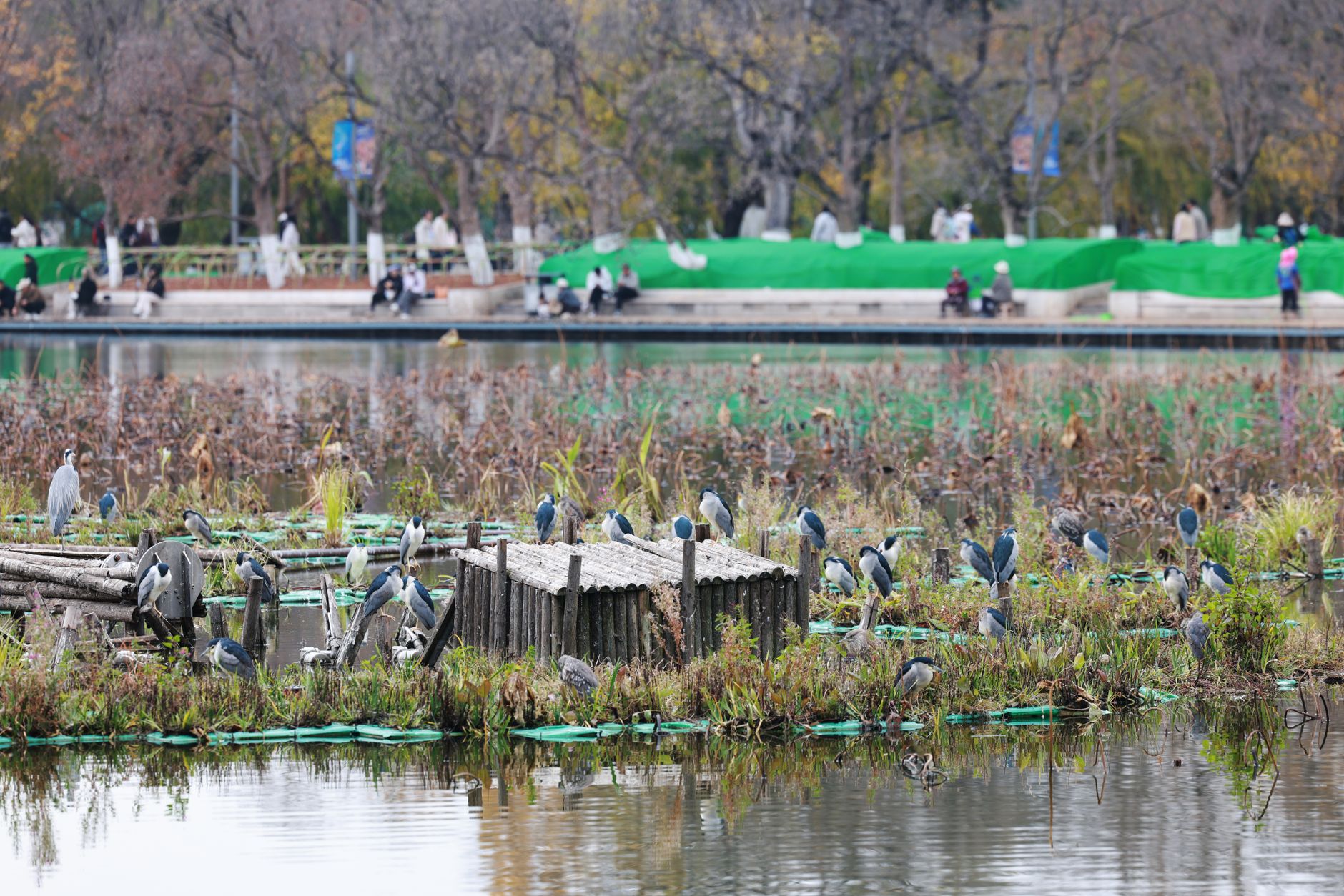
Okhla Bird Sanctuary occupies roughly four square kilometres of wetland at the point where the Yamuna leaves Delhi and enters Uttar Pradesh, held back by the Okhla barrage. It was notified as a bird sanctuary in 1990 and is managed by the Uttar Pradesh Forest Department, though its entrance sits a short walk from the Delhi border in Noida. The open water, reed beds and marshy islands created by the barrage make it one of the most important bird habitats on the upper Yamuna: over three hundred species have been recorded here across the decades, including large wintering populations of ducks, waders and gulls, along with resident kingfishers, herons, egrets, cormorants and raptors. It is an unlikely place — flyovers, high-rises and industrial Noida on every horizon — and that contrast is exactly why birders keep coming back to it.
The visit is a walk along embankments and paths inside a fenced compound. From the ticket gate a paved track runs beside the water with viewing points and watchtowers spaced along it; the towers are the real asset, giving you elevation over the reed beds and the open water where the flocks sit. There is an interpretation area with panels on the species you might see, benches under trees, and quieter side paths through scrub where warblers and prinias work the bushes. Distances are modest — a full out-and-back along the main embankment is a few kilometres — but birders move slowly, and two hours passes without effort. Bring binoculars: much of what you will see is at 100 to 400 metres across water, and without optics the sanctuary reduces to a pleasant walk beside a river.
Plan it as a morning. Two to three hours is right, arriving at opening, and there is nothing to book. Carry water and a snack, because the food options inside are minimal to non-existent and the nearest proper cafés are back across the road in Noida. Sun protection matters more than it looks — the embankment is exposed. If you are serious about birds, come with a field guide or a checklist app and, ideally, with someone who knows the site, because the difference between a casual walk and a fifty-species morning here is entirely down to knowing where to stand. Skip weekends if you can. Skip the whole idea between April and September, when both the heat and the bird numbers work against you.
This is the easiest wildlife site in the National Capital Region to reach without a car, because a metro station carries its name. Okhla Bird Sanctuary station on the Magenta Line sits about 700 metres from the entrance, a ten-minute walk. From Rajiv Chowk take the Blue Line to Botanical Garden and change to the Magenta Line for one stop; total journey is about 45-55 minutes and the fare around ₹50-60. From the Kalindi Kunj side, buses and autos run constantly along the Mathura Road and Noida approaches for ₹10-30. Driving from central Delhi is 15-18 km via the DND Flyway or Kalindi Kunj, 35-60 minutes depending on the hour, and there is free roadside parking outside the gate. App cabs from Connaught Place run roughly ₹300-400.
Entry is modest: around ₹30 per Indian adult, with children paying a reduced ticket of roughly half that and foreign nationals charged a substantially higher rate — in the region of ₹350 — in line with Uttar Pradesh forest tariffs, which are revised from time to time and are posted at the counter. Still or video camera charges may be levied separately for professional equipment, so ask at the window if you are carrying a long lens on a tripod. There is no combined ticket with anything else, no guide service sold at the gate and effectively nothing to buy inside, so the whole outing costs less than the metro fare to reach it. Parking outside is free.
The season is short and absolute: mid-November to late February. That is when the migrants are in, the water level is right and the temperature lets you stand still for an hour without suffering. December and January are the peak, and a good winter morning here can produce forty to sixty species. Arrive at opening, 7:30 in winter, and work the first two hours — bird activity drops sharply after 10:00 and the light for photography goes flat. Late afternoon from 15:00 to closing is a decent second window. March is thinning out; April to September is hot, humid and quiet, with the monsoon raising water levels and closing off some paths. Weekend mornings bring local families and picnicking crowds that push the birds further out.
It suits birdwatchers above all, and photographers with long lenses. It suits families with older children who can be persuaded to be quiet, and it suits anyone staying in Noida or east Delhi who wants a genuine outdoor morning without a long drive. Accessibility is partial: the main paved embankment near the entrance is flat and manageable with a wheelchair for a few hundred metres, but the watchtowers involve steps and the side trails are rough earth. It is a poor choice on a rainy afternoon, a poor choice without binoculars, and a poor choice for anyone with only an hour, because the walk from the gate to the productive stretches takes fifteen minutes on its own. Small children get bored fast.
Nearby, the pairings are practical rather than glamorous. Kalindi Kunj park sits across the barrage a few minutes away by auto. The Lotus Temple and Kalkaji are 6-7 km west, roughly ₹150-200 by cab or a metro hop, and make a natural second half of the day. The Noida malls at Sector 18 and the Botanical Garden interchange are 4-6 km north for lunch and air conditioning. Akshardham is about 10 km north along the river. For a base, Noida is the sensible area on this side of the Yamuna — modern hotels at honest prices, good metro links on the Blue and Magenta lines, and far cheaper per night than Aerocity or the centre, at the cost of a longer ride to the old city.
The honest caveats: this is a working wetland beside a heavily polluted stretch of the Yamuna, and it looks it. Water quality is poor, foam and floating waste appear at the barrage, and the smell on a warm day is unpleasant. The sanctuary is fenced and comparatively small, so you are birding along a corridor rather than roaming a wilderness. Species counts published online reflect decades of records by specialists, not what a casual visitor sees in one visit — expect twenty to thirty species without binoculars and expertise. Ticket rates and opening times are set by the Uttar Pradesh Forest Department and do change, so confirm at the counter. And outside the winter window, be blunt with yourself: there is very little here to justify the trip.
Hours & entry
Not free
Apr-Sep daily 7:00-17:30 · Oct-Mar daily 7:30-17:00 · Ticket counter closes about an hour before the gate
What to see
{'what': 'Main watchtower over the open water', 'where': 'Embankment path, about 1 km from the gate'}
{'what': 'Reed-bed viewing points for waders', 'where': 'Southern stretch of the embankment'}
{'what': 'Scrub side-trail for warblers and prinias', 'where': 'Behind the interpretation area'}
Tips from the ground
Arrive at opening — bird activity drops sharply after 10:00.
Bring binoculars; without them most of the sanctuary is out of useful range.
Confirm the current ticket rate at the counter — Uttar Pradesh forest tariffs are revised periodically.
Questions, answered
How much does Okhla Bird Sanctuary cost?
Entry is around ₹30 for an Indian adult, with children paying roughly half and foreign nationals charged a much higher rate, in the region of ₹350, under Uttar Pradesh Forest Department tariffs. Rates are revised periodically and the current figures are posted at the ticket counter by the gate. Professional camera and video equipment can attract a separate charge, so ask at the window if you are carrying a tripod. Parking outside the gate is free and there is nothing to buy inside.
Are there free entry windows?
No. The sanctuary charges its ticket at every opening hour and there is no free morning, free day or concession window beyond the reduced child rate. Because the adult ticket is only about ₹30, the cost is rarely the deciding factor. Occasional bird counts, awareness walks and events organised with conservation groups on days such as World Wetlands Day may be run free or by prior registration; those are announced by the organisers rather than at the gate.
How long should I spend there?
Two to three hours, arriving at opening. That gives you the walk out along the embankment, time at the watchtowers where the flocks are visible, and the scrub side-trails on the way back. Serious birders stay from opening until about 10:30, after which activity falls away. A quick look — gate, first viewing point and back — takes about 45 minutes but is barely worth the journey. Distances inside total only a few kilometres on flat paths.
Which day is it closed?
There is no advertised weekly closing day; the sanctuary opens daily through the year during daylight hours, roughly 7:00 to 17:30 from April to September and 7:30 to 17:00 from October to March. Because it is managed by the Uttar Pradesh Forest Department, timings and access can change with the season, and paths can be closed during high monsoon water levels or maintenance work. Confirm at the gate on the day rather than relying on third-party listings.
Do I need to book in advance?
No. Tickets are sold at the counter beside the gate and there is no online booking, no capacity limit and no queue worth worrying about. Advance arrangements only matter for organised group visits, school parties and professional filming, which should be cleared with the Uttar Pradesh Forest Department beforehand. If you want a guided morning, arrange it through a Delhi birding group before you arrive — no guides are hired at the gate — and bring binoculars, which are not available to rent.
What is the nearest metro station?
Okhla Bird Sanctuary station on the Magenta Line is about 700 metres away, a ten-minute walk to the entrance — the sanctuary is one of the very few in India with a metro stop named after it. From Rajiv Chowk, take the Blue Line to Botanical Garden and change to the Magenta Line for a single stop; expect 45-55 minutes and a fare of roughly ₹50-60. Autos and buses on the Kalindi Kunj and Noida approaches charge ₹10-30.
Doing good is the business: every booking through Stay New Delhi funds one verified tonne of carbon removal — same room, same price, no markup.
Start Your Search