Paranthe Wali Gali
A lane barely two metres wide off Chandni Chowk where three family shops have been deep-frying stuffed parathas in ghee since the 1870s — the most concentrated piece of edible history in Delhi.
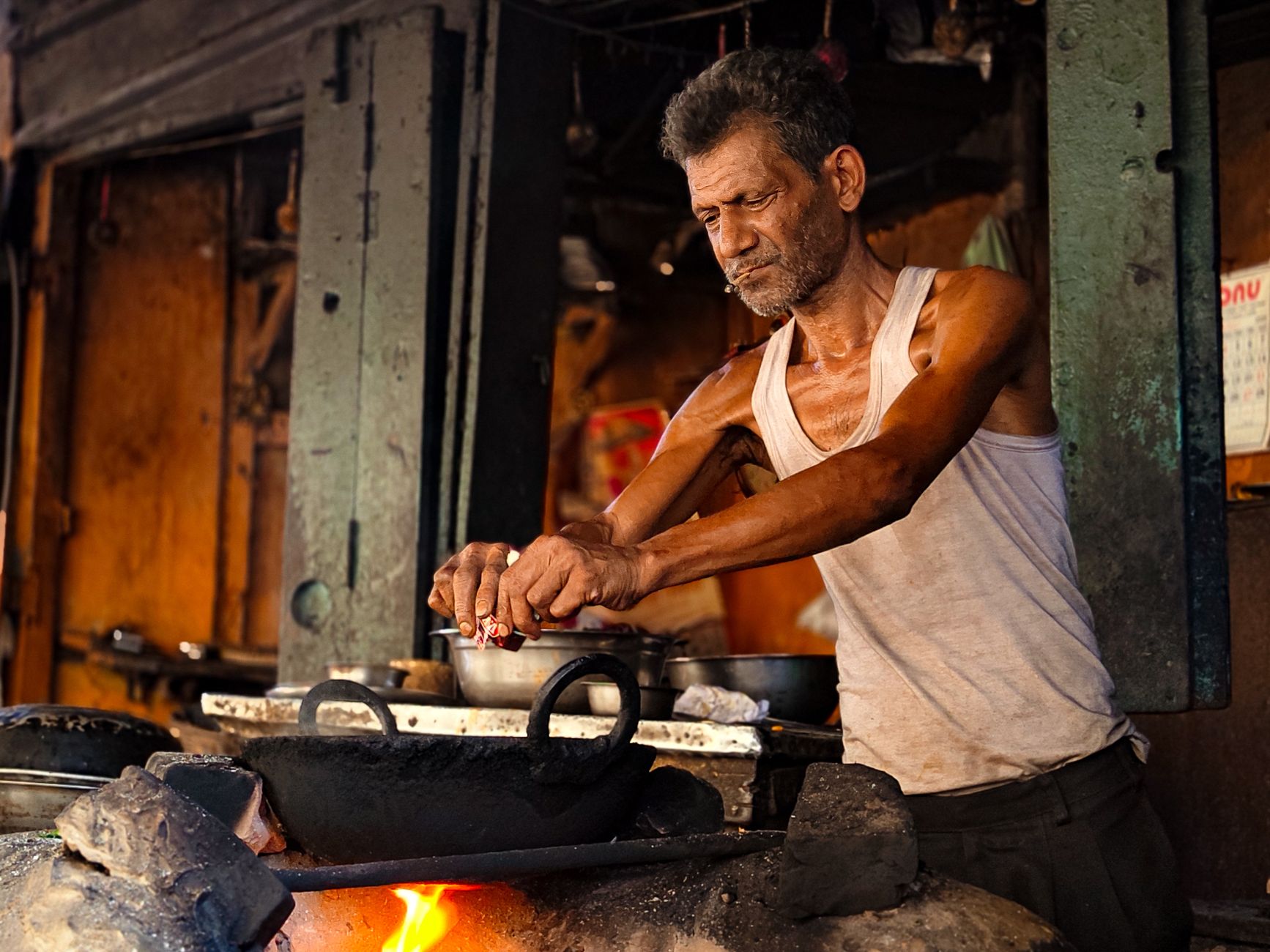
Paranthe Wali Gali — the lane of the paratha makers — branches south off the Chandni Chowk avenue near Dariba Kalan, and is one of the very few streets in Delhi still named after what it sells. The oldest surviving shops date their founding to the 1870s: Pandit Gaya Prasad Shivcharan claims 1872, and Pandit Babu Ram Devi Dayal and Pandit Kanhaiyalal Durga Prasad are of a similar vintage. All are run by Brahmin families from the same tradition, all cook pure vegetarian food with no onion or garlic, and all fry their parathas rather than griddle them — the bread goes into a wide, shallow iron pan of ghee and comes out puffed and crisp. At its peak the lane had a dozen such shops; six or seven remain, squeezed between sari and trim traders, and the survivors have been feeding the same recipes to Old Delhi for five generations.
Eating here is a compressed, slightly theatrical business. You step off the main avenue into a lane so narrow that a passing handcart flattens you against a wall, and within thirty metres you are at the frying pans, watched from framed photographs by politicians and film stars who ate here decades ago. Marble-topped tables and benches fill tiny rooms behind the cooking. You order by the piece: the classic aloo, or gobhi, paneer, methi, mixed vegetable, and the eccentric ones the shops are famous for — rabri paratha, khurchan, papad, karela, even a sweet one. Each plate arrives with four accompaniments in small steel bowls: a potato curry, a sweet-and-sour pumpkin, mint chutney and a tamarind-banana chutney. The whole meal takes twenty minutes and leaves you comprehensively full.
Plan this as a stop inside a Chandni Chowk morning rather than a destination in its own right — the lane is fifty metres long and you will be done in three-quarters of an hour. Two parathas per person is plenty; the ghee is heavy and most first-timers over-order. Nothing is bookable, tables are shared, and you may stand for a few minutes at peak hour. Order one classic and one unusual paratha and split them. Drink the lassi from a shop on the main avenue afterwards rather than a bottled soft drink. What to skip: the newer imitator stalls that have opened at the lane's mouth with laminated menus — the old shops are the ones with the family names and the founding dates painted above the door.
Getting there means getting to Chandni Chowk. Take the Yellow Line to Chandni Chowk station and use exit 5 by Gurudwara Sis Ganj Sahib, then walk west along the pedestrianised avenue for about seven minutes; the lane opens on your left just past Dariba Kalan and is signed in Hindi and English. From Rajiv Chowk in Connaught Place the metro ride is two stops, six minutes, roughly ₹20-30. Chawri Bazaar station on the same line is an alternative, ten minutes' walk from the south. Autos from Connaught Place cost ₹100-150 but crawl through the last kilometre, and cabs cannot enter the main avenue between 09:00 and 21:00 — they will set you down on Netaji Subhash Marg, a 10-minute walk. A cycle rickshaw from the metro exit costs ₹40-60 and is faster than it looks.
There is nothing to pay to walk in. Food prices are modest but no longer trivial: a single stuffed paratha with its four accompaniments runs about ₹80-140 depending on the filling, with the paneer, rabri and speciality versions at the upper end. A full meal for two with three or four parathas, a lassi and a sweet comes to ₹400-700. Payment is by cash or UPI; cards are unreliable in the older shops. There is no service charge and no tipping culture at these counters. Compare that with a mid-range Khan Market lunch at ₹1,200-2,000 a head and the value is obvious. Bring small notes, since change for a ₹500 at 13:00 on a Saturday is a slow negotiation. Bottled water costs ₹20 and is worth buying rather than drinking the table jug.
The lane runs daily from about 09:00 to 23:00, with a lull in the mid-afternoon when some shops half-shut. The best window is 10:00-11:30 on a weekday: the frying is at its freshest, the crowd is thin and the surrounding bazaar is still opening up. From 12:30 to 15:00 you will queue and share a bench. Evenings after 19:00 are busy and atmospheric but hot in the tiny rooms. Sunday is quieter on the main avenue since the cloth trade closes, and the paratha shops stay open — one of the few good reasons to be in Chandni Chowk on a Sunday. October to March is comfortable; the pre-monsoon weeks of May and June turn a room with three frying pans into an oven, and monsoon days make the lane slippery underfoot.
It suits food-first travellers, vegetarians and anyone wanting one authentic, cheap Old Delhi meal without a full food tour. Jains and strict vegetarians are well served, since the kitchens use no onion or garlic. It suits children if they will eat mildly spiced fried bread, which most do. It does not suit wheelchair users at all — the lane is narrow, the surface broken, and the eating rooms are up a step with no space to turn. It is not the place for a leisurely lunch, or for anyone who needs air conditioning, a clean toilet or a table to themselves. If you have an hour before a train from Old Delhi station, 2 km north, this is a realistic and rewarding use of it.
Nearby, everything is within ten minutes on foot: Dariba Kalan's silver shops are at the lane's mouth, Kinari Bazaar's wedding trim is a two-minute detour, Jama Masjid is a ten-minute walk south through the lanes, and the Red Fort sits at the eastern end of the avenue. Khari Baoli's spice market is fifteen minutes west. The honest caveats: the food is much heavier than photographs suggest and a full plate defeats most visitors; hygiene is street-level and sensitive stomachs should stick to hot, freshly fried food and bottled water; and the lane's fame has brought aggressive touting at its entrance, where men will steer you to whichever shop pays them. Walk past, read the founding dates above the doors, and choose for yourself.
Hours & entry
No ticket at any hour · lane open daily, food charged per plate
Daily roughly 09:00-23:00 · Busiest 12:00-15:00 and 19:00-21:30 · Some shops take a short afternoon lull around 16:00
What to see
{'what': 'Pandit Gaya Prasad Shivcharan, established 1872', 'where': 'First of the old shops on the right, thirty metres into the lane'}
{'what': 'The open frying pans', 'where': 'Street-front counter of each shop, before the seating room'}
{'what': 'Rabri or khurchan paratha', 'where': 'Speciality section of the menu boards at the older shops'}
Tips from the ground
Two parathas per person is the limit for most people — order one classic, one unusual, and share.
Come 10:00-11:30 on a weekday to avoid sharing a bench.
Ignore the men steering you at the lane mouth; pick a shop by its painted founding date.
Questions, answered
How much does a meal in Paranthe Wali Gali cost?
There is no charge to enter the lane. A single stuffed paratha with its four accompaniments costs about ₹80-140 depending on filling, with paneer and rabri versions at the top of that range. Two people eating three or four parathas with a lassi and a sweet spend ₹400-700 in total. Payment is cash or UPI; cards often fail in the older shops, so bring ₹100 notes for quick change at busy hours.
Are there free tastings or free entry times?
No. The lane is a public street with no ticket at any hour, but nothing is given away — every paratha is charged per piece. Some paid Old Delhi food walks, priced around ₹1,200-2,500 per person for three hours, include a paratha here as one of six or seven tastings, which is the only way it comes bundled. The accompanying chutneys and vegetable bowls are included with each plate at no extra cost.
How long do I need?
About 45 minutes. The lane itself is only fifty metres long, ordering is quick, and a meal takes twenty minutes from sitting to finishing. Allow an extra ten to fifteen minutes at peak hours between 12:30 and 15:00, when you may wait for a bench. Most visitors fold this into a longer Chandni Chowk walk of three or four hours rather than making a separate trip for it.
Do the shops close on any day?
The old paratha shops open daily, roughly 09:00 to 23:00, including Sundays when most of the surrounding cloth and jewellery trade shuts — that makes Sunday a quieter and quite pleasant time to eat here. Some shops half-close for a lull around 16:00. Expect reduced service and shorter hours on major festival days such as Diwali and Holi, when Old Delhi's traders take time off with their families.
Can I book a table?
No. None of the shops take reservations; seating is a handful of marble tables and benches, shared with strangers when full. You order at the counter or from a seat and pay afterwards. If you want a guaranteed seat, come before 11:30 or after 21:00. Guided food walks that include the lane should be booked a few days ahead in the October to March season, but they do not reserve tables either.
Which metro station is nearest?
Chandni Chowk on the Yellow Line, exit 5 by Gurudwara Sis Ganj Sahib, then a seven-minute walk west along the pedestrianised avenue; the lane opens on the left just past Dariba Kalan. Chawri Bazaar, also Yellow Line, is a ten-minute walk from the south. From Rajiv Chowk the ride is two stops, six minutes, ₹20-30. Cabs cannot enter the avenue between 09:00 and 21:00 and will drop you a ten-minute walk away.
Doing good is the business: every booking through Stay New Delhi funds one verified tonne of carbon removal — same room, same price, no markup.
Start Your Search