Purana Qila (Old Fort)
The oldest continuously excavated site in Delhi, where trenches have turned up Painted Grey Ware from around 1000 BCE beneath a Sher Shah Suri fortress.
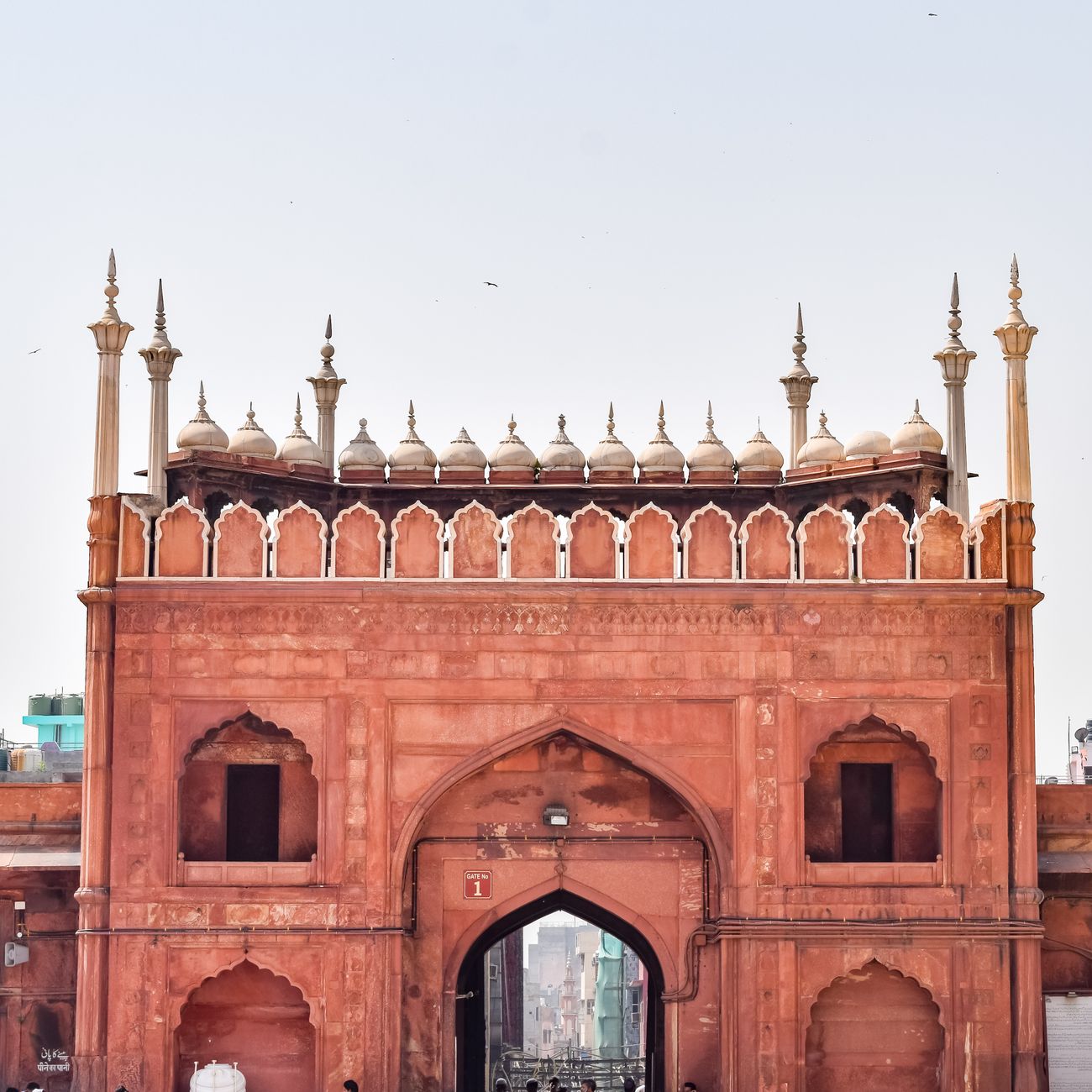
Purana Qila is the fort that Humayun began around 1533 as Dinpanah and that Sher Shah Suri completed after driving him out, adding walls roughly 1.5 km in circuit with three great gates — Bara Darwaza to the west, Humayun Darwaza to the south and Talaqi Darwaza to the north. Inside stand two exceptional buildings: the Qila-i-Kuhna Masjid of 1541, a five-arched mosque in red sandstone and marble that is one of the finest pre-Mughal mosques in India, and Sher Mandal, an octagonal two-storey pavilion that Humayun used as a library and from whose steps he fell to his death in 1556. What makes the site archaeologically important is what lies beneath: ASI excavations, resumed in recent seasons, have exposed Painted Grey Ware, Northern Black Polished Ware and later levels in a sequence long argued to represent the site of Indraprastha.
A visit is short and physical rather than gallery-like. You come through the Bara Darwaza onto a broad ramp, and the whole interior is essentially a grassy plateau ringed by ramparts. The Qila-i-Kuhna Masjid sits to your right, its mihrab wall carved with marble inlay and a stair to the roof; the sandstone is warm and the interior acoustics are startling. Sher Mandal stands a hundred metres south, small, red and steep, with the fatal staircase roped off. Between the two, fenced excavation trenches show the stratigraphy, with signboards giving the ceramic phases. Walk the inner face of the ramparts to the Talaqi Darwaza for the best wall views, and look out at the lake on the west side, dug in the 1960s along the old moat line, where pedal boats run.
Ninety minutes is honest, two hours if you walk the full rampart circuit and read the trench boards. Bring water: there is very little shade and no café inside, only a kiosk near the gate. This is a good early-morning site because it opens at 07:00 and is a favourite of local walkers and joggers. Combine it with the National Zoological Park, whose gate is 400 metres south on Mathura Road, or with Pragati Maidan. Skip the boating unless you have children, and skip the evening sound and light show unless you find it running — it has been intermittent for years. Photographers should note that the ramparts face west, so the golden hour works from inside looking out.
The nearest metro is Supreme Court, formerly Pragati Maidan, on the Blue Line, 1.2 km north — about 15 minutes' walk along Mathura Road or a ₹30 auto. From Rajiv Chowk the ride is two stops and roughly ₹20, so the whole trip from Connaught Place takes 25 minutes. Khan Market on the Violet Line is 2.5 km southwest. Many buses run down Mathura Road and stop at Delhi Zoo, directly outside the fort gate. By car it is 10 minutes from India Gate and there is an ASI car park at the Bara Darwaza charging around ₹20-30; it fills on Sundays with zoo traffic. From Aerocity a cab takes 35-45 minutes. Auto from Connaught Place is about ₹80-100.
Entry is ₹25 for Indian nationals and SAARC and BIMSTEC citizens and ₹300 for other foreign nationals, marginally cheaper booked online through the ASI portal. Children under 15 are free. That covers the whole enclosure including the mosque, Sher Mandal and the excavation viewing areas. A video camera permit is ₹25. The boating lake outside the west wall is run separately and charges roughly ₹100-200 per pedal boat for half an hour, payable at the boathouse. Parking is extra. There is no combined ticket with the zoo next door, which has its own fare and its own advance booking. Nothing else inside costs money; the only refreshments are bottled water and packet snacks at the gate kiosk.
Come at 07:00 for the coolest, emptiest hour, when the fort belongs to walkers and the sun is low on the ramparts. Weekday mornings stay quiet all the way to 11:00. Sunday afternoons bring families spilling over from the zoo and the boating lake, and the lawn fills up. It opens every day of the week, which makes it another Monday-proof option. Winter, November to February, is ideal, though morning fog can hang over the moat until 09:30. March and October are pleasant. May and June are severe on an open plateau with no trees, and the monsoon leaves the grass thick and the trenches tarpaulined. Closing is firm at 17:00 and the guards start clearing the ramparts around 16:40.
It suits walkers, history readers and anyone with a spare morning between Old Delhi and India Gate. Families combine it easily with the zoo and the boats. Wheelchair access is partial: the entrance ramp through Bara Darwaza is manageable, but the interior is grass and uneven paths and the mosque has steps. Teenagers usually last about forty minutes unless the excavation trenches are open and staffed. It is a bad rainy-day choice, being almost entirely outdoors, and it will not fill a full afternoon on its own. For a one-hour gap it works better than most Delhi monuments because the gate, the mosque and Sher Mandal are within 200 metres of each other.
Nearby, the National Zoological Park is 400 metres south, the Crafts Museum is a 10-minute walk northwest, and Humayun's Tomb is 3 km south down Mathura Road, an easy ₹60 auto that makes a natural pairing of Delhi's two Humayun sites. Khan Market for lunch is 10 minutes by car. Honest caveats: the Indraprastha claim is contested and the visible trenches are modest, so anyone arriving expecting a dramatic dig will be let down; much of the interior is empty lawn; the sound and light show advertised in older guides is frequently not running; and the lake is a modern feature, not a Mughal moat in any meaningful sense. Come for the mosque and the walls, not for a museum experience.
Hours & entry
Not free
Daily 07:00-17:00 · Ticket counter closes 16:30 · Boating lake operates roughly 10:00-18:00, separately charged
What to see
{'what': 'Qila-i-Kuhna Masjid (1541)', 'where': 'Northern half of the interior, right of the Bara Darwaza ramp'}
{'what': 'Sher Mandal', 'where': 'Centre-south of the enclosure, 100 m from the mosque'}
{'what': 'ASI excavation trenches', 'where': 'Fenced plots between the mosque and the eastern rampart'}
Tips from the ground
Open at 07:00 — the coolest, quietest hour and the best rampart light.
Boating on the western lake is a separate ticket bought at the boathouse, not at the fort gate.
The zoo gate is 400 m south if you want to fill the rest of the morning.
Questions, answered
What is the entry fee for Purana Qila?
₹25 for Indian nationals and SAARC and BIMSTEC citizens, and ₹300 for other foreign nationals, with a small saving for booking on the ASI portal. Children under 15 enter free. The ticket covers the entire enclosure, including the Qila-i-Kuhna Masjid, Sher Mandal and the excavation viewing areas. Video camera permits cost ₹25. Pedal boats on the lake outside the west wall are run separately at roughly ₹100-200 for half an hour, paid at the boathouse.
Is entry ever free?
No. Purana Qila charges every day it is open, with no free hour, free evening or monthly free Sunday. The only routine exemption is for children under 15. The ASI has sometimes waived charges across its ticketed monuments on World Heritage Day, 18 April, but that is announced at short notice and should not be built into a plan. Budget ₹25 or ₹300 and treat any free access as a bonus.
How much time does it need?
About 90 minutes. An hour covers the Bara Darwaza, the Qila-i-Kuhna Masjid and Sher Mandal at a comfortable pace. Two hours lets you walk the inner rampart circuit to the Talaqi Darwaza, read the excavation signboards and sit by the lake. Add 30 minutes if you are boating and another 15 for the walk from the Blue Line metro. It is one of the few Delhi forts you can genuinely see in a spare morning hour.
Which day is Purana Qila closed?
None — it opens seven days a week, 07:00 to 17:00, with the ticket counter shutting around 16:30. That includes Mondays, when the Red Fort is closed, so it is a reliable substitute at the start of the week. Access to individual excavation trenches can be fenced off during a dig season or after heavy rain, and the sound and light show has been suspended for long stretches, but the fort itself stays open.
Do I need to book ahead?
No. Purana Qila has no capacity cap, no timed slots and rarely more than a short queue at the counter, even on Sundays. An ASI e-ticket saves a couple of minutes and a few rupees, which is worth doing if you are already booking Humayun's Tomb the same day. Guides are not stationed here in the numbers you find at Qutub Minar, so arrange one in advance if you want a specialist on the excavations.
What is the nearest metro station?
Supreme Court, formerly Pragati Maidan, on the Blue Line, 1.2 km north — a 15-minute walk down Mathura Road or a ₹30 auto. From Rajiv Chowk it is two stops and around ₹20, roughly 25 minutes door to door. Khan Market on the Violet Line is 2.5 km southwest. Buses along Mathura Road stop at Delhi Zoo, directly outside the gate, and there is an ASI car park at the Bara Darwaza for about ₹20-30.
Doing good is the business: every booking through Stay New Delhi funds one verified tonne of carbon removal — same room, same price, no markup.
Start Your Search