Qutub Minar Complex
The tallest brick minaret on earth, standing in a 12th-century mosque courtyard built from the pillars of twenty-seven demolished temples — Delhi's founding archaeological site and its most photographed one.
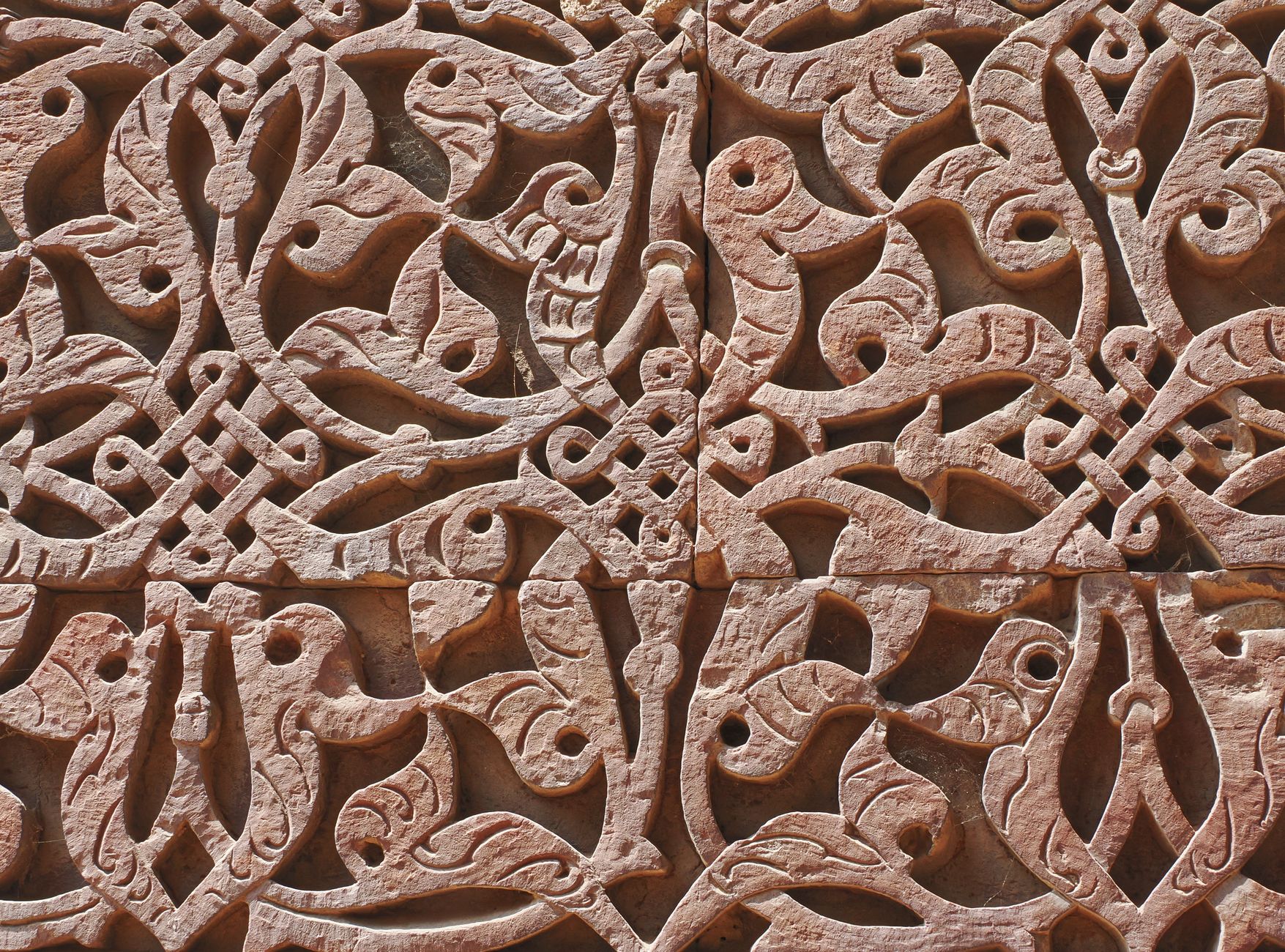
The Qutub Minar is the single monument that explains how Delhi began as a sultanate capital. Qutb al-Din Aibak laid its first storey in 1199, immediately after the Ghurid conquest, and his successor Iltutmish carried it to four storeys; Firoz Shah Tughlaq rebuilt the top after lightning damage in the 1360s, which is why the fifth storey switches from red sandstone to marble. The finished shaft rises 72.5 metres over a base 14.3 metres wide, tapering to 2.7 metres, with 379 internal steps that have been closed to the public since 1981. Around it stands the Quwwat-ul-Islam mosque of 1192, the earliest surviving mosque in northern India, its courtyard colonnades assembled from carved pillars stripped out of twenty-seven earlier Jain and Hindu temples. UNESCO inscribed the whole complex in 1993. It is not one building but a compressed archaeological record of four dynasties in about thirty acres.
A visit runs anticlockwise from the ticket gate. You pass the ruined Alai Darwaza of 1311, Alauddin Khalji's gateway and the first true dome-and-arch building in India, its marble inlay and horseshoe arches still sharp. Behind it the mosque courtyard opens, and in the middle stands the Iron Pillar: 7.2 metres of nearly rust-free wrought iron, cast in the 4th century under the Guptas, moved here from elsewhere, with a Sanskrit inscription in Brahmi script around its shaft. A low railing has stopped people hugging it since 1997. Iltutmish's tomb of 1235 sits to the northwest, roofless, its interior a dense carpet of carved calligraphy and lotus medallions. In the far corner squats the Alai Minar, a 25-metre stub of rubble core — Khalji's plan to build a minaret twice the height of the Qutub, abandoned when he died in 1316.
Plan it as a two- to three-hour block and buy online before you arrive. The ASI sells e-tickets through the ASI ticketing portal and DigiYatra-linked apps; the QR queue moves in a minute or two, the cash counter can take fifteen on a Sunday. Take a bottle of water and a hat, because the lawns are open and there is very little shade between the mosque and the Alai Minar. Licensed ASI guides wait at the gate and charge by negotiation, usually ₹500-800 for a group; the audio guide app is a cheaper alternative. Skip anything sold as a "climb the Minar" tour — nobody has been allowed inside the shaft for over forty years, after a stampede on the stairs. Two hours covers everything; three lets you sit on the grass and actually look at the Iron Pillar inscription.
Getting there is easiest by metro. From Rajiv Chowk in Connaught Place, take the Yellow Line south towards Millennium City Centre Gurugram and get off at Qutab Minar station — about 30 minutes and roughly ₹40. The station is not at the monument: it is 1.8 km north on Mehrauli-Badarpur Road, so take a shared or metered auto for ₹30-50, or an app cab for ₹60-90. Walking it takes 22 minutes along a pavement that disappears in places. Buses 715, 505 and 534 run along the same road and drop at the Qutub Minar stop by the gate. By car, the signed ASI car park off Anuvrat Marg charges around ₹20-30 for a car; it fills by 11:00 at weekends and the overflow parks on the verge. Cabs from Aerocity take about 25 minutes.
Tickets are sold in two tiers: ₹35 for Indian nationals and citizens of BIMSTEC and SAARC countries, and ₹550 for other foreign nationals. Booking online through the ASI portal usually saves ₹5 for Indians and ₹50 for foreigners, so plan on ₹30 and ₹500 respectively. Children under 15 enter free regardless of nationality, but you may be asked for a document. A still camera on your phone or a DSLR costs nothing; a video camera is charged ₹25. There is no combined ticket linking the Qutub to Humayun's Tomb or the Red Fort — each is bought separately. Inside there is nothing to buy except bottled water and soft drinks from the kiosk near the exit, at inflated prices. Toilets are free. Guides, wheelchairs and cloakroom use are not part of the ticket.
Come at opening, 07:00, or after 16:00. The first hour gives you the mosque courtyard almost to yourself and side light down the fluted shaft; the last hour turns the sandstone deep orange and is when photographers show up. Between 11:00 and 15:00 the complex fills with school groups and coach parties, and there is no queueing system inside the mosque, just crowd. It never closes — no weekly rest day — which makes it the reliable choice on a Monday when the Red Fort is shut. Season matters more than hour: October to March is comfortable, December mornings are cold and often foggy enough to hide the top two storeys until 10:00, and May and June push past 43°C on open lawns with no shade at all. The monsoon, July to September, is humid but the grass is green and crowds thin out.
It suits nearly everybody. Paths between the ticket gate, the mosque and the Alai Darwaza are paved and broadly wheelchair-navigable, though the mosque courtyard has thresholds and loose gravel; ASI keeps a small number of wheelchairs at the gate. Families do well because children can run on lawns rather than be shushed through galleries, and teenagers get the Alai Minar to scramble around at the base. If you have one hour before a train it is the wrong choice — the station transfer alone eats forty minutes. On a rainy afternoon it is exposed and miserable; go to a museum instead. Anyone with a serious interest in the temple spoils in the colonnade should bring a torch, because the carved pillars in the darker western arcade are the most rewarding thing in the complex and are almost never lit.
Fold it into the rest of Mehrauli. The Mehrauli Archaeological Park gate is a 10-minute walk west and costs nothing, giving you Balban's tomb, Jamali Kamali and Rajon ki Baoli in the same half-day. Mehrauli village bazaar, five minutes further, is where you find lassi and kebabs at a fraction of Hauz Khas prices. Saket's malls and cinemas are 4 km east if the afternoon turns hot. As for honest caveats: the complex is smaller than the photographs suggest and you cannot go up the tower, which disappoints a surprising number of visitors; the "seven-metre Iron Pillar that never rusts" story is heavily embroidered by guides, and it does corrode at the buried base; and the two-tier pricing catches out foreign visitors who expect the ₹35 board rate. Weekend afternoons are genuinely unpleasant, and the lawns are patrolled, so no picnics.
Hours & entry
Not free
Daily 07:00-17:00 (gates close at sunset) · Ticket counter shuts 30 min before closing · Open every day including public holidays
What to see
{'what': 'Iron Pillar of Chandragupta II', 'where': 'Centre of the Quwwat-ul-Islam mosque courtyard, behind the railing'}
{'what': 'Alai Darwaza (1311)', 'where': 'Southern gateway, immediately right of the main ticket path'}
{'what': 'Tomb of Iltutmish', 'where': 'Northwest corner of the mosque enclosure, roofless chamber'}
Tips from the ground
Buy the e-ticket on the ASI portal — the QR lane at the gate is far shorter than the cash counter.
Enter at 07:00 for empty courtyards; the 16:00-17:00 hour has the best light but the worst crowds.
Bring a small torch for the carved temple pillars in the shaded western colonnade.
Questions, answered
How much does Qutub Minar cost?
Entry is ₹35 for Indian nationals and visitors from SAARC and BIMSTEC countries, and ₹550 for other foreign nationals. Booking on the ASI e-ticketing portal shaves it to about ₹30 and ₹500 respectively. Children under 15 go in free, though staff sometimes ask for proof of age. A video camera permit is ₹25; phone and still cameras are included. Guides are extra and negotiated at the gate, usually ₹500-800 for a small group.
Are there free entry hours?
No. Qutub Minar charges every day it is open, with no free evening, no free Sunday and no free first-of-the-month window. The only people who enter without paying are children under 15 and accredited ASI staff and researchers. On World Heritage Day, 18 April, the ASI has in some years waived entry at ticketed monuments nationwide, but this is announced only days ahead and should not be planned around. Budget the full ticket.
How long should I spend there?
Two to three hours is right. One hour covers the Minar, the mosque courtyard and the Iron Pillar at a brisk pace. Two hours lets you add Iltutmish's tomb, the Alai Darwaza and the Alai Minar stub without hurrying. Three hours suits photographers and anyone reading the carved colonnade closely. Add 20 minutes for the ticket queue on weekend afternoons, and another 25 minutes each way for the transfer from the metro station.
Which day is it closed?
None. Qutub Minar opens seven days a week, including Mondays, national holidays and festival days, from 07:00 until sunset, with the ticket counter closing about 30 minutes early. That makes it the obvious substitute on a Monday, when the Red Fort and most ASI site museums shut. The only closures are occasional short ones for state visits or conservation work on a specific structure, which are posted at the gate rather than announced in advance.
Do I need to book in advance?
You do not need to, but you should. E-tickets on the ASI portal or partner apps are issued instantly and the QR lane at the gate typically clears in under two minutes, while the cash window can take 15 minutes on a Sunday afternoon. There is no capacity cap and no timed-slot system, so tickets never sell out. Guides cannot be pre-booked through ASI; you hire licensed ones at the entrance.
What is the nearest metro station?
Qutab Minar on the Yellow Line, about 1.8 km north of the gate on Mehrauli-Badarpur Road. From Rajiv Chowk the ride is roughly 30 minutes and about ₹40. From the station take an auto for ₹30-50, an app cab for ₹60-90, or bus 715, 505 or 534, which stop right outside the complex. Walking takes about 22 minutes on patchy pavement. Saket station on the same line is a similar distance if you are coming from a hotel there.
Doing good is the business: every booking through Stay New Delhi funds one verified tonne of carbon removal — same room, same price, no markup.
Start Your Search