Sanjay Van
Several hundred acres of Aravalli ridge forest between Vasant Kunj and Mehrauli, with dirt trails, nilgai, peacocks and the ruined ramparts of Delhi's first city running through the trees — free, and almost nobody knows it is there.
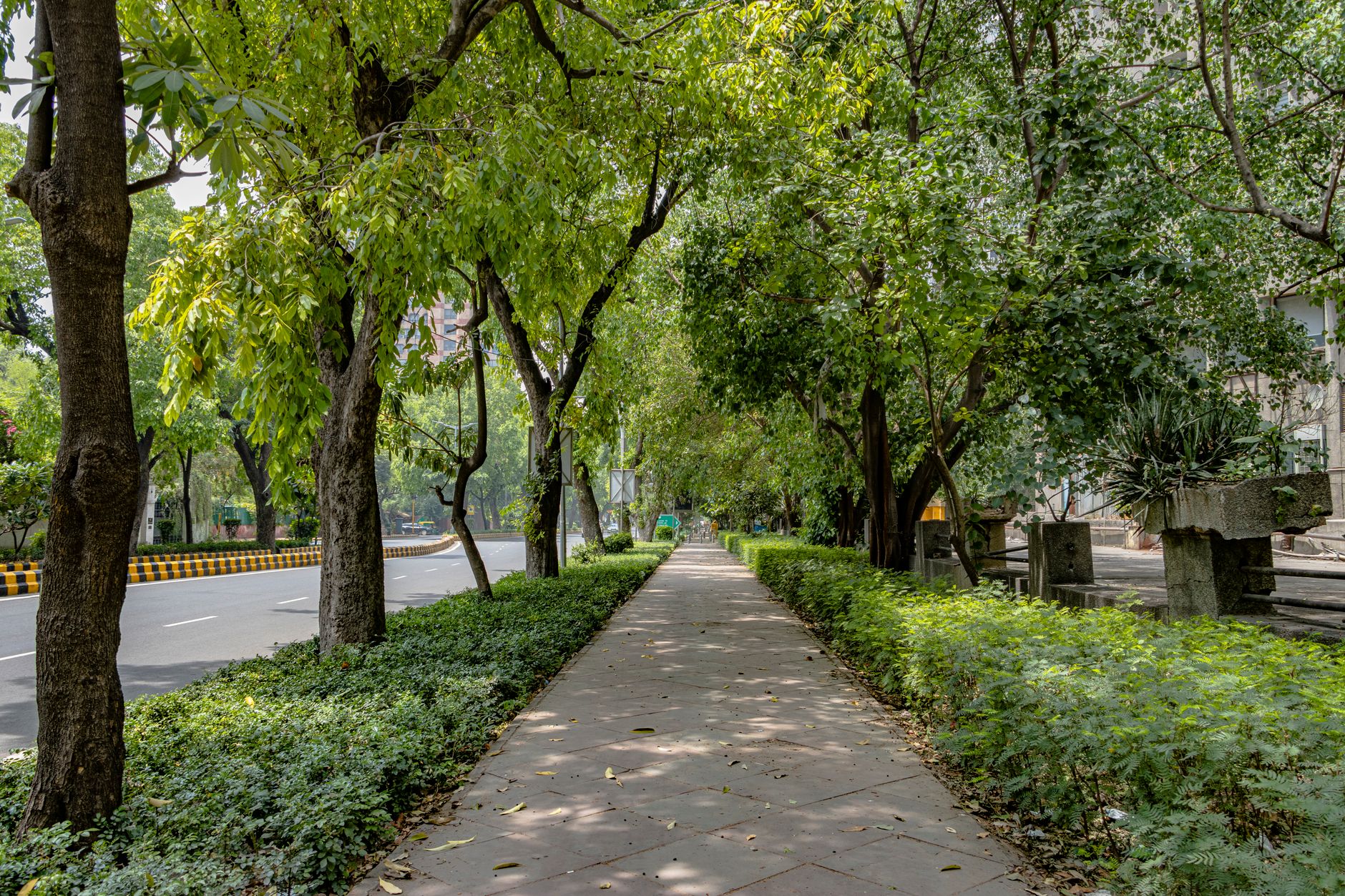
Sanjay Van is the largest surviving piece of natural forest inside Delhi that an ordinary visitor can simply walk into. It covers several hundred acres of the South Central Ridge, the northern tail of the Aravalli hills, on the ground between Vasant Kunj and Mehrauli. This is dry deciduous and thorn scrub country: kikar, ronjh, dhak, neem and gum arabic, much of it dominated by the invasive Prosopis juliflora planted decades ago, with patches now being replanted with native ridge species by the Forest Department. Its history is older than its trees. The broken earthen and stone ramparts of Lal Kot and Qila Rai Pithora — the eleventh and twelfth-century walls of the first city of Delhi — run through the forest, and you will walk over and along them without a signboard telling you so. Nilgai, jackals, mongoose, peacocks and well over a hundred bird species live here.
Walking it is the whole activity. From the Mehrauli-side gate near the Qutub Institutional Area, or from the Vasant Kunj gate, a network of packed-earth trails runs into the trees — some wide enough for a jeep, most single-file. There is a small lake, seasonal and reedy, that draws birds in winter; there are clearings where the ground rises and you can see the ramparts as low ridges of rubble under the undergrowth; there is a modest shrine deep in the forest that local walkers use as a landmark. Signage is minimal, which is both the charm and the problem: routes fork constantly and the loops are unmarked. Morning walkers, birders with binoculars and the occasional trail runner are the only people you will meet on a weekday. It is genuinely quiet in a way nowhere else in south Delhi is.
Plan two to three hours and treat it as a hike, not a stroll. Wear closed shoes — there are thorns everywhere — carry at least a litre of water, because there is nothing to buy inside, and download an offline map before you go in, because phone signal is patchy and every trail looks like the last one. Go with someone rather than alone, particularly if you are a woman or if it is late in the day; this is empty forest inside a major city and the sensible local advice is to be out before dusk. Do not plan a picnic: there are no facilities, no toilets worth the name, and no bins. The best approach is a loop of an hour and a half from whichever gate you enter, returning the way you came.
The Mehrauli side is the easier arrival. Qutub Minar station on the Yellow Line is about 2 km from that gate, a ₹40-60 auto ride or a 25-minute walk; from Rajiv Chowk the metro fare is roughly ₹40-50 with a journey of 35-40 minutes. The Vasant Kunj gate is best reached by app cab, around ₹350-500 from Connaught Place, 45-70 minutes depending on traffic on the Ring Road. Buses run along Mehrauli-Mahipalpur Road and Aruna Asaf Ali Marg for ₹10-25 and drop you within a ten-minute walk of the Vasant Kunj entrances. Both gates have informal roadside parking that costs nothing but fills early on winter weekends. Autos will not wait for you, so arrange a return cab or walk back out to the main road.
It costs nothing at all. Sanjay Van is Forest Department land managed as a city forest, there is no ticket counter at any gate, no camera fee and no charge for the trails. That also means there is nothing to buy inside: no water, no food, no toilets beyond the most basic, no guides for hire on site and no maps. Budget only for transport — ₹40-60 by auto from Qutub Minar metro, or ₹300-500 by cab from central Delhi — and for what you carry in. Occasional guided nature walks are run by conservation groups and birding clubs, sometimes free and sometimes with a small contribution of a few hundred rupees; those are announced through their own channels rather than sold at the gate.
November to February is the season without argument: cool enough to walk for hours, the best birdlife of the year, and the light through the thorn trees in early morning is the reason photographers come. Within the day, go between 6:30 and 9:30. Mammal and bird activity collapses after mid-morning, and by 11:00 you are walking through hot, still scrub for no reward. Late afternoon from 16:00 to about an hour before sunset works too, but do not push it — the forest gets dark fast and the trails are unlit. March and October are acceptable. April to June is dangerous rather than merely uncomfortable, with no shade of any depth and no water. The monsoon greens everything and brings out snakes, which is a real consideration on narrow trails.
This suits walkers, birdwatchers, trail runners and anyone in south Delhi who needs an hour without traffic noise. It suits teenagers who would rather be outdoors than in a museum. It does not suit wheelchair users or prams at all — the trails are rutted earth with roots, rubble and gradients throughout, and there is no accessible route. It is not a good rainy-day option and it is a poor choice with very small children given the thorns, the distances and the absence of toilets. Anyone with an hour before a train should not attempt it: the gates are far from the stations and the forest only rewards you once you are twenty minutes in. Solo evening visits are not recommended by anyone who walks here regularly.
Nearby, you are on the edge of the richest archaeological ground in Delhi. The Mehrauli Archaeological Park begins about 1.5 km south-east of the Mehrauli gate, and the Qutub Minar complex sits just beyond it — a ₹40 auto or a 20-minute walk. Champa Gali and the Lado Sarai galleries and cafés are 2-3 km east if you want coffee after a dusty morning. Vasant Kunj's malls are 2 km west on the other side of the forest for air conditioning and a proper lunch. As a base, Vasant Kunj and Saket are the quiet, green, well-priced areas of this corner of the city, both far calmer at night than the centre and both within a short cab ride of the airport.
The honest caveats: this is not a manicured national park and nobody should arrive expecting one. Sections carry litter, encroachment and the debris of picnics that should not have happened. The invasive kikar dominates large stretches and makes the forest look monotonous to anyone hoping for tall trees. The Lal Kot ramparts are marked on maps and enthusiasts' blogs but almost never on the ground, so without a guide you will walk past most of them. The lake is seasonal and can be a mudflat by April. There is a persistent local reputation for the place being unsafe or haunted after dark, and while the ghost stories are nonsense, the underlying advice — do not be in there alone at dusk — is sound. Come for the quiet, not for a spectacle.
What to see
{'what': 'Lal Kot / Qila Rai Pithora rampart line', 'where': 'Rubble ridges along the north-east trails'}
{'what': 'Seasonal forest lake', 'where': 'Central depression, roughly 1 km in from the Mehrauli gate'}
{'what': 'Peacock and nilgai clearings', 'where': 'Open scrub patches on the Vasant Kunj side'}
Tips from the ground
Enter at the Mehrauli gate — it is the easiest to reach and the trails are clearest there.
Download an offline map: signage is almost non-existent and trails fork constantly.
Be out of the forest before dusk and avoid walking alone.
Questions, answered
How much does Sanjay Van cost?
Nothing. It is Forest Department land open as a city forest, with no ticket counter at any gate, no camera charge and no parking fee at the informal roadside spaces outside. That also means nothing is sold inside — no water, no food, no maps and no guides — so carry everything you need. Your only spend is transport: roughly ₹40-60 by auto from Qutub Minar metro to the Mehrauli gate, or ₹300-500 by app cab from central Delhi.
Are there free entry windows?
The whole forest is free at every hour it is open, so no special window applies. Gates operate roughly from sunrise to sunset, and the practical free window that matters is the one dictated by daylight rather than by any ticket: be inside between 6:30 and 9:30 in the morning for wildlife and cool air, and be out of the trees before dusk because there is no lighting anywhere on the trail network.
How long should I spend there?
Two to three hours is a proper visit — enough for a loop of six or seven kilometres on the earth trails with time to stop for birds. A short taste of the forest, in and out from the Mehrauli gate, takes about an hour. Birdwatchers and photographers often stay from first light until mid-morning, when activity drops off sharply. Do not plan more than three hours: there is no water, no food and no shade of any depth inside.
Which day is it closed?
There is no weekly closing day. Sanjay Van is open every day, all year, during daylight hours, with the gates unlocked around sunrise and closed near sunset. The Forest Department occasionally restricts access to sections for plantation work, fire management in the dry months, or restoration of the ridge habitat, and those closures are signposted at the gate rather than announced online. In practice you will always find one of the entrances open.
Do I need to book in advance?
No. There is no booking system, no permit and no registration for walking in. You simply arrive at a gate and start walking. The only things worth arranging beforehand are a guided nature or birding walk, run periodically by conservation groups and birding clubs and announced through their own channels — some free, some asking a small contribution — and your return transport, since autos do not wait at the gates and phone signal inside is unreliable.
What is the nearest metro station?
Qutub Minar on the Yellow Line is nearest to the Mehrauli-side gate, about 2 km away — a ₹40-60 auto or a 25-minute walk. From Rajiv Chowk the fare is roughly ₹40-50 and the ride 35-40 minutes. The Vasant Kunj entrances have no close metro and are best reached by app cab, about ₹350-500 from Connaught Place. Buses along Aruna Asaf Ali Marg and Mehrauli-Mahipalpur Road cost ₹10-25 and stop within a ten-minute walk.
Doing good is the business: every booking through Stay New Delhi funds one verified tonne of carbon removal — same room, same price, no markup.
Start Your Search