Sarojini Nagar Market
Delhi's export-surplus bargain market, where the same shirt that hangs in a European chain store sells off a pavement rack for ₹250 — if you can bargain, and if you come on a day it is open.
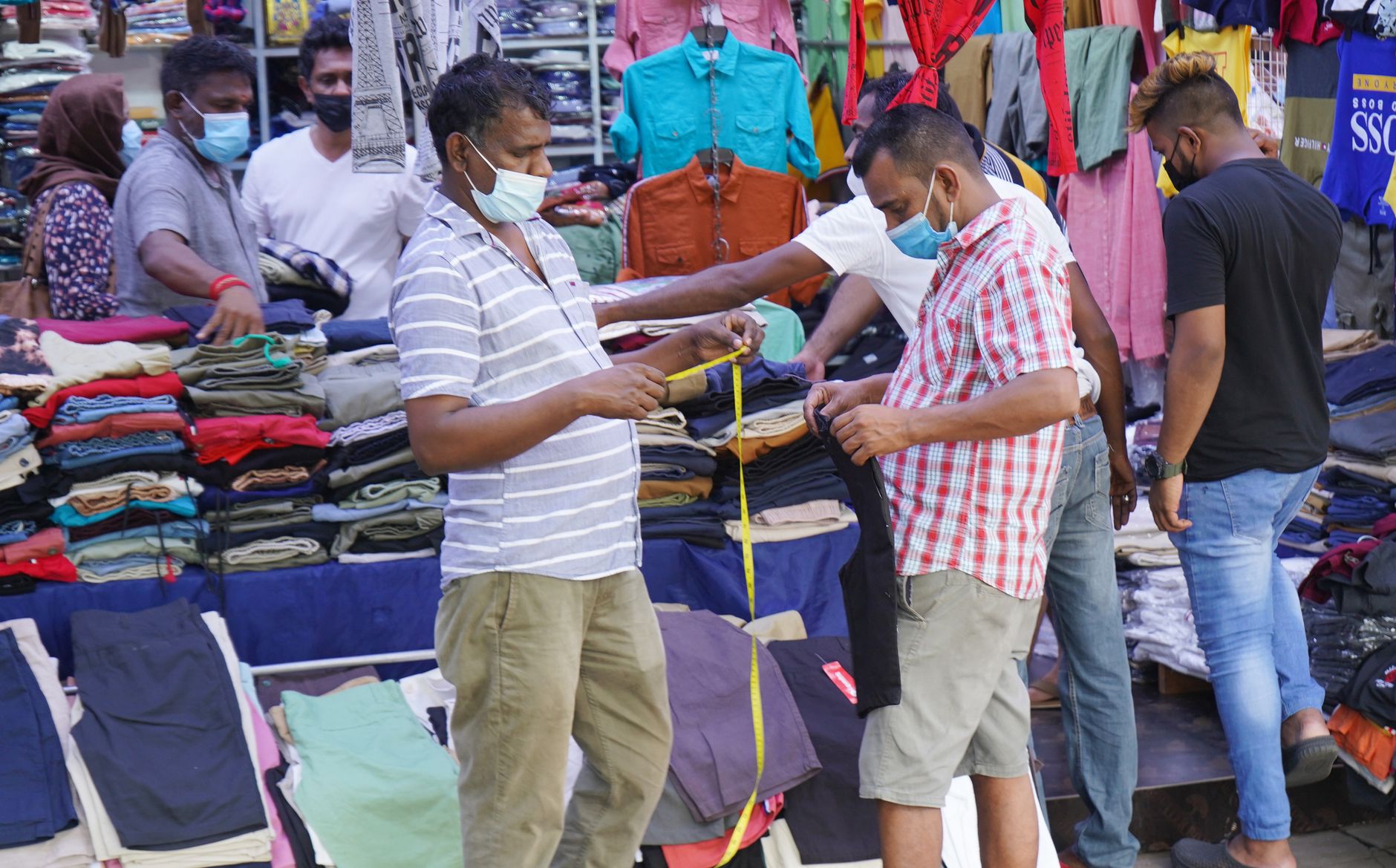
Sarojini Nagar is a post-Partition government housing colony in south-west Delhi whose local shopping centre grew into the city's most famous cheap-clothing market. The trade here is export surplus: overruns, cancelled orders and quality-rejected stock from the garment factories of Gurugram, Noida and Tirupur that would otherwise have shipped to Western high-street chains. Labels are cut, sizes are erratic, and the same rack holds a ₹150 cotton top and a ₹900 winter coat. Around the fixed shops of the inner market — which sell shoes, luggage, household goods and fabric at ordinary prices — a ring of pavement stalls has grown up, and it is those stalls that draw students, young professionals and every visitor who has been told Delhi is cheap. There is no gate, no ticket and no organising authority beyond the traders' association and a very busy police post.
The experience is physical. The export lanes run in tight parallel rows with clothes hung on frames overhead and piled knee-deep on tarpaulins, and you move at the pace of the crowd, which on a Saturday evening is a shuffle. Sellers call out a flat price — bees rupya, sau rupya — and the correct response is to offer roughly a third and settle near half. There are no changing rooms; people hold garments against themselves, and returns do not exist. Beyond the export stalls, the permanent shops in the market square sell jeans, ethnic wear and shoes with fixed prices and a little more comfort, and Babu Market on the far side handles cheaper household goods. Street food punctuates the whole thing: momos, chowmein, aloo chaat and lemon soda carts at every junction.
Plan it as a focused two-to-three-hour raid, not a leisurely browse. Come with a list, wear clothes you can pull things over, bring a tote so you are not handed twenty plastic bags, and carry small notes — many stallholders take UPI but claim not to when it suits the haggle. Check seams, zips and armpit stains before paying, because rejected stock is rejected for a reason. Leave valuables at the hotel; this market is famous for pickpockets working the tightest lanes at peak hour. If bargaining stresses you, the fixed-price shops inside the market square will still be cheaper than anywhere in central Delhi, and Dilli Haat, 2 km east, is the calm alternative for handicrafts rather than clothes.
Getting there is straightforward. Sarojini Nagar station on the Pink Line sits at the edge of the market — walk out and you are in it within four minutes. INA station, on both the Yellow and Pink Lines, is about 1.5 km east and a ₹40-60 auto ride or a 20-minute walk. From Rajiv Chowk in Connaught Place, take the Yellow Line south to INA and change to the Pink Line, roughly 25 minutes end to end for ₹30-40. Auto-rickshaws from Hauz Khas cost ₹100-150, from Defence Colony ₹80-120. Driving is a mistake: the small car parks around the market are full from mid-morning at ₹20-40 an hour, the approach roads jam, and app cabs struggle to reach a pickup point on weekend evenings — walk out to Ring Road for a cab instead.
There is no entry charge of any kind. What you spend is entirely at the stalls, and the point of coming is how little that is: t-shirts ₹150-300, shirts and tops ₹200-400, jeans ₹300-700, dresses ₹300-800, jackets and winter coats ₹600-1,200, and bags or shoes from ₹400. Those are post-bargaining prices; opening quotes run 50-100 percent higher, and quotes rise noticeably for anyone who looks foreign. Street food is ₹40-120 a plate. A realistic day here is ₹1,000-2,500 for an armful of clothes. Bring cash in ₹100 and ₹500 notes; ATMs on the market's edge run dry on weekends. Nothing has a warranty, nothing can be exchanged, and no stall issues a bill, so inspect before you hand over money.
Timing matters more here than at any other Delhi market. Monday is the weekly closing day — the export lanes are largely empty and many shops shuttered, so do not plan a Monday visit. Tuesday to Friday between 11:00 and 15:00 is the sweet spot: fresh stock, sellers willing to negotiate for early business, and room to actually see what you are holding. From 16:00 the crowd builds, and Saturday and Sunday evenings are shoulder-to-shoulder. October to February is comfortable and brings the winter stock that represents the best value in the market. April to June is brutal in unshaded lanes, and monsoon afternoons flood the pavement stalls, at which point the tarpaulins come down and half the traders vanish for the day.
It suits bargain hunters, students, anyone restocking a wardrobe cheaply, and travellers who enjoy a scrum. It suits solo visitors who keep bags zipped and phones pocketed. It is a poor choice for wheelchair users — the export lanes are narrow, uneven and continually blocked by handcarts — and hard work with a pushchair or small children at any time after 16:00. Anyone who dislikes haggling, crowds or being shouted at cheerfully should go to Dilli Haat instead. If you have a spare hour before a flight, skip it: nothing here is quick, and the market is 45 minutes from the airport in traffic despite being only 12 km away.
Nearby, Dilli Haat INA is 2 km east and the natural pairing — bargain clothes first, then a sit-down state thali; INA Market next to it sells produce, fish and imported groceries. Safdarjung's Tomb is about 3 km north-east if you want a quiet Mughal garden after the noise, and Chanakyapuri's embassy avenues, five minutes away by auto, are the greenest streets in the city. The honest caveats: the market's reputation has outrun its stock, and on a bad day the export lanes are full of ordinary local-brand seconds rather than recognisable labels; sizing is chaotic and skewed small; and the pickpocketing is not an urban legend — the police post exists because it is needed. Come with realistic expectations and a firm grip on your bag.
Hours & entry
No ticket at any hour · closed Mondays
Tue-Sun roughly 10:00-20:30 · Closed Mondays (weekly market holiday) · Pavement stalls busiest 16:00-20:00
What to see
{'what': 'Export-surplus pavement lanes', 'where': 'The tarpaulin rows behind the main market square, west side'}
{'what': 'Fixed-price shoe and luggage shops', 'where': 'Inner market square, ground-floor arcade'}
{'what': 'Street food carts', 'where': 'Junction between the export lanes and Babu Market'}
Tips from the ground
Open at a third of the quoted price and walk away once — the seller usually calls you back.
Come Tuesday to Friday before 15:00; Monday the market is shut.
Wear a cross-body bag zipped and worn to the front in the export lanes.
Questions, answered
What does it cost to shop at Sarojini Nagar?
Entry is free — it is a public street market with no gate or ticket. Clothing is the cheapest in Delhi after bargaining: t-shirts ₹150-300, jeans ₹300-700, dresses ₹300-800, jackets ₹600-1,200. Opening quotes are 50-100 percent above the real price, so offer a third and settle near half. Street food runs ₹40-120 a plate. Most people spend ₹1,000-2,500 on a proper visit and bring cash in small notes.
Are there discount days or free events here?
There is no ticket, so nothing to discount, and no organised free events. The nearest thing to a sale window is late evening after about 19:30, when stallholders clear stock and accept lower offers, and the start of a season change when winter or summer surplus first lands. Prices also soften on quiet weekday mornings. Festival weeks before Diwali and Raksha Bandhan push prices up rather than down, so avoid those if you are hunting bargains.
How long should I allow?
Two to three hours is right for the export lanes plus the fixed-price shops in the market square. A quick, targeted visit — one lane, a few pieces — takes about an hour. Serious shoppers who work every row and try prices at several stalls can spend half a day. Add another hour if you are folding in Dilli Haat, 2 km east, which pairs well as a lunch stop after the shopping.
Which day is Sarojini Nagar Market closed?
Monday is the weekly closing day. The export-surplus lanes are mostly empty and a large share of the fixed shops keep their shutters down, so a Monday trip wastes the journey. Tuesday to Sunday the market runs roughly 10:00 to 20:30, with pavement stalls at their fullest from 16:00. Heavy monsoon rain also clears the outdoor lanes within minutes, since the stock sits on tarpaulins in the open.
Do I need to book anything?
No — there is nothing to book. It is a walk-in street market with no tickets, no tours run by any official body and no reservations at any stall or eatery. The only planning worth doing is bringing cash in ₹100 and ₹500 notes, a tote bag, and clothes you can pull garments over, since there are no changing rooms anywhere in the export lanes and no returns or exchanges on anything you buy.
What is the closest metro station?
Sarojini Nagar on the Pink Line sits at the market's edge, about four minutes on foot from the export lanes. INA station, on both the Yellow and Pink Lines, is 1.5 km east — a ₹40-60 auto or a 20-minute walk, and the better choice if you are combining the trip with Dilli Haat. From Rajiv Chowk allow about 25 minutes with one change at INA, fare ₹30-40. Avoid driving; parking fills by mid-morning.
Doing good is the business: every booking through Stay New Delhi funds one verified tonne of carbon removal — same room, same price, no markup.
Start Your Search