Sultanpur National Park
A shallow seasonal lake in the Haryana countryside an hour from Delhi, ringed by watchtowers, where thousands of wintering ducks, storks, flamingos and cranes come in from November to February.
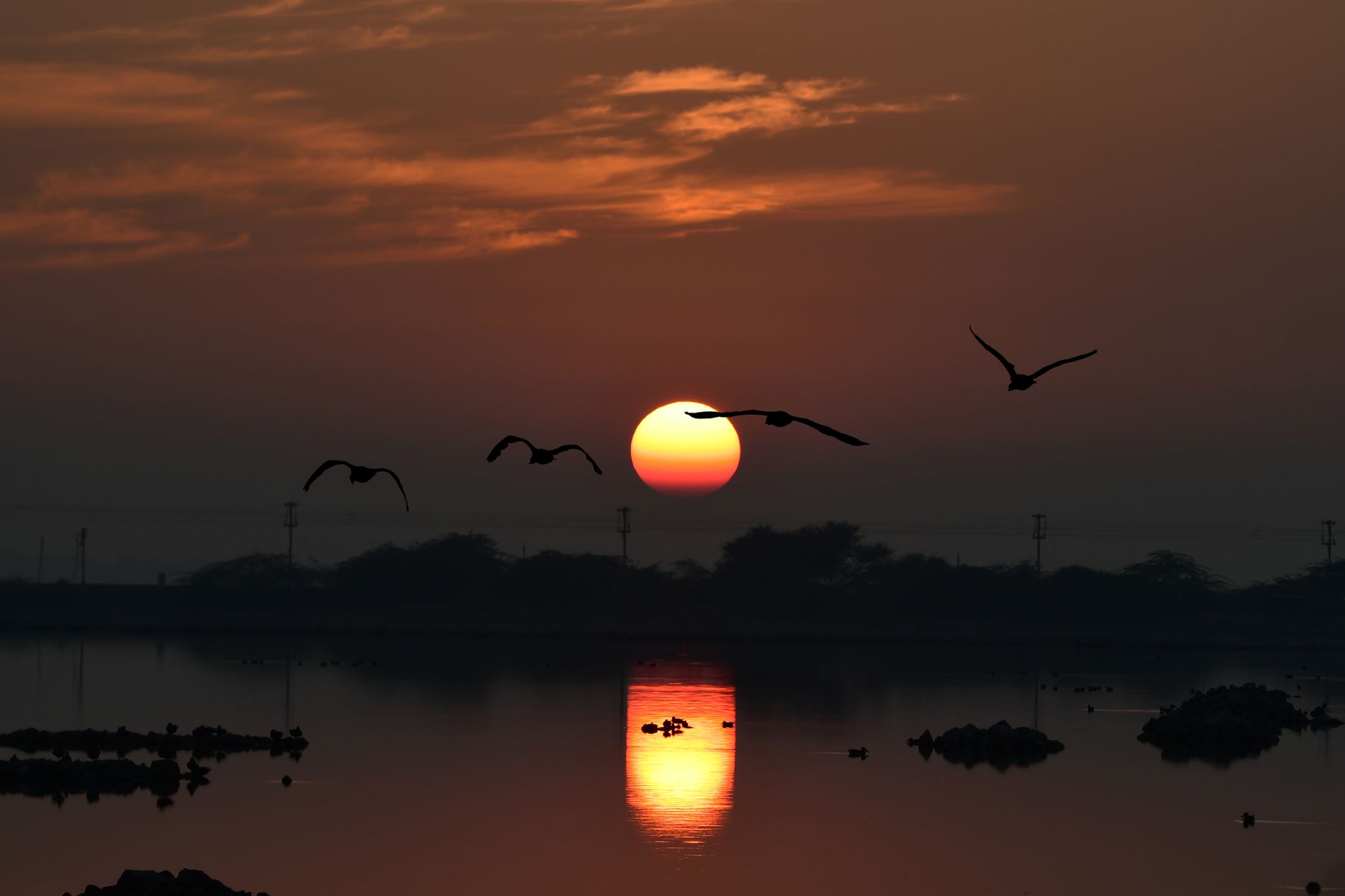
Sultanpur National Park sits about 15 km west of Gurugram on the road to Farrukhnagar, and is small — roughly 1.4 square kilometres — but disproportionately important. The core is a shallow seasonal freshwater lake, a natural depression in the flat Haryana plain, which fills in the monsoon and draws waterbirds through the winter. It was declared a bird sanctuary in 1972 largely through the efforts of the ornithologist Peter Jackson and with the support of Indira Gandhi, and upgraded to national park status in 1989. More than two hundred and fifty bird species have been recorded here, of which a large proportion are winter migrants arriving from Central Asia, Siberia and Europe: greylag and bar-headed geese, northern pintail, shoveller, common teal, ruff, black-winged stilt, painted and black-necked storks, and in some years flamingos and cranes.
The visit is a walking circuit of about three kilometres around the lake on a made path, with four raised watchtowers and several ground-level hides positioned to look across the water. From the gate you pass an interpretation centre with panels and mounted material, then the path swings out along the bund. The towers matter enormously here: the lake is shallow and wide, birds gather at distance, and elevation plus binoculars is the difference between seeing a grey smudge and seeing a raft of two thousand ducks. Nilgai and jackals move through the scrub and grassland between the path and the boundary, and peafowl are everywhere. Benches, shade trees and drinking-water points are spaced along the route, and the whole loop takes an unhurried hour and a half to two hours.
Treat this as a half-day trip from Delhi and go early. The park opens around 7:00 and the first three hours are the ones that count. Bring binoculars — this is the single most important thing, and none are rented on site — plus water, a hat and a field guide or a checklist app. Nothing needs booking for individual entry. Guides are sometimes available near the gate and are worth taking if you want the birds identified for you; agree a fee before you set off. Skip it entirely on a Tuesday, when it is closed, and skip it between April and September, when the lake shrinks or dries and the migrants are gone. Do not plan a picnic inside; food is not sold within the park.
There is no metro anywhere near it, and this is the one real obstacle. HUDA City Centre on the Yellow Line is the closest station at about 25 km, and an app cab or taxi from there costs roughly ₹500-700 one way and takes 40-50 minutes via the Gurugram-Farrukhnagar road. From central Delhi the drive is 45-50 km, an hour to an hour and a half on NH-48 through Gurugram, and a return cab with waiting time typically runs ₹1,800-2,500 for the day. Haryana Roadways buses from Gurugram bus stand towards Farrukhnagar pass the turning for ₹25-40, leaving a short auto or walk to the gate. Parking at the entrance is free and rarely full. Coming back to Delhi after 17:00 means the Gurugram evening traffic, so leave earlier.
Entry is inexpensive: about ₹40 for an Indian adult, with a reduced ticket of roughly ₹20 for children, and a substantially higher rate for foreign nationals in the region of ₹400, set by the Haryana Forest Department and revised from time to time — the current tariff is displayed at the counter. Camera charges may apply to professional equipment; ask at the window. Parking is free. There is no combined ticket with any other site. Inside, nothing is sold, so anything you eat or drink you have carried in. If you hire a local guide at the gate, expect to pay something in the range of ₹300-600 for a couple of hours depending on the group size, agreed in advance.
November to February, and no other months are worth the drive. Numbers build through November, peak in December and January, and thin out through February; by March most migrants have left and by April the lake can be a cracked pan. Within the day, be at the gate at opening — 7:00 — and walk the circuit before 10:30, when the birds settle, the heat rises and the light goes hard. A second window opens from about 15:30 until closing. Weekdays are quiet; winter Sundays bring Gurugram families walking the loop, which pushes the birds towards the far bank. It is closed on Tuesdays year-round. The monsoon fills the lake beautifully but brings very few birds and a great many mosquitoes.
It suits birdwatchers, photographers with long lenses, and families with children old enough to walk three kilometres and stay reasonably quiet. It is one of the better half-day escapes for anyone based in Gurugram or on the airport side of the city. Accessibility is better than at most Indian wildlife sites: the main circuit is a made path, largely flat and negotiable with a wheelchair or a pram for much of its length, though the watchtowers are stairs-only and the hides have thresholds. It is a bad choice on a rainy day, with a short one-hour gap, or in summer. Without binoculars, honestly, most visitors leave underwhelmed and blame the park rather than their kit.
Nearby, the options are Haryana rather than Delhi. Farrukhnagar, about 8 km west, has the eighteenth-century Sheesh Mahal and the stepwell known as the Baoli of Farrukhnagar, a genuinely interesting and almost unvisited detour of an hour. Damdama Lake and the Aravalli foothills near Sohna lie 30-40 km south for a longer countryside day. Back in Gurugram, 15-20 km east, Cyber Hub and the Sector 29 market are the standard lunch and coffee stop, roughly ₹350-500 by cab. If you are staying out here, Gurugram is the practical base for this trip — new hotels, honest business-district pricing, quick access to the airport, and half the drive time to the park compared with starting from Old Delhi.
The honest caveats: Sultanpur is small, and the word 'national park' sets expectations it cannot meet. There are no large mammals beyond nilgai, no jungle and no safari; you walk a three-kilometre loop around a lake in farmland. Out of season it is a dusty circuit with peacocks. Water levels are entirely dependent on the monsoon and on managed pumping, and in poor years the bird numbers are a fraction of what the guidebooks describe. The far side of the lake is distant enough that even good binoculars struggle. Weekend crowds walking the bund noticeably reduce what you see. And the journey is the real cost — an hour each way from central Delhi and no metro — so build the day around it rather than squeezing it in.
Hours & entry
Not free
Wed-Mon 7:00-16:30 (approximately; seasonal variation) · Closed Tuesdays · Ticket counter shuts about 30 min before the gate
What to see
{'what': 'Main watchtower over the lake', 'where': 'North-west corner of the bund circuit'}
{'what': 'Wader flats and stilt colonies', 'where': 'Shallow southern edge, second hide'}
{'what': 'Interpretation centre displays', 'where': 'Beside the entrance gate'}
Tips from the ground
Never come on a Tuesday — the park is closed all day.
Be at the gate at 7:00; birds settle and the light flattens after 10:30.
Agree a guide's fee at the gate before setting off, and carry your own binoculars.
Questions, answered
How much does Sultanpur National Park cost?
Entry is about ₹40 for an Indian adult and roughly ₹20 for children, with foreign nationals charged a higher rate in the region of ₹400 under Haryana Forest Department tariffs. Rates are revised periodically and the current figures are posted at the ticket counter. Parking at the gate is free. Professional camera equipment may attract a separate fee. If you hire a local guide at the entrance, expect ₹300-600 for a couple of hours, agreed before you start walking.
Are there free entry windows?
No. The park charges its ticket at every opening hour, on every open day, and there is no free morning or free day of the week. The ticket is inexpensive enough that it is not usually the deciding factor — the transport cost from Delhi is far higher. Occasional bird-count events and awareness walks run with the Forest Department or birding groups may be free by prior registration, but these are announced by the organisers and not sold at the gate.
How long should I spend there?
Half a day, including travel. The walking circuit around the lake is about three kilometres and takes an hour and a half to two hours at birding pace, plus 15-20 minutes at the interpretation centre. Add an hour each way from central Delhi and you have a comfortable half-day trip. Serious birders arrive at opening and stay until about 10:30, when activity drops. A hurried loop can be walked in 50 minutes but wastes the journey.
Which day is it closed?
The park is closed on Tuesdays, every week, all year — this catches out more visitors than anything else, because it is a long drive to find a shut gate. On other days it opens roughly from 7:00 to 16:30, with seasonal variation and the ticket counter closing about half an hour before the gate. Timings are set by the Haryana Forest Department and can shift between summer and winter, so confirm before making the trip.
Do I need to book in advance?
No booking is needed or possible for individual visitors; tickets are sold at the counter on arrival and there is no capacity limit. What is worth arranging in advance is transport, because there is no metro and autos do not wait at the gate — book a return cab with waiting time, typically ₹1,800-2,500 from central Delhi for the day. School groups, research visits and professional filming require prior permission from the Haryana Forest Department.
What is the nearest metro station?
There is no metro near the park. HUDA City Centre on the Yellow Line is the closest at about 25 km, from which a cab costs roughly ₹500-700 and takes 40-50 minutes along the Gurugram-Farrukhnagar road. From central Delhi the drive is 45-50 km on NH-48 through Gurugram, one to one and a half hours. Haryana Roadways buses from Gurugram bus stand towards Farrukhnagar pass the turning for ₹25-40. Parking at the gate is free.
Doing good is the business: every booking through Stay New Delhi funds one verified tonne of carbon removal — same room, same price, no markup.
Start Your Search