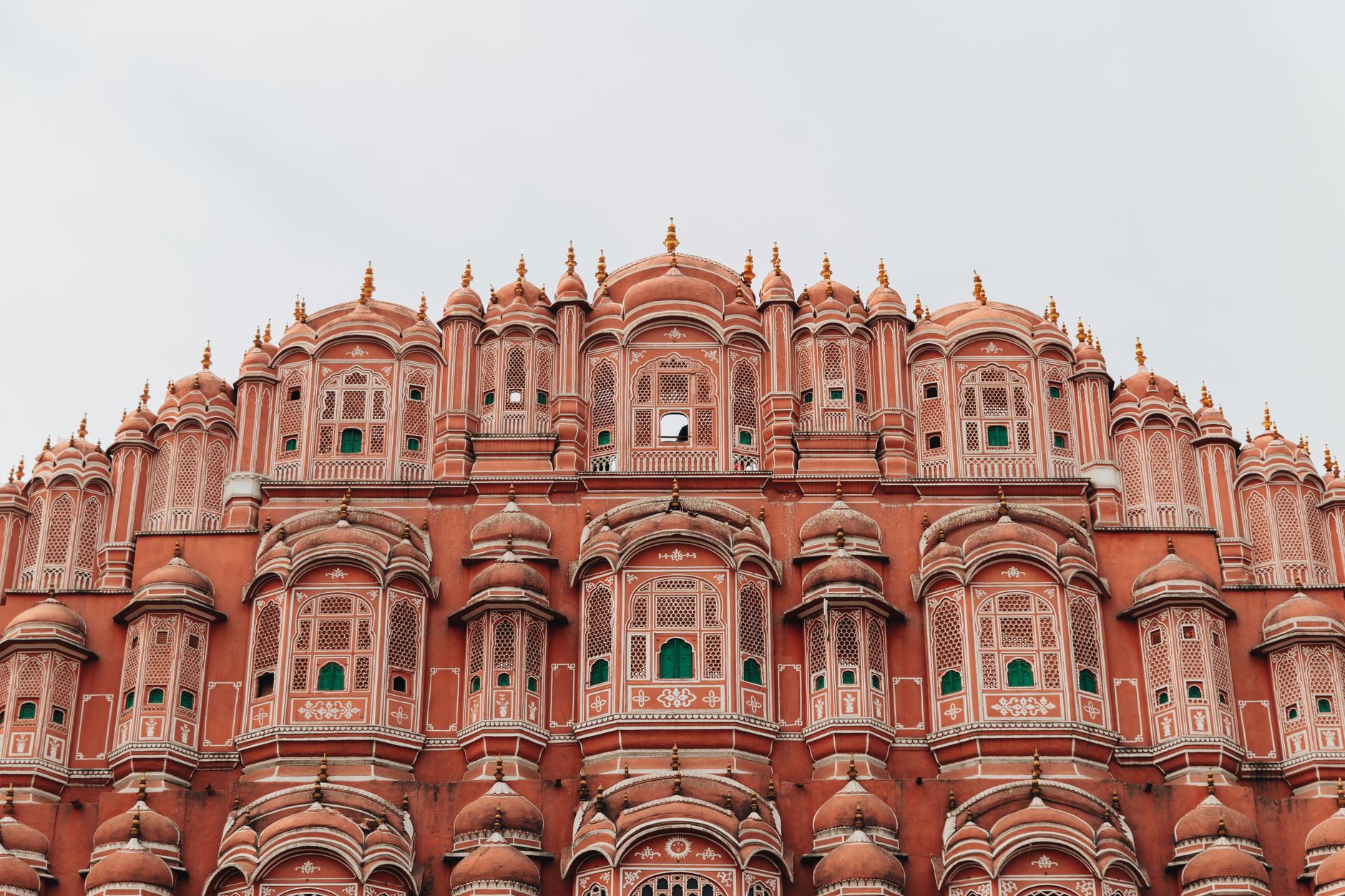
Rajasthan's capital, 270 km southwest: walled bazaars, hill forts, the best hotel value within a day of Delhi.
Jaipur is a capital city of three and a half million people, not a Delhi day trip, and treating it as one is the single most common mistake on this corridor. It sits 270 km southwest on NH-48; the drive takes five hours with a Behror tea stop, the Vande Bharat and Ajmer Shatabdi take four to five from New Delhi station. People try to do Amber Fort, City Palace and Hawa Mahal between 11am and 5pm, and end up remembering a car park. Give it two nights minimum, three if you want to sleep in and eat properly.
The old walled city — the pink one, painted for the Prince of Wales in 1876 and repainted since by municipal decree — is a grid, which makes it far easier to walk than Old Delhi. Johari Bazaar for gemstones and gota work, Bapu Bazaar for textiles and juttis, Tripolia for lac bangles, Kishanpole for marble. Shopkeepers here are excellent and relentless; the first price on anything is roughly double. Outside the walls, C-Scheme and Civil Lines are wide, leafy, 1940s-planned streets where most of the good restaurants and the calmer hotels are.
At 9pm the walled city is still fully awake — Johari Bazaar shutters come down around 8:30 to 9, but the chaat counters at Badi Chaupar and the kulfi at Bapu Bazaar run later, and the fort ramparts at Nahargarh are lit above the whole grid. C-Scheme is where Jaipur actually drinks: bars around MI Road and Ashok Marg, most of them serving until 11pm or midnight and none of them cheap by Rajasthan standards. Rajasthan has a 30 percent state excise on top of everything, so a beer at ₹450 is normal.
Skip Jaipur if you want beaches, quiet or cool weather — May and June routinely pass 44 degrees and the forts become genuinely dangerous by noon. Come between October and March, and be warned that late January is Literature Festival week, when every decent room in Civil Lines and C-Scheme doubles in price and books out six weeks ahead. Diwali here, when the whole of MI Road is strung with lights and the bazaars stay open past midnight, is the best single night in the state.
Where to stay in Jaipur
Four honest choices. Inside the walled city — Hawa Mahal Road, Chandpole, Nahargarh Road — puts you thirty seconds from the bazaars for ₹900–₹2,500, but expect noise from 6am and no parking whatsoever. Bani Park is the traveller ghetto north-west of the station: quiet haveli-style guesthouses at ₹1,500–₹3,500, and a ten-minute auto to everything. C-Scheme and Civil Lines are the grown-up choice — 1940s bungalows converted to boutique hotels at ₹4,000–₹9,000, walking distance to MI Road restaurants. Amer village, up by the fort, is beautiful and remote; you will pay ₹500 in autos every time you want dinner. Avoid the Tonk Road and Sitapura hotel cluster unless you are here for a conference — it is 12 km of traffic from the old city — and avoid any "free" hotel pickup that comes with a gemstone showroom stop.
Things to do in Jaipur
- Amber Fort at 8am, before the busesEleven kilometres north on the Delhi road, above Maota Lake. Entry ₹100 for Indians, ₹500 for foreigners; the two-day composite ticket at ₹300/₹1,000 also covers City Palace grounds, Jantar Mantar, Hawa Mahal and Nahargarh, and pays for itself in a day. Walk up the ramp — skip the elephant rides, which are ethically grim and slower than your own legs.
- City Palace and Jantar Mantar togetherBoth sit inside the walled city off Tripolia Bazaar and share a gate area, so do them back to back. City Palace ₹200/₹700 for the standard route; Jantar Mantar ₹50/₹200 and worth hiring the ₹200 audio guide, because eighteen stone instruments make no sense without one. The Samrat Yantra sundial tells local time to two seconds.
- Sunset from Nahargarh FortAbove the north wall on the Aravalli ridge, twenty minutes by car up the hairpins from Chandpole. ₹50/₹200. Padao, the terrace restaurant on the ramparts, serves overpriced drinks with the finest view in Rajasthan — the entire grid of the pink city laid out below. Arrive an hour before sunset; the road down after dark is unlit and full of monkeys.
- Pyaaz kachori and lassi on MI RoadRawat Mishthan Bhandar near Sindhi Camp bus stand does the definitive onion kachori — about ₹40, eaten standing, from around 8am. Then walk east on MI Road to Lassiwala opposite Niros; there are several shops with near-identical names, and the original is the leftmost as you face them. A clay kulhad of thick lassi is roughly ₹60.
- Block printing at Sanganer or BagruTwo villages south and west of the city where hand block printing has run for three centuries; Sanganer is 16 km down Tonk Road, Bagru 30 km west. Workshops will show you the carved wooden blocks and indigo vats for a small fee. In town, the Anokhi Museum of Hand Printing in Amer covers the same ground indoors — closed Mondays and shut through the hottest weeks of summer.
- Chokhi Dhani for the touristy Rajasthan eveningTwenty kilometres out on Tonk Road, a mock village with folk dancers, puppet shows, camel rides and an unlimited thali eaten cross-legged on the floor. Entry with dinner is roughly ₹1,100–₹1,600 depending on the thali. It is completely artificial and children love it; go at 6pm, leave by 9:30 before the exit queue.
Getting around & the essentials
Metro
Pink Line to old city
On foot
Enter at Ajmeri Gate, walk east along Bapu Bazaar past the jutti and textile stalls to Sanganeri Gate, then turn north up Johari Bazaar — jewellers, gota work, the Laxmi Mishthan Bhandar sweet counter — to Badi Chaupar. Cross to Hawa Mahal for the facade from street level, continue west along Tripolia Bazaar under the lac-bangle arcades to Chhoti Chaupar, and finish at Chandpole. Flat, gridded, and best between 5pm and 8pm.
By road
No car needed centrally
Transport
From Delhi: Vande Bharat and Shatabdi services from New Delhi station reach Jaipur Junction in around four and a half hours; sleeper and Superfast trains take five to six. By road, NH-48 through Gurugram, Neemrana and Behror is a five-hour drive, and a one-way taxi runs ₹5,500–₹8,000 with tolls. Buses from Sarai Kale Khan and Dhaula Kuan cost ₹700–₹1,300 for Volvo AC. Jaipur airport at Sanganer is 12 km south of the walled city, ₹400–₹600 by app cab. Inside the city, the Metro Pink Line runs Mansarovar to Badi Chaupar for ₹6–₹22 and drops you inside the walls. Otherwise autos: ₹80–₹150 across the old city, ₹350–₹500 to Amber.
Evenings
Bazaars busy till 9pm
Nightlife
Bars close by midnight
Best season
October to March
Jaipur, questions answered
How long is the drive from Delhi to Jaipur?
Five hours door to door on a good day via NH-48, allowing one stop. Leaving Delhi between 7am and 10am you will lose forty minutes in the Gurugram–Manesar stretch alone, so start before 6:30am or after 11am. The Delhi–Mumbai Expressway link has improved the run from South Delhi, but the last approach through Jaipur city is slow regardless.
Where should I stay in Jaipur if I do not have a car?
Bani Park or the walled city itself. Both are a short auto ride from the bazaars and Jaipur Junction, and the Pink Line metro puts Badi Chaupar within walking distance of Hawa Mahal and Johari Bazaar. C-Scheme works too if you want restaurants on your doorstep. Avoid Sitapura and outer Tonk Road, which need a car for everything.
Is the Amber Fort elephant ride worth doing?
No. The animals work long shifts on hot stone ramps, the queues at the bottom are an hour in season, and welfare inspections have repeatedly flagged the practice. Walking the same ramp takes ten minutes and costs nothing, and a jeep is available for those who cannot. Almost every responsible operator in Jaipur now declines to book it.
When is Jaipur too hot to visit?
From late April to the end of June, when daytime highs sit between 40 and 45 degrees and the fort courtyards have no shade. July to September brings monsoon humidity and green Aravallis but unreliable sightseeing. October to March is the real season; December and January mornings can be genuinely cold, around 8 degrees, so bring a layer.
Doing good is the business: every booking through Stay New Delhi funds one verified tonne of carbon removal — same room, same price, no markup.
Start Your Search